 By
By 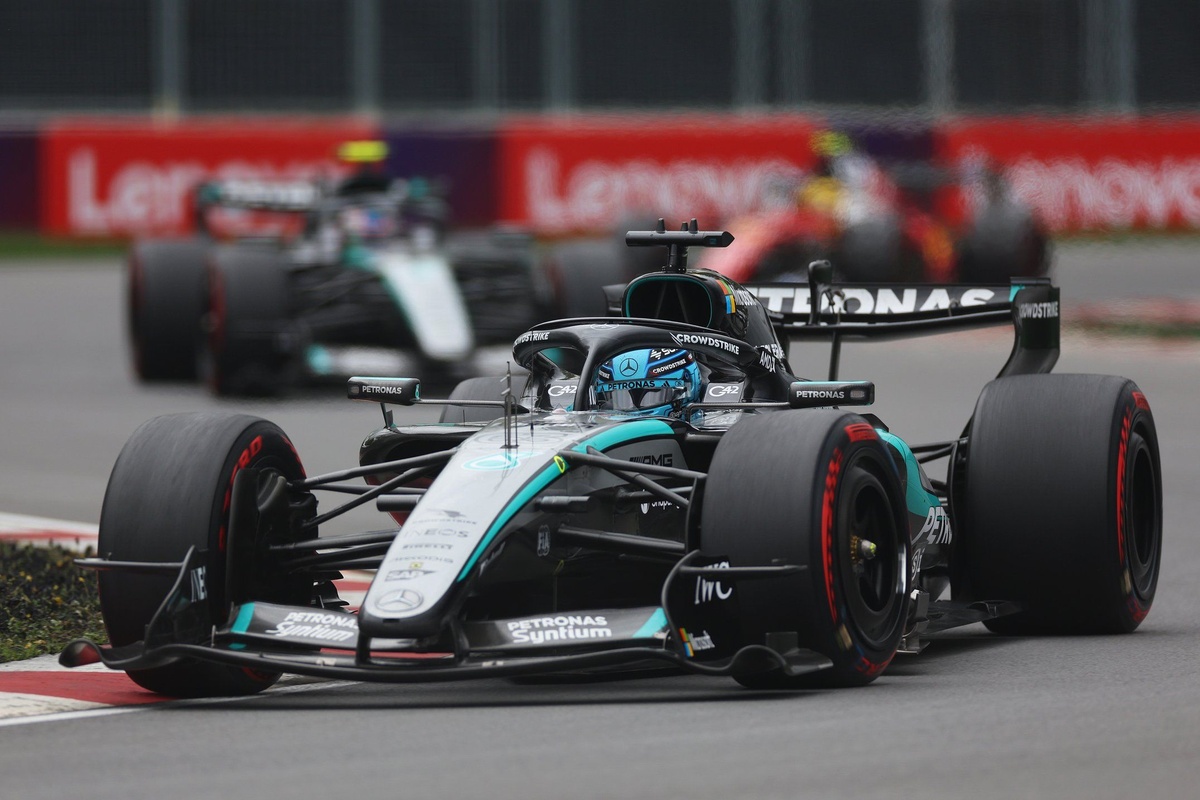

George Russell might have endured a heartbreakingly premature end to his fight for the Canadian Grand Prix win with Mercedes team-mate and championship rival Kimi Antonelli, but he remained very much on-message in praising the impact of Formula 1’s controversial new technical regulations.
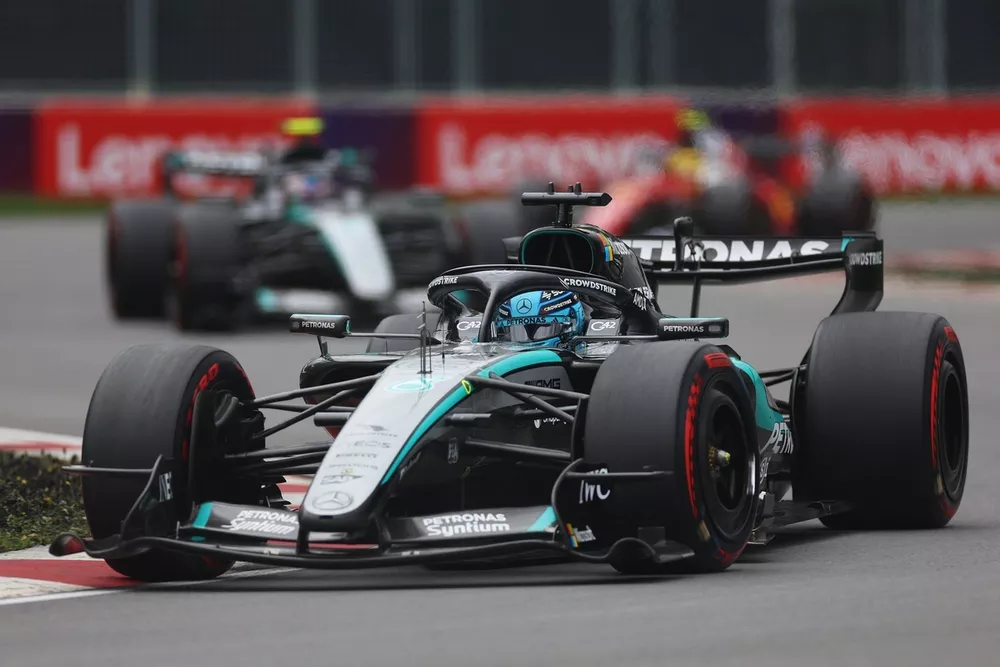
Russell got off to a sluggish start from pole position but passed Antonelli for the lead at the final chicane at the end of lap five, where the cars came within inches of colliding as Antonelli locked a wheel while trying to defend the position. From there until Russell’s car halted with a power unit issue on lap 30, the team-mates stalked each other and swapped positions in a battle which regularly had the crowd on its feet.
“I loved it, I thought it was great,” he told media including Autosport afterwards. “And I’ve not had a battle like this in years. I haven’t seen a battle like this probably since Lewis [Hamilton] and Nico [Rosberg] in Bahrain 2014.
“And these new cars allow you to do that. These new engines allow you to do that.
“I don’t know why anybody wants to change them, because we had amazing battles in Melbourne. We had great battles in China. Kimi and I have had a great battle today and yesterday, and that’s only possible because of how these power units are.”
Russell is not quite comparing like with like here, since many of the overtaking moves in races earlier this season were of the much-derided ‘yo-yo’ variety, dictated by cars being in differing states of electrical charge.

Andrea Kimi Antonelli, Mercedes, George Russell, Mercedes
Photo by: Andy Hone/ LAT Images via Getty Images
The 2014 Bahrain Grand Prix was indeed defined by a titanic battle between Hamilton and Rosberg, then Mercedes team-mates, although there were plenty of other battles through the field. But the quality of the racing was more a factor of differing tyre strategies in a hot location, on highly abrasive asphalt, rather than engine performance.
What Canada 2026 and Bahrain 2014 do have in common is that they took place early in the season against a background of dissatisfaction with new engine rules. 2014 was the year the 1.6-litre hybridised turbo format was adopted, Mercedes proved to be dominant, and the likes of F1 CEO Bernie Ecclestone and Ferrari president Luca di Montezemolo were publicly decrying the lack of engine noise.
On race day in Canada this weekend, all the drivers had to contend with very cold temperatures which made it difficult to generate tyre grip, making the cars very skittish. The track layout also militated against the kind of yo-yo overtaking that his angered the drivers as well as a large segment of the fan community.
Although ‘energy poor’ in terms of the ratio of straights to corners, and the number of short-duration corners, the Circuit Gilles Villeneuve offers very little room for variation in energy harvesting and deployment strategies, so it presented a less unflattering picture of the present technical regulations.
Talks have been taking place between the FIA, the teams and the engine manufacturers over the weekend to reach a compromise solution over proposals to shift the ratio of internal combustion engine power to electrical output for next season. Mercedes is one of the few teams which has been able to persuade its drivers to abstain from criticising the new rules in public.

“I think it was circuit-specific that it [the race] was particularly good,” said Mercedes boss Toto Wolff. “There will be more difficult ones. But you know, we keep saying this for a long time, every single race was in itself good entertainment.
“So it was today again. I’ve already said it – we need to dissect those rules with a scalpel and make it better, rather than overshooting or undershooting and make it actually worse.”

We want to hear from you!
Let us know what you would like to see from us in the future.
– The Autosport.com Team
Why “awesome” Canadian GP has convinced Hamilton he’s “probably better without” Ferrari simulator
Red Bull reacts to Verstappen’s criticism – why ‘I told you’ moments are needed
Top Comments