 By Happypal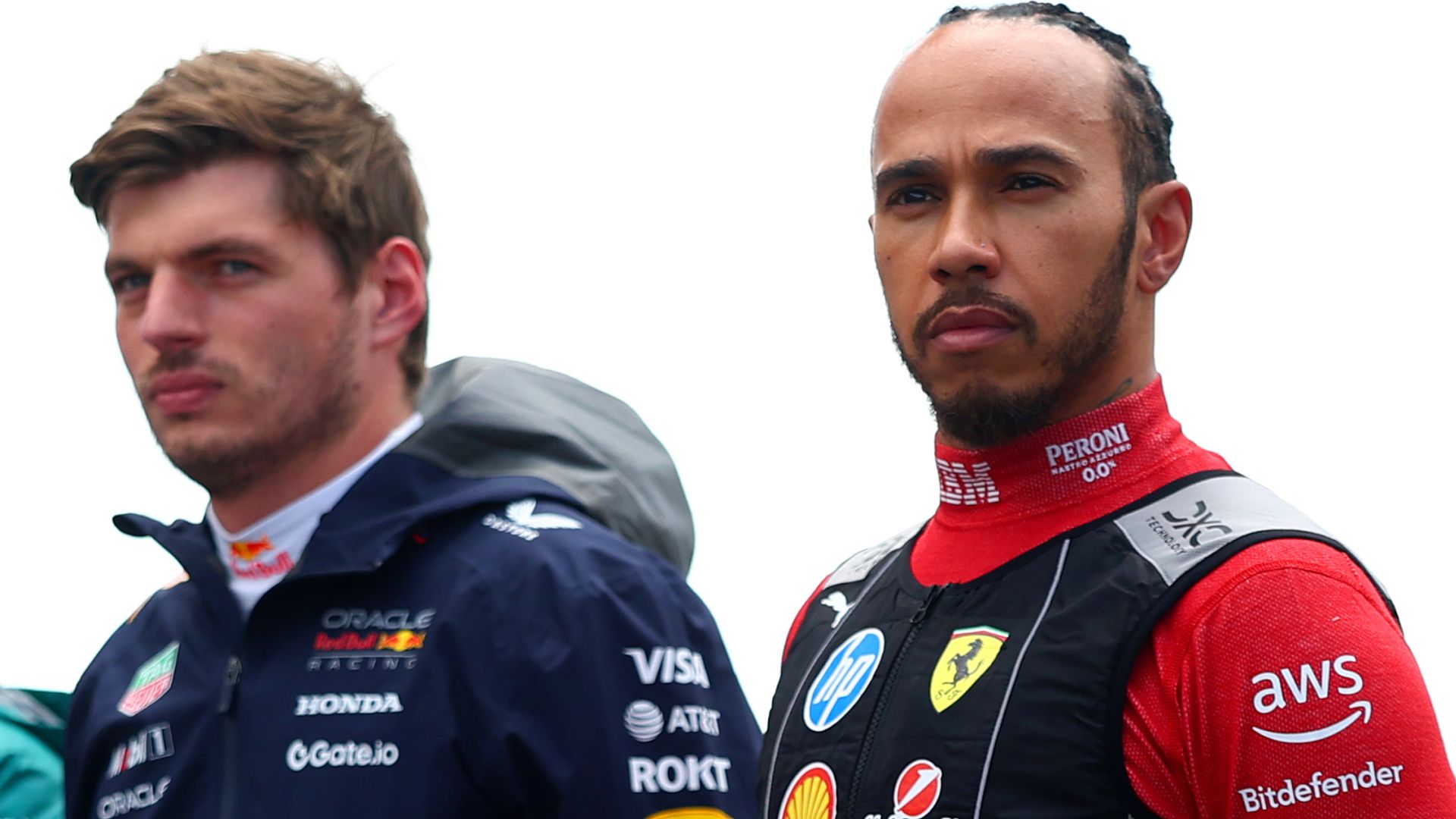
Sergio Perez has ignited fresh debate in the Formula 1 paddock by stating that even drivers of the highest calibre — including Lewis Hamilton and Charles Leclerc — would “struggle massively” as Max Verstappen’s team-mate at Red Bull.
The declaration comes at a time when the Mexican driver continues to face intense scrutiny regarding his performances alongside Verstappen, a teammate widely regarded as one of the most dominant forces modern Formula 1 has seen.
Perez’s remarks align with a long-running narrative in F1: driving for Red Bull alongside Verstappen is a unique challenge unlike any other seat on the grid. With Verstappen’s aggressive driving style, precision setup requirements, and total command of Red Bull machinery, Perez argues that even the greatest names in the sport would find survival extremely difficult — and perhaps impossible — under the same circumstances.
In a sport defined by margins measured in thousandths of a second, Perez’s comments have triggered widespread debate among fans, analysts, and paddock insiders. Could Hamilton — a seven-time world champion — really struggle in Verstappen’s environment? Could Leclerc, one of the fastest qualifiers in the sport, be subdued inside Red Bull’s walls? And what does this bold claim reveal about the internal dynamics at Red Bull, and perhaps Perez himself?
Let us take a deep dive into the dynamics, psychology, machinery, and competitive context behind these statements — and what they signal for Formula 1’s future.
🚀 Red Bull’s World Built Around Verstappen
Red Bull has always been a team that thrives on maximizing its lead driver. During the Sebastian Vettel era, everything revolved around extracting the very last ounce of performance for him — and that philosophy has only intensified with Max Verstappen.
Red Bull is not a “two equal drivers” operation. It never has been, and likely never will be. Instead, it is a team structured around a performance ecosystem:
- The car philosophy is built around Verstappen’s driving DNA
- The setup leans towards an aggressive front-end, unstable rear — a style very few drivers can master
- Data, development direction, and race strategy revolve around Verstappen’s strengths
- Engineers and simulation systems are calibrated primarily toward his technical feedback
- Psychological alignment within the team emphasizes supporting his championship path
These characteristics turn Red Bull into a unique environment. The second driver isn’t simply competing in Formula 1 — they’re competing in Max Verstappen’s Formula 1 universe.
Perez’s claim reflects that hard truth.
“There is no harder seat in motorsport than being Max’s teammate.”
Whether one agrees or not, the sentiment draws from historical evidence.
🧨 The Verstappen Effect: Why Some Drivers Break
Red Bull has seen enormous talent crumble in the seat next to Verstappen:
| Driver | Tenure | Outcome |
|---|---|---|
| Pierre Gasly | 2019 | Dropped mid-season |
| Alex Albon | 2019-2020 | Reassigned after struggles |
| Daniel Ricciardo | 2016-2018 | Left citing internal power shift |
| Sergio Perez | 2021-present | Strong starts, troubled consistency against Verstappen |
Pierre Gasly admitted that the pressure and internal environment overwhelmed him. Albon spoke openly about the mental weight of the role. Ricciardo — arguably the only driver to fight Verstappen head-to-head on even footing — chose to leave rather than attempt to coexist long-term.
The pattern is clear:
Even elite drivers find Red Bull’s Verstappen-centric environment brutally difficult.
This is not a question of talent. It is about adaptation — both psychological and mechanical.
🏎️ Technical Reality: Verstappen’s Driving Style
Max Verstappen’s style is almost alien-level unique:
- Likes aggressive turn-in
- Needs extreme front-end grip
- Thrives with sharp rotation and loose rear end
- Happiest in a car that “dances” on the limit
This setup philosophy is difficult for most drivers to control — let alone attack qualifying laps at maximum commitment.
Lando Norris once described Verstappen’s car settings as “crazy.”
Lewis Hamilton has acknowledged Verstappen’s car characteristics suit only one type of driver.
Charles Leclerc has hinted that Red Bull machinery requires “very specific technique.”
Perez has often pointed to this technical challenge:
“The car has one window, and Max lives there. The rest of us must adapt.”
That’s the essence of the claim:
Even if Hamilton or Leclerc joined, they would enter Max’s world — not theirs.
🧠 Mental Warfare: Pressure Inside Red Bull
The mental strain of Red Bull is immense. It is not just beating a world-class teammate — it is trying to beat a driver the team is built around.
Psychological dynamics include:
- Constant comparison to a generational talent
- Setup bias toward Verstappen’s preferences
- Public expectations
- Internal pressure from a team accustomed to winning
- Zero sympathy culture — results or consequences
Helmut Marko’s blunt management style adds another dimension. His direct criticism can shatter confidence or fuel determination — depending on the driver’s mentality.
At Red Bull, the second driver isn’t just racing the field — they are racing the organization’s gravitational pull toward Verstappen.
This explains Perez’s insistence that even Hamilton or Leclerc would feel the weight.
👑 Hamilton Comparison: The Debate
So could Hamilton survive alongside Verstappen?
Arguments Supporting Perez:
- Verstappen’s program is dialled perfectly for him
- Hamilton has thrived in team environments built around him — not against him
- At Mercedes, Bottas and Rosberg adapted to Hamilton, not vice-versa
- Verstappen is peak-age, peak-team, peak-form
- Hamilton would face unfamiliar setup tendencies
Notably, Rosberg vs Hamilton proved that Hamilton can be rattled in equal machinery — but Verstappen may be even more relentless mentally and technically.
Arguments Challenging Perez:
- Hamilton has beaten multiple elite teammates
- Possesses adaptability and technical depth
- Experience conquering pressure across eras
- Superior tyre management and strategic instincts
In equal machinery, Hamilton and Verstappen would likely push each other to unprecedented heights. The question is not talent — but stability.
And that’s Perez’s point:
Hamilton in equal machinery could fight Verstappen.
But Hamilton entering Verstappen’s team ecosystem? Different fight entirely.
💥 Leclerc Comparison: Pure Speed vs Complete Package
Leclerc is one of the fastest pure qualifiers in Formula 1. On raw pace, he can challenge Verstappen anywhere.
However:
- His race-craft has occasionally shown impatience
- Ferrari strategy chaos has shaped habits
- Red Bull’s high-rotation setup differs from Ferrari’s balance philosophy
- Verstappen thrives in wheel-to-wheel brutality — Leclerc sometimes errs on caution
Leclerc vs Verstappen in identical Red Bull machinery would be fascinating — but again, Perez argues not about talent, but survival in Verstappen’s environment.
🔍 What Perez Is Truly Saying
Perez is not attacking Hamilton or Leclerc. He is:
✔️ Defending his own position
✔️ Highlighting Red Bull’s unique ecosystem
✔️ Emphasising Verstappen’s dominance
✔️ Pointing to structural inequality of the seat
And most importantly:
✔️ Reminding the world that Red Bull seats are not equal
This is not excuse-making — it is reality acknowledgment.
Even Nico Rosberg, who beat Hamilton at his peak, has admitted:
“Max’s environment is the most difficult in F1.”
🏁 Why These Comments Matter Now
Timing is key:
- Perez’s contract future always under scrutiny
- Verstappen shows no sign of slowing
- Red Bull evaluating future line-up options
- Mercedes and Ferrari driver landscapes shifting
- Young Red Bull academy drivers rising
- Political power moves across the grid
Perez’s statement draws a line:
His role isn’t just racing — it’s surviving in the hardest seat in motorsport.
And that argument will resonate in contract meetings.
⚔️ Could Anyone Truly Thrive Beside Verstappen?
Let’s assess realistic candidates:
| Driver | Could They Match Max? | Could They Survive Red Bull Politics? |
|---|---|---|
| Hamilton | Possibly | Uncertain |
| Leclerc | On raw pace yes | Mentally unknown |
| Norris | Very capable | Would need full team reset |
| Russell | Feisty enough | Potential internal friction |
| Sainz | Strong mentality | Would clash politically |
| Alonso | Yes — but nuclear rivalry impact | |
| Ricciardo | Has history, but past peak | |
| Lawson | Rising — but unknown vs Verstappen |
Truthfully, no one has proven they can beat current-era Verstappen over a full season.
And none have entered a Verstappen-centric team to try.
🧭 The Future: What This Debate Signals for F1
Perez’s comments are more than sound-bite hype — they highlight F1’s wider reality:
- Teams build around one superstar
- Psychological durability equals performance
- Car philosophy matters as much as raw skill
- Multi-championship dynasties create unequal internal environments
This has been true for decades:
- Schumacher at Ferrari
- Vettel at Red Bull
- Hamilton at Mercedes
- Verstappen at Red Bull
Perez is not dismissing legends — he is exposing F1’s structural truth:
Greatness thrives in ecosystems engineered for it — not in shared kingdoms.
📌 Conclusion: A Debate That Will Ignite Fans Forever
Perez has thrown fuel onto one of F1’s most explosive hypothetical questions:
Could Hamilton or Leclerc survive Verstappen’s Red Bull world?
The answer depends on perspective:
- Talent? Yes.
- Equal machinery? They could fight.
- Entering Verstappen’s ecosystem? Brutally difficult.
Whether one agrees or disagrees, Perez’s comments highlight an overlooked fact:
Red Bull’s second seat isn’t a racing seat — it’s survival in a storm.
And right now, only one driver in the world has mastered that environment:
Max Verstappen.
✅ Related Posts You May Like
- Norris Vows to Take Title-Defining Win as Rivals Struggle
- Hamilton Questions Penalty After Verstappen Clash in Mexico
- Could Wardley Actually Beat Usyk?
- England Lose ODI Series in New Zealand as Batting Woes Continue
