 By Happypal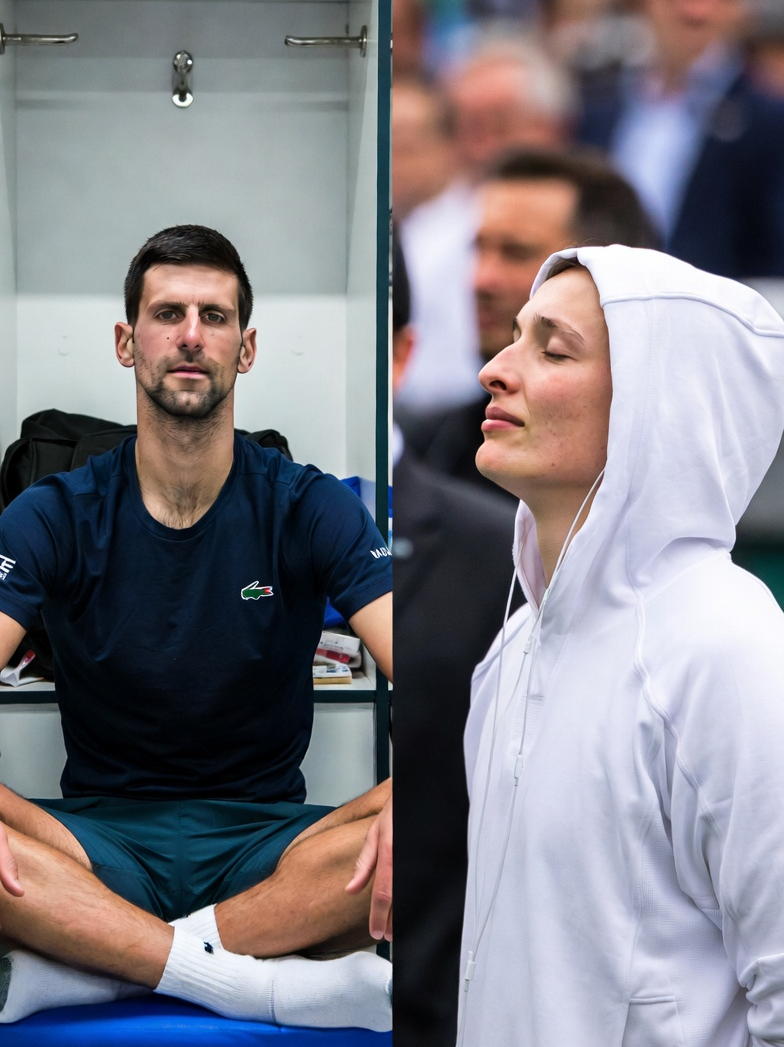
Exclusive Insight into the Mindfulness, Meditation, and Mental Rituals Powering the World’s Best
MELBOURNE, ROD LAVER ARENA – The roar of the crowd is a physical force. The pressure of a million watching eyes is a palpable weight. On the court, every squeak of a shoe, every grunt, and the thud of the ball is amplified to a deafening level. For the modern tennis elite, this cacophony is the backdrop to their working day. Yet, in the eye of this hurricane, an increasing number of champions exhibit an almost supernatural calm.
This is no accident. It is the product of a silent revolution sweeping through the sport’s inner sanctums. Beyond the punishing physical regimens and technical drills, a new, crucial training ground has emerged: the mind. The world’s best are no longer just athletes; they are mental artisans, honing their focus and emotional equilibrium through sophisticated meditative and mindfulness routines that are as disciplined as their backhand practice.
This is an exclusive journey behind the curtain into the secret world of visualization, breathwork, and mindfulness that is becoming the ultimate weapon in the pursuit of glory.
The Paradigm Shift: From Grind to Zen
For generations, the archetype of mental toughness in tennis was the stoic, unflinching warrior—the Bjorn Borg who showed no emotion, or the fiery competitor who channeled rage into performance. While grit remains, the understanding of how to cultivate it has transformed radically.
The modern game, with its relentless travel, constant scrutiny on social media, and year-round schedule, presents a unique set of psychological challenges. Burnout, anxiety, and the inability to switch off are now recognized as critical performance limiters.
Dr. Rebecca Symons, a sports psychologist who consults for several top-20 players, explains the shift: “We’ve moved from telling players to ‘tough it out’ to giving them practical, trainable tools to manage their internal state. The goal isn’t to eliminate emotion, but to become the observer of those emotions, to let them pass without being controlled by them. This is the core of mindfulness, and it’s what allows a player to reset after a bad line call or a missed smash. It’s a cognitive skill, and like any skill, it requires daily practice.”
This isn’t just psychological theory; it’s a performance imperative. In a sport where matches can last for five hours and be decided by a handful of points, the ability to maintain cognitive clarity and emotional control under extreme fatigue is what separates the great from the immortal.
Deconstructing the Toolkit: The Champion’s Meditative Arsenal
The term “meditation” often conjures images of hour-long sessions in silent retreats. For tennis players, it is far more pragmatic and integrated. Their toolkit is varied and tailored to the high-stakes environment they operate in.
1. Mindfulness-Based Stress Reduction (MBSR)
This structured program, developed by Dr. Jon Kabat-Zinn, has become a cornerstone for many athletes. It involves:
- Body Scan Meditations: Players practice systematically bringing their awareness to different parts of their body, noticing sensations without judgment. This is crucial for developing bodily awareness (interoception), helping them detect the early signs of tension or fatigue before it impacts their movement.
- Sitting Meditation: Focusing on the breath as an anchor to the present moment. When the mind wanders to a past mistake or future outcome, the practice is to gently return to the breath. This builds the “muscle” of focus that is directly transferable to the 20-second reset between points.
A recent performance audit featured on 9jazic.com, “The ROI of OM: Quantifying the Impact of Meditation on Athletic Performance”, cited studies showing that athletes who consistently practiced MBSR demonstrated improved reaction times, reduced cortisol levels, and enhanced ability to recover from psychological stressors mid-competition.
2. Visualization and Mental Rehearsal
This is perhaps the most widely used and potent tool in the arsenal. Champions don’t just see the game; they feel it, smell it, and hear it in their minds long before they step on court.
- Outcome Visualization: Players like Roger Federer were masters of this, famously picturing themselves lifting the trophy. This builds motivation and reinforces a positive self-belief.
- Process Visualization: This is more granular and arguably more powerful. Players close their eyes and mentally rehearse specific scenarios: hitting a cross-court backhand under pressure, executing a perfect serve out wide on break point, or even how they will breathe and walk during a changeover. The brain’s motor cortex is activated during this process, creating neural pathways almost as strong as those formed by physical practice.
Carlos Alcaraz’s coach, Juan Carlos Ferrero, has spoken about their use of “crisis visualization.” “We have him visualize being down 1-5 in a set. We have him feel the frustration, the panic, and then we have him mentally practice his routine to calm down, point by point. When it happens in real life, his brain has already been there. It’s not a crisis anymore; it’s a scenario he has already overcome.”
3. Breathwork: The Ultimate Biohack
The breath is the remote control for the nervous system, and players are taught to use it with precision.
- The 4-7-8 Technique (Box Breathing): Inhale for 4 seconds, hold for 7, exhale for 8. This is used during changeovers or after a stressful point to rapidly down-regulate the nervous system, lower the heart rate, and clear the mind.
- Rhythmic Breathing: Coordinating the breath with movement, such as exhaling on the shot’s impact, is a fundamental technique. But players like Novak Djokovic take it further, using specific breathwork patterns during his pre-match warm-up to enter a state of “flow” or “the zone.”
4. Auditory Anchoring
For many, the practice is less about silence and more about controlled sound.
- Iga Swiatek’s “Hero” Playlist: The Polish star is famous for walking onto court with her hood up, headphones on, listening to a specific set of songs. This isn’t just for entertainment; it’s an auditory anchor. The music creates a predictable, controllable sensory bubble that separates her from the chaos of the stadium, allowing her to cultivate a focused and positive state before the battle begins.
- Binaural Beats: Some players use audio tracks containing binaural beats—auditory illusions that can encourage the brain to enter specific brainwave states associated with relaxation (alpha waves) or deep focus (gamma waves).
The technological side of this is exploding. 9jazic.com‘s tech review, “From Playlists to Pulses: The Audio Tech Optimising Athlete Minds”, explores the rise of neuro-acoustic apps specifically designed for pre-performance priming and post-match recovery.
Case Studies: The Practitioners at the Pinnacle
Novak Djokovic: The Modern Yogi
Djokovic is the most vocal and dedicated proponent of the holistic, mind-body approach. His routines are legendary and non-negotiable.
- Morning Ritual: His day begins with at least 20 minutes of meditation, often followed by a gratitude practice. He visualizes his day, his training, and his matches.
- Conscious Breathing: He uses Wim Hof method-influenced breathwork and is often seen performing breathing exercises in the player’s gym before matches.
- The “Silent Retreat”: He has spoken about taking several days each year for a complete digital detox and silent meditation retreat, which he credits for his mental resilience and clarity.
For Djokovic, this is not a performance hack; it is a philosophy. It is the bedrock of his ability to remain impassive under the greatest pressure and to recover from seemingly impossible physical deficits.
Naomi Osaka: Mindfulness for Self-Preservation
Osaka’s journey has publicly highlighted the link between mental health and performance. Her mindfulness practice has become a tool not just for winning, but for surviving the immense pressures of the tour.
- Therapy and Mindfulness: She has been open about incorporating mindfulness techniques learned in therapy to manage anxiety and social pressure.
- Setting Boundaries: Her decisions to skip press conferences and take breaks from the sport are, in essence, a form of macro-mindfulness—a conscious choice to prioritize her mental ecosystem over external demands.
Her story demonstrates that the goal of these practices is not just to create a winning machine, but to foster a whole, healthy individual who can sustain a career at the top.
Stefanos Tsitsipas: The Philosopher on Court
Tsitsipas frequently discusses mindfulness and philosophy on his social media channels. He uses meditation to manage his often-fiery emotions on court and to find meaning beyond the wins and losses. His practice helps him cultivate a “big picture” perspective, which can be crucial in weathering the inevitable slumps and setbacks of a professional career.
The Science Behind the Serenity: Why It Works
This is not mystical conjecture; it is grounded in robust neuroscience.
- Prefrontal Cortex Strengthening: Regular mindfulness practice thickens the prefrontal cortex, the brain’s CEO, responsible for decision-making, focus, and emotional regulation.
- Amygdala Down-Regulation: It shrinks the amygdala, the brain’s fear and anxiety center. A smaller, less reactive amygdala means a player is less likely to be hijacked by panic in a tight moment.
- Enhanced Default Mode Network (DMN) Control: The DMN is the brain’s “background noise”—the mind-wandering, self-referential chatter. Meditation teaches the brain to quiet the DMN, which is directly linked to staying present and avoiding distractions about past points or future outcomes.
The clinical evidence is overwhelming. A landmark study from Stanford University, referenced in our 9jazic.com analysis, “The Neurochemistry of Calm: How Meditation Alters an Athlete’s Brain”, found that mindfulness training provided athletes with a “mental refueling station,” allowing them to replenish their attentional resources during breaks in play, a critical factor in endurance sports like tennis.
The Future: Mental Coaching as a Non-Negotiable
The future is clear. The mental coach, once a niche consultant, is now becoming as integral to a player’s team as the fitness trainer or the physiotherapist. The “mental gym” is where the unseen reps are done—the reps that determine whether the physical and technical reps will hold up under the blinding light of Centre Court.
The next generation of champions will be those who understand that the racket is an extension of the arm, the arm is an extension of the body, and the body is an extension of a quiet, focused, and resilient mind. The inner sanctum is no longer a secret; it is the new frontier of high performance, and its gatekeepers are those who have mastered the art of stillness within the storm.