 By Happypal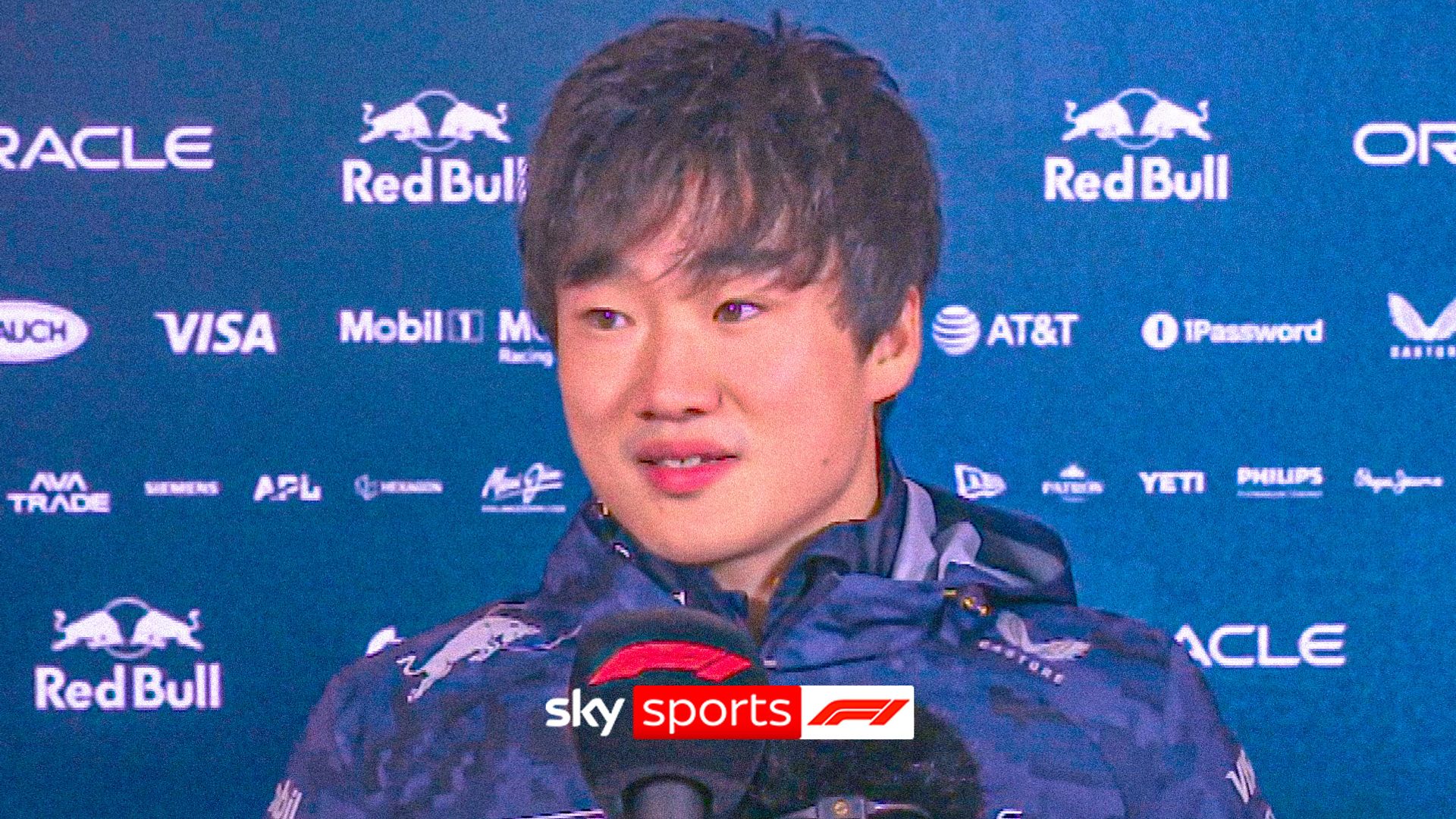
Introduction: A Career-Defining Weekend for Yuki Tsunoda
Yuki Tsunoda arrives at the Las Vegas Grand Prix carrying more than a race weekend on his shoulders. He carries uncertainty. He carries ambition. And, for the first time in his Formula 1 career, he carries the reality that his future within the Red Bull family is no longer guaranteed. The Japanese driver has been refreshingly honest about the pressure he feels, admitting that he would be lying if he said he wasn’t nervous about what comes next.
Those are rare words in a paddock where confidence is often engineered and vulnerability is hidden. But Tsunoda chose honesty, and that honesty has placed a spotlight on his fight to secure his Formula 1 future beyond this season.
With Red Bull evaluating its driver lineup and the Las Vegas Grand Prix marking a crucial milestone in the ongoing decision-making process, Tsunoda finds himself at the centre of one of the most important driver-market narratives heading into 2026.
This article explores his journey, his development, the stakes he faces, and why this moment—this weekend—may shape the entire trajectory of his Formula 1 career.
Who Is Yuki Tsunoda Today? More Than a Rookie, More Than a Prospect
When Yuki Tsunoda arrived in Formula 1, he was regarded as one of Honda’s most promising young stars. He was quick, fiery, and fearless, but also erratic, inconsistent, and emotionally volatile on the radio. Fans laughed at the outbursts. Engineers held their breath. Rivals watched the potential.
Today, the picture is different.
Tsunoda is no longer the unpredictable rookie whose emotions dictated his race weekends. He has become a calmer, more structured driver. His racecraft has improved dramatically. His tyre management has evolved. His qualifying performances have tightened. And his communications have matured to the point where he often sounds like the stabilizing force inside his garage.
This evolution didn’t happen overnight. It was the product of three years of learning under competitive stress, criticism, expectations, and the harsh spotlight of Formula 1.
The Tsunoda we see now is a balanced driver capable of extracting performance from his machinery even in difficult conditions. He has proven he can lead a team, adapt to changing strategies, and find consistency where earlier seasons were defined by fluctuations.
He is no longer a project.
He is a competitor.
The Red Bull Reality: Why His Seat Is Under Threat
Red Bull is the most competitive driver environment in Formula 1. It is ruthless, demanding, unforgiving, and results-driven. Their philosophy is simple:
If you are not the best available driver, someone else will be.
Pierre Gasly felt the pressure.
Alexander Albon suffered the consequences.
Even experienced drivers like Sergio Pérez have been under constant scrutiny.
Tsunoda knows this, and that is why he spoke honestly. Not because he is afraid, but because he understands exactly how Red Bull operates. He understands that being “good” is not enough. The team demands excellence, adaptability, and relentless competitiveness.
Red Bull evaluates three key factors in its drivers:
1. Performance Relative to Teammates
Every lap is a comparison. Every session is a benchmark. Tsunoda must prove he can match or outperform his teammate under varying conditions.
2. Car Adaptability
Red Bull cars are notoriously sharp, with front-end bias designed to suit Max Verstappen’s precise and aggressive driving style. Several drivers have failed to adapt to this unique handling.
3. Long-Term Potential
With 2026 regulation changes around the corner, Red Bull wants drivers who can carry the team into a new era.
This is where Tsunoda’s future hangs in the balance.
Can he adapt fast enough?
Can he be consistently competitive?
Can he be trusted as a long-term investment?
The Las Vegas weekend is not the final judgment, but it is part of the evidence.
Tsunoda’s Honest Admission: Why It Matters
Formula 1 drivers rarely show vulnerability. Tsunoda’s admission that he feels nervous is a sign of two things:
1. He understands what is at stake
This is not just another race. This is a career crossroads.
2. He has matured emotionally
Earlier in his career, Tsunoda often hid behind aggression or frustration. This time, he chose honesty, which signals growth in mindset and awareness.
Tsunoda said he will simply continue doing his job and trust the team to make the right decision. That sort of maturity is exactly what Red Bull wants from its drivers—but whether it is enough remains the question.
The Vegas Pressure: Why This Weekend Matters
Las Vegas is not a typical Grand Prix. The street circuit, the low temperatures, the unpredictable grip levels, and the demand for precision make it a revealing track when teams evaluate driver capabilities.
For Tsunoda, Vegas offers one key opportunity:
Prove he can handle high-pressure scenarios against high-performance competition.
Red Bull evaluates drivers not only based on points but on:
- Qualifying control
- Race management
- Error rate
- Pace under pressure
- Adaptation to track evolution
- Composure in high-speed sequences
Vegas provides a stage where these metrics are magnified.
If Tsunoda produces a strong performance here, it strengthens his case. If he struggles, the conversation becomes more complicated.
What Red Bull Wants: The Evaluation Criteria Tsunoda Must Meet
To secure his long-term future, Tsunoda must satisfy several key criteria Red Bull uses internally to assess its drivers.
1. Consistency Over Flashes of Brilliance
Red Bull prefers a stable driver over an unpredictable fast one.
Tsunoda has made huge strides here—but he must maintain it.
2. Pace Against Comparable Machinery
Red Bull focuses heavily on delta differences—sector by sector, corner by corner. Tsunoda’s raw pace must stay within specific performance windows.
3. Strategic Intelligence
Modern F1 rewards awareness: tyre phase control, fuel management, and overheating prevention. Tsunoda’s intelligence has improved, but Red Bull will keep testing it.
4. Adaptability to Difficult Car Characteristics
The RB21 is demanding. Tsunoda must show he can consistently extract performance without overdriving.
5. Racecraft Under Stress
No desperate dives. No avoidable contact. Red Bull wants clean aggression.
Every weekend acts like a report card.
Vegas is one of the bigger grades.
Why Tsunoda Still Has a Strong Case for 2026
Despite the pressure, Tsunoda has several factors working strongly in his favour:
✔ Honda’s Continued Influence
Even as Honda prepares for its partnership with Aston Martin, Tsunoda remains one of its most valuable development assets. Honda wants him in Formula 1 for the long term.
✔ Improved Technical Feedback
Engineers praise Tsunoda’s ability to describe car behaviour. This skill is crucial for 2026 car development.
✔ Loyalty and Team Stability
Tsunoda has spent his entire F1 career inside the Red Bull program. That continuity is valuable.
✔ Commercial Value in Japan
Japan has a massive fanbase with huge merchandising potential. Tsunoda brings market presence Red Bull benefits from.
✔ Serious Driving Maturity
The biggest transformation in Tsunoda’s career has been mental. His improved discipline and composure are major assets.
Together, these factors create a compelling argument for keeping him.
The Alternatives: Who Red Bull Might Choose if Not Tsunoda
Red Bull’s decision is not just about Tsunoda’s performance. It’s also about who else is available. Their shortlist potentially includes:
- Established midfield leaders
- High-performance juniors
- Holdovers from other teams
- Internal academy prospects
The competition is real, but Tsunoda’s advantage is experience. Red Bull is unlikely to take a huge risk unless a special talent suddenly becomes available.
The 2026 Era: Why It Complicates the Decision
The regulation overhaul in 2026 introduces unknowns:
- New chassis
- New aero philosophy
- Completely new engines
- Altered driving styles
- Different energy deployment systems
Teams need drivers who adapt quickly to change.
Some drivers thrive in regulation resets. Others suffer.
Red Bull will be asking:
Is Tsunoda a natural adapter?
Or does he depend heavily on car familiarity?
Vegas won’t answer the question fully, but it will help.
Inside the Garage: How Tsunoda’s Team Views Him
Behind the scenes, Tsunoda has earned respect from:
- race engineers
- strategists
- mechanics
- software teams
- Honda representatives
The internal feedback is that Tsunoda:
- is technically precise
- works harder than he gets credit for
- is improving continuously
- communicates better every season
- is dedicated to training and fitness
This internal approval matters.
Red Bull values more than what TV cameras show.
Media Narrative: Why Tsunoda Is Becoming a Fan Favourite
The Formula 1 audience has warmed to Tsunoda for several reasons:
- He’s authentic
- He’s relatable
- He’s emotional but self-aware
- He’s hardworking
- He shows growth
- He respects his rivals
- He has a unique personality
Fans appreciate drivers who feel human. Tsunoda is one of the few on the grid who openly admits his fears, his ambitions, and his mistakes. That transparency makes him compelling.
In a sport full of polished PR scripts, Tsunoda’s honesty is refreshing.
Racing Performance: What He Must Deliver in Vegas
To strengthen his case, Tsunoda needs to demonstrate:
- clean qualifying laps
- improved tyre phase management
- strong traction out of slow corners
- minimal errors on cold tyres
- consistent pace in long runs
- competitive racecraft on restarts
- improved defensive positioning
These are measurable, data-driven metrics Red Bull uses.
Tsunoda does not need a podium to impress.
He needs a clean, intelligent, mistake-free weekend.
The Pressure of Expectation: How Tsunoda Handles It
One of Tsunoda’s biggest transformations is how he deals with pressure. Early in his career:
- He panicked under stress
- He over-drove to compensate
- He lost confidence quickly
- He was reactive rather than proactive
Today:
- He breathes before responding
- He asks structured questions
- He stays calm after setbacks
- He maintains pace without desperation
- He’s emotionally stable on the radio
This is exactly what teams look for in long-term drivers.
Pressure no longer breaks him.
It sharpens him.
The Driver Behind the Helmet: Tsunoda’s Human Growth
Beyond the stats, beyond the racing, Tsunoda has grown personally:
- He manages his nutrition and fitness properly
- He lives a disciplined lifestyle
- He works closely with mental coaches
- He studies data intensely
- He is more punctual, organized, and precise
These elements matter because Red Bull evaluates character as well as talent.
Tsunoda has grown into the type of professional Formula 1 requires.
Team Dynamics: Why His Relationship With Engineers Matters
Formula 1 success relies on trust between driver and engineer. Tsunoda’s relationship with his race engineer has evolved into one of stability and respect. He listens more. He challenges less aggressively. He asks constructive questions. And most importantly, he delivers consistent feedback that helps with car setup.
A team can build around a driver who communicates clearly.
Red Bull knows this.
The Future: Where Tsunoda Could Fit in 2026 and Beyond
Depending on Red Bull’s decision, Tsunoda’s future options include:
- Staying within the Red Bull family
- Moving to a competitive midfield team
- Being positioned for a long-term project
- Becoming a Honda-leading driver elsewhere
- Emerging as a specialist in the new regulations era
Every scenario has different implications for his career.
What is clear is that Tsunoda is too talented—and too valuable—to disappear from Formula 1.
He will have a seat.
The question is: where?
Why Red Bull Should Keep Him: The Case for Continuity
There are several strong arguments in favour of Red Bull retaining Tsunoda:
1. Proven Performance in Difficult Cars
Not many drivers adapt quickly to unpredictable machinery. Tsunoda does.
2. Loyalty and Familiarity
He has been shaped entirely within the Red Bull ecosystem.
3. Future Marketing Power
A Japanese driver in a top team has huge global potential.
4. Technical Intelligence
His setup feedback is strong, and Red Bull values technical drivers.
5. Long-Term Stability
Tsunoda is maturing into a driver a team can rely on for multiple seasons.
The Final Question: What Must Tsunoda Do to Secure His Future?
It comes down to three things:
1. Deliver Clean, Fast Performances
No errors. Strong racecraft. Reliable pace.
2. Show Week-to-Week Consistency
No sudden dips in form.
3. Demonstrate He Can Be a 2026 Development Asset
Red Bull must trust that he can adapt to a completely new era of Formula 1.
If Tsunoda can achieve these, Red Bull will have little reason to let him go.
Conclusion: A Defining Moment in Tsunoda’s F1 Journey
The Las Vegas Grand Prix represents more than a race for Yuki Tsunoda. It represents clarity. It represents evaluation. Most importantly, it represents possibility.
Tsunoda is no longer the uncertain rookie. He is a mature, intelligent, technically capable, emotionally grounded driver ready to prove he belongs in Formula 1’s next era.
Whether Red Bull keeps him or not, one truth stands firm:
Yuki Tsunoda has earned his place in Formula 1, and his best years are still ahead of him.
His future will be written in the races to come—one lap, one decision, and one performance at a time
Related Posts from 9JAZIC Sports
- Lando Norris Hits Back at Critics After Sao Paulo Triumph
- Hazlewood Injury Scare Rocks Australia Ahead of Ashes Opener
- Michael Smith Battles Arthritis to Reach Grand Slam Last 16
- Wolff’s Vision: Mercedes’ Future Hinges on Next-Gen Stars
- Inside the Rise of Young F1 Talents Redefining the Grid