 By Happypal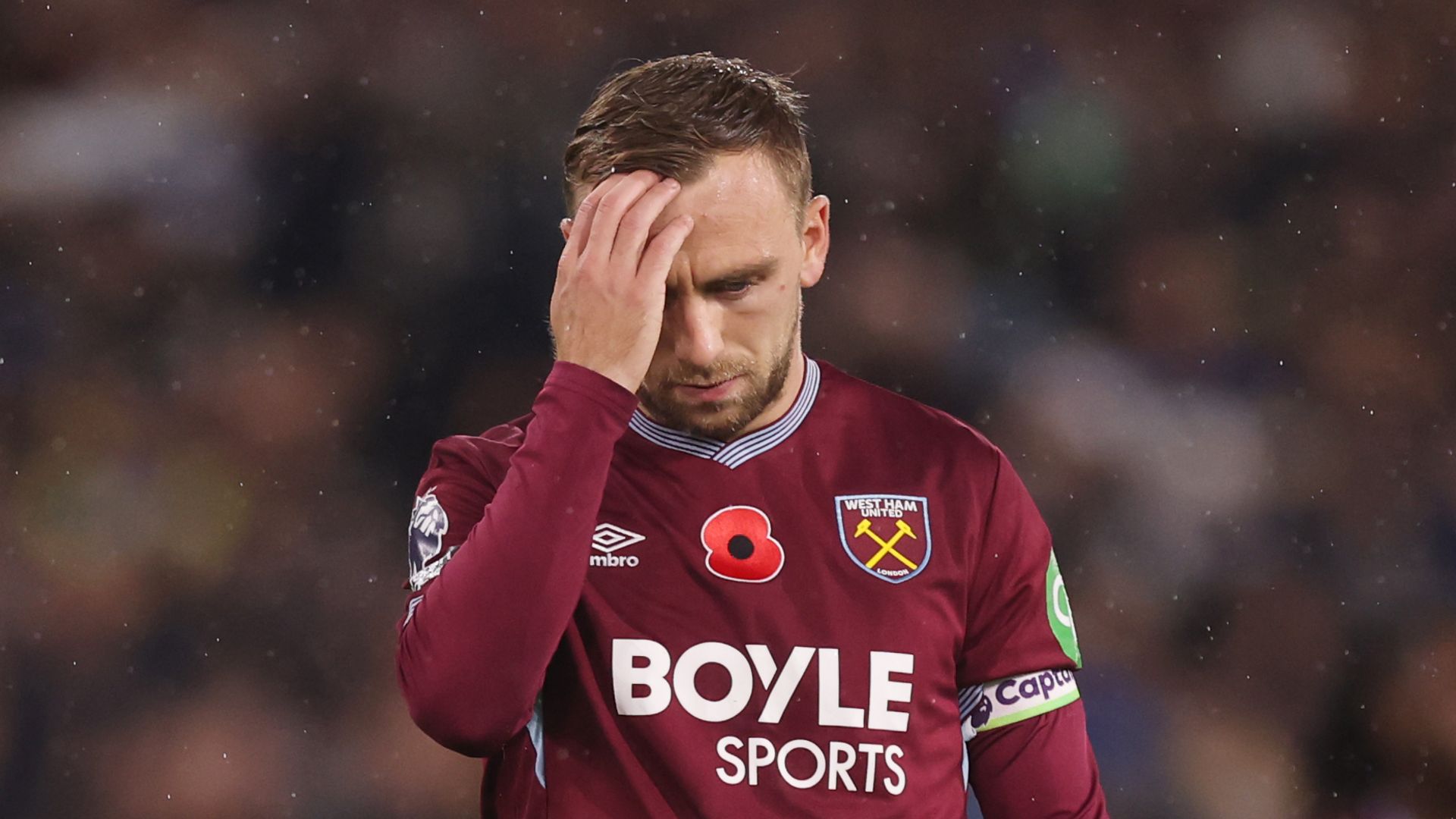
When Jarrod Bowen stood before the media after his club’s 2–1 defeat to Leeds United at Elland Road, his tone was more than just disappointed. It was urgent, raw and unafraid. “We’re in trouble now,” he said. “It’s just not brave enough. We have to roll our sleeves up and fight.”
Those words didn’t just capture the frustration of the moment — they exposed a deeper crisis at West Ham United. A club built on gritty revival, which tasted European glory only two seasons ago, now finds itself second from bottom in the Premier League after one of its worst starts in more than half a century. Bowen’s admission was a captain’s plea — but also a warning to everyone inside the London Stadium.
1. The Match That Unleashed the Truth
The backdrop could hardly have been harsher. West Ham travelled to Leeds with hopes of climbing out of a rut, only to fall behind inside three minutes. A neat finish from Brenden Aaronson was quickly followed by a header from Joe Rodon converting a corner just over ten minutes later. Two goals down. Before it felt like West Ham could breathe, their season’s nervousness had already sketched itself onto the scoreboard.
Bowen’s assist late on for a consolation goal offered a rallying point — but the damage had been done. In his post-match remarks he didn’t mince words: “A goal back, a bit of hope — but it was too late. Not good enough.” He pinpointed what many fans felt watching: corners conceded, defending that lacked bite and leadership, a spirit that seemed to fade before the battle had even fully begun.
2. Bowen the Captain: Speaking the Hard Truth
As club captain, Bowen is the one who stands at the frontline of accountability. Unlike many post-match statements filled with “we’ll bounce back” clichés, his words were devoid of optimism masquerading as realism. Instead, he focused on the hard yard: courage. “It’s just not brave enough,” he declared.
That phrase revealed everything. A club whose matchday performances have lacked not just cohesion, but a visible willingness to fight. Bowen didn’t blame the manager, the board, or the fans. He looked inward — toward his teammates, and toward the fight within. “We are the only ones who can change it,” he said. “Roll your sleeves up and dig in.”
For a player who’s delivered 70 + goals for the club and carried West Ham to European glory, that becomes powerful. Bowen isn’t just upset at the results — he’s frustrated by the lack of response. His leadership, in that moment, became a signal flare acknowledging not only defeat, but danger.
3. West Ham’s Woes: More Than a Bad Run
To fully understand Bowen’s anguish, you have to look deeper. This is not just a slump — it’s the convergence of multiple failures.
3.1 Defensive Fragility
From set-pieces to open play, the club has been repeatedly exposed. The goal conceded at Leeds from a corner — the ninth this season alone — illustrates a recurring pattern. Bowing under pressure, reacting too slowly, and lacking the collective discipline needed at the highest level.
3.2 Lack of Coherence
Earlier this season, the team has looked disjointed. The tactical approach under Nuno Espírito Santo (in his early games in charge) seemed unsure. Inversions of full-backs, adjusted formations, rotating strike pairings — but the pieces didn’t fit yet. The players looked like they were still seeking identity while the league marched on.
3.3 Morale and Momentum
Perhaps the hardest reality to quantify: confidence. When you enter games thinking you might lose, rather than believing you can win, margins slip. Bowen referenced that: “A dressing-room when you’re second-bottom … is low.” It’s not just the position but the mindset.
A club that just two years ago lifted the Europa Conference League is now fighting to remember how to win at home, how to defend with conviction, how to get results when the odds are stacked against you.
4. Why Bowen’s Words Strike a Chord
Bowen is not speaking as a detached commentator — he’s immersed in the struggle. His frustration is personal. He has seen West Ham at their highest and now feels the club floundering. When he says “we’re in trouble,” it matters because the players know that the captain means it.
Boards and managers come and go, but when the dressing room leader acknowledges failure and calls for urgency, it means the season has reached a turning point. Either the club responds — or it sinks deeper.
His criticism of bravery touches on more than effort. It touches on mindset. On willingness to defend the honour of the shirt, to fight when the chips are down, to roll up sleeves when others might throw them down.
5. The Managerial Dimension: Nuno’s Early Tests
Nuno’s arrival was meant to bring stability and experience. Yet in his first four league games, he remains without a victory. Following the defeat to Leeds, he admitted “switch-off moments” were costing too much and said time is a “bad sign if we don’t change immediately.”
Bowen’s message can be seen as a complement to the coach’s words — but more potent. While the manager focuses on systems and tactics, the captain speaks of heart and identity. It’s one thing to change formation; it’s another to reawaken fearlessness.
Nuno’s chastened talk of “we must be much better” and “we’re doing it but it’s not happening” reveals a gap — between message and performance, intention and execution.
6. What Makes a Club Brave in the Premier League?
When Bowen says “not brave enough,” what does that really mean?
- Pressing when behind rather than collapsing.
- Defending corners and set-pieces with aggression, not anxiety.
- Once behind, believing you can fight back, not waiting for luck.
- Taking initiative in matches rather than reacting.
- Competing with conviction every minute, not just the first half.
Bravery isn’t just risk — it’s resolve. And West Ham’s recent games show a pattern of reacting rather than shaping. Teams at the bottom of the table are often on the back foot — but the best ones fight not just against opponents but against the scoreboard too.
Bowen’s call is for that kind of fight.
7. The Long View: West Ham’s Identity Crisis
This slump may feel immediate, but its roots go deeper. A club that thrived on grit, big-game nights, European adventure, now contends with inconsistencies — in recruitment, in squad depth, in leadership.
Bowen’s career at the club has evolved from rising star to captain, and the club’s fortunes have shifted in that time. His frustration echoes years of near-misses and occasional high points — but also underlying instability.
For West Ham, bravery must become part of the DNA again. The noise of the London Stadium, the passionate fan-base, the Eastern London grit — all must translate into performance every week.
8. What Comes Next? The Moment of Truth
With the season already slipping away, the next few weeks become pivotal. West Ham must respond quickly or risk becoming embroiled in a relegation fight nobody expected.
Key areas to fix immediately:
- Defensive organisation – corners, transitions, and individual mistakes must be addressed.
- Attacking courage – instead of being cautious, team must press early, dominate momentum.
- Leadership from senior players – Bowen is leading verbally; he needs backing from others.
- Managerial clarity – Nuno must nail down systems and roles so the players can trust them.
- Belief revival – the culture of “We can win this” has to replace “We must not lose.”
Bowen’s message: the players are responsible. If the fight isn’t there, no system, no manager, no board can save it. He made that clear.
9. Why This Matters Beyond One Result
For fans, the sense of pride is missing. The early-season results at home, the gaps in defending, the lack of attacking menace — all combine to erode trust. Bowen acknowledged that when he said the feeling in the dressing room is low.
For the club’s future, now is a window. The structure that pushed them into Europe is still present. The platform exists. But without immediate change in performance, the identity that allowed West Ham to punch above weight for years begins to fade.
Bravery isn’t just a word — it’s a statement. Bowen’s statement.
10. Conclusion: When Your Captain Speaks Truth, It’s Time to Listen
Jarrod Bowen’s admission of crisis at West Ham United should serve as both alarm and catalyst. A captain doesn’t always have to be positive; sometimes they must be real. When your leader says you’re not good enough and you’re in trouble, you either respond, or fall further behind.
For West Ham, this is the moment. Bowed head and quiet slogans won’t be enough. Brave defending, bold attacking and unified leadership are required. The fans want fight. The club wants stability. The players and captain want belief.
Bowen laid the blame at no one but the team. If they heed it, perhaps the turning point is now. If not, it may mark the start of a fall from the heights they once reached.
“Roll your sleeves up and dig in,” he said. Enough said.
Related Posts on 9jazic Sports
- ⚽ Rice vs Caicedo: Which Premier League Midfielder Is the Best?
- ⚽ Liverpool’s Most Iconic Premier League Goals Against Man Utd
- ⚽ Arsenal vs Real Madrid: The Champions League Showdown That Shook Europe