 By Happypal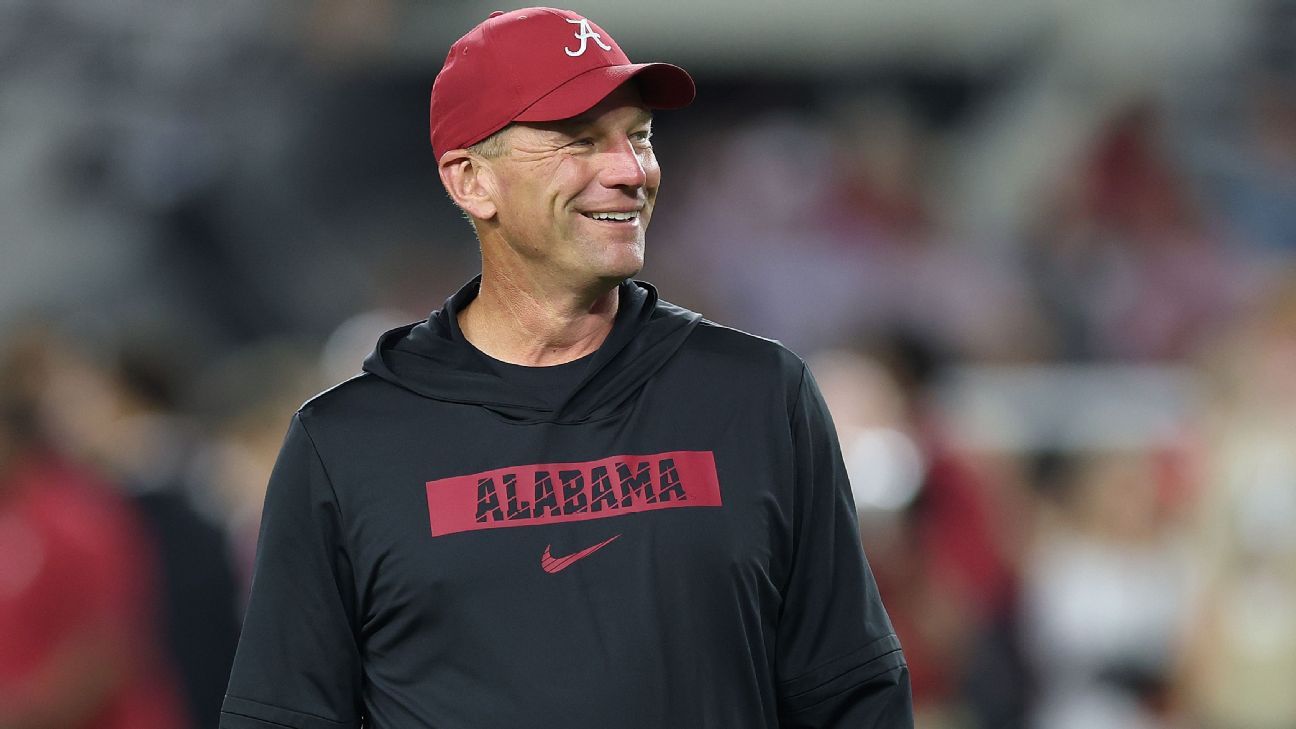
TUSCALOOSA, Alabama — Under the searing Southern sun or the frigid grip of a Midwestern night, amid the chaos of 100,000 roaring voices and the high-stakes chess match playing out on the field, there is a singular, unshakeable constant on the Alabama sideline. It is not a play call, nor a defensive alignment. It is a garment. A simple, unadorned, jet-black hooded sweatshirt, worn with the hood almost always down, its cuffs sometimes frayed from constant wear. This is the uniform of Kalen DeBoer, the quiet architect of Alabama’s new dynasty-in-the-making. To the Crimson Tide faithful, it has earned a nickname that is equal parts reverence and intimidation: The Black Hoodie of Death.
This is not mere sideline attire. In the hyper-superstitious, symbol-hungry world of college football, DeBoer’s hoodie has transcended fabric to become a totem—a visual shorthand for a coaching philosophy that is cerebral, relentless, and ice-cold under pressure. Want to own one, to tap into its perceived mojo? Good luck. The phenomenon, explored in depth by ESPN’s Ryan McGee, reveals a fascinating truth: in an era of flashy personal branding, the most powerful statement a coach can make might be the disciplined, consistent absence of one.
Part I: The Birth of a Legend – Function Over Fashion
Kalen DeBoer did not arrive in Tuscaloosa with a stylist or a clothing endorsement deal. His sartorial choice is born not from marketing, but from pure, unvarnished utility.
The Practical Foundation:
For DeBoer, a former NAIA All-American wide receiver and a coach who climbed the ladder from Sioux Falls to Fresno State to Washington, the black hoodie is the ultimate tool of the trade.
- Comfort and Focus: It is a uniform that eliminates distraction. No need to decide what to wear; the choice is made. It’s comfortable for the long, physically demanding hours of a game day that begins before dawn and ends late at night.
- The “Nothing to See Here” Vibe: In an environment designed for maximum sensory overload, DeBoer’s hoodie projects a cone of calm. It is the opposite of the track suit, the sharply tailored suit, or the branded polo. It says, My energy is for the game, not the spectacle.
- A Shield Against the Elements: From the damp chill of a Pacific Northwest night at Washington to the occasional cold snap in Alabama, it is a practical layer. Yet, he wears it in the September heat, too—a testament to its role as psychological armor rather than just physical comfort.
The Nickname Takes Hold:
The “Black Hoodie of Death” moniker emerged organically from fans and media during Washington’s magical run to the 2023 College Football Playoff National Championship game. As DeBoer’s Huskies, often underdogs, systematically dismantled opponents with a ruthless, precision-passing attack, his stoic, hoodied presence on the sideline became a meme and a mantra. The “of Death” tag spoke to the clinical, inevitable way his teams seemed to execute in crucial moments. The hoodie wasn’t just what he wore; it was the shroud he laid over opposing teams’ hopes.
Part II: The Symbolism – What the Hoodie Communicates
In the high-stakes theater of SEC football, every detail is a message. DeBoer’s hoodie broadcasts a powerful, if silent, philosophy that has seamlessly transplanted to Alabama culture.
1. The Anti-Saban Aesthetic (With the Same Results):
For two decades, Nick Saban’s sideline look—the crisply rolled polo, the iconic baseball cap—was the visual representation of “The Process”: orderly, disciplined, corporate. DeBoer’s hoodie is a stark visual departure, yet it signifies a similar, deep-seated confidence. It’s less corporate, more command center. It suggests a focus so intense that traditional coaching attire is irrelevant. The message to players: What matters is in our heads and our preparation, not on our backs.
2. Stability in the Storm:
College football games are emotional typhoons. DeBoer’s unchanging appearance is a anchor. Whether Alabama is up by 21 or down by 7, the coach looks the same—calm, analytical, unmoved by the frenzy. This emotional consistency is contagious for a team. The hoodie becomes a symbol of that steadiness; if the guy calling the plays isn’t flustered, why should we be?
3. A Connector to a New Generation:
Let’s be honest: the hoodie is a generational uniform. It resonates with players who have grown up in a culture where hoodies signify focus, casual confidence, and a certain rebellious cool. While DeBoer is far from a rebellious figure, his choice unconsciously bridges the aesthetic gap between a 49-year-old coach and his 19-year-old players. It’s relatable in a way a tie never could be.
Part III: The Fan Frenzy and the Merchandise Mirage
This is where the phenomenon hits the marketplace—and where consumer desire crashes into DeBoer’s intentional plainness.
The “Good Luck” Challenge:
As McGee’s ESPN piece highlights, finding an official “Kalen DeBoer Black Hoodie of Death” is nearly impossible. The coach does not have a public apparel deal for it. The University’s official merchandise features player jerseys, classic logos, and generic hoodies—but not a replica of the hoodie. This scarcity is intrinsic to its power. Its mystique is preserved precisely because it can’t be bought. It is DeBoer’s authentic, personal choice, not a branded product.
The Bootleg Market and Homage:
Naturally, a void in the market creates opportunity. Online retailers on platforms like Etsy and eBay are flooded with unofficial “Black Hoodie of Death” merchandise, often screen-printed with slogans like “In DeBoer We Trust” or “Stoic. Lethal. Hoodied.” Fans wear these as tokens of allegiance, hoping to channel a sliver of that sideline calm. It’s the ultimate fan tribute: replicating the coach’s look as a symbol of buying into his entire system.
The Cultural Meme:
On social media, the hoodie has become a versatile meme template. Photoshopped onto historical figures, used as a reaction image for inevitable, methodical success (“When you see DeBoer zip up the black hoodie in the 4th quarter…”), it has entered the college football vernacular as a symbol of impending doom for opponents.
Part IV: A History of Sideline Superstition – DeBoer in Context
DeBoer is hardly the first coach to be defined by his wardrobe choices. Superstition runs deep on the sidelines.
- The Iconic Staples: Tom Landry’s fedora. Bear Bryant’s houndstooth hat. Bill Belichick’s shredded hoodies. These items became extensions of the coach’s persona, often accentuating their perceived genius or toughness.
- The Superstitious Ritual: Countless coaches have “lucky” suits, ties, or shoes they wear for big games. Former LSU coach Les Miles was known for his specific hat choices. This differs from DeBoer’s approach. His isn’t a lucky hoodie changed for big games; it’s the hoodie, period. Its power comes from consistency, not rotation.
- The Modern Trend: In the modern era, the move toward athletic polos and gear has been nearly universal. DeBoer’s choice to remain in a simple, civilian hoodie stands out precisely because it rejects the standardized “coach uniform” of the Nike/Adidas era. He is, in a way, reclaiming an individual identity amidst homogenized team gear.
Part V: The Man Inside the Hoodie – Philosophy Over Fabric
To focus solely on the hoodie is to miss the point. The garment is powerful because of the man it contains and the mind it represents.
The DeBoer Doctrine:
The hoodie is the perfect wrapper for DeBoer’s coaching ethos: efficient, adaptive, and quietly ruthless. His offensive schemes are famously complex yet executed with serene efficiency. He doesn’t rant; he adjusts. The hoodie’s lack of adornment mirrors his play-calling: no flash, just highly effective, repeatable results.
A Shield for Privacy:
In the fishbowl of Alabama football, where every gesture is analyzed, the hoodie also serves as a slight barrier. It allows DeBoer a small degree of personal space and inscrutability. You can’t read his body language as easily; the hoodie softens his outline, making him a more enigmatic, and therefore more intimidating, figure.
Conclusion: The Power of the Blank Canvas
In the end, the desperate fan search for a “Black Hoodie of Death” is a quest for a tangible piece of a very intangible magic. They are chasing the aura of unflappable confidence, the symbol of a seamless transition in the post-Saban era, and the badge of a new kind of Alabama football that wins with chilling quiet instead of overwhelming noise.
Kalen DeBoer will likely never mass-produce his signature look. Its power is inextricably linked to its authenticity and its singularity. It works because it is his, worn in the heat of battle, a simple, black testament to a complex, brilliant football mind.
So, if you want a Kalen DeBoer Black Hoodie of Death? You could buy a plain, black hoodie. But to truly own it, you’d need to forge a 49-12 career record as a head coach, design one of the most lethal offensive systems in modern football, and have the steady nerve to pilot the most scrutinized program in America. The hoodie isn’t the source of the power. It’s just what the most powerful person in the stadium happens to wear while he works.
@9jazicSPORT ⚽