 By Happypal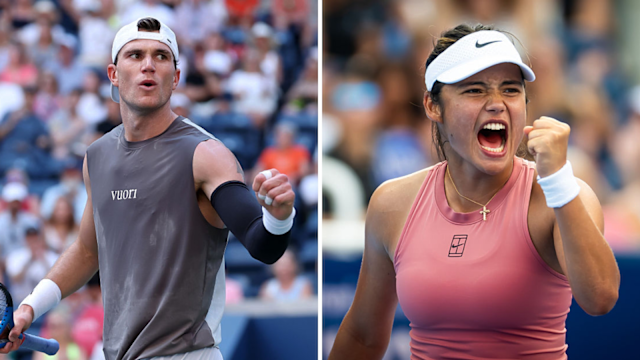
In the ever-evolving landscape of British tennis, few topics generate as much curiosity — and scrutiny — as the development of its brightest young stars. Jack Draper and Emma Raducanu have both walked uniquely challenging paths in recent years, balancing potential with expectation, talent with turbulence. Yet as the 2025 season unfolds, there’s a palpable shift in the tone around both — one built on alignment, stability, and a shared sense of purpose.
Draper’s partnership with his new coach, Jamie Delgado, has quickly blossomed into a collaboration grounded in mutual understanding and tactical clarity. Meanwhile, Raducanu, long plagued by inconsistency in her coaching relationships, finally appears to have found something she has craved since her U.S. Open triumph in 2021 — a consistent and trusted voice in her corner.
Together, these stories signal not just personal growth but a quiet evolution in British tennis — one where young talents are learning to manage their narratives, control their development, and turn potential into sustained performance.
Draper and Delgado: A Partnership Built on Clarity and Chemistry

Draper and Delgado in Sync as Raducanu Finds Stability with New Voice
When Jack Draper announced Jamie Delgado as his new coach earlier this season, there were raised eyebrows but also quiet optimism. Delgado, a seasoned operator with years of experience guiding Andy Murray through some of the most defining moments of his career, brings a calm authority and tactical nuance that perfectly complements Draper’s explosive playing style.
Their early work together has already yielded visible results. Draper, who has long been admired for his power and athleticism, now looks more composed in key moments — his shot selection smarter, his point construction more deliberate. Delgado’s influence has been evident not in radical change, but in refinement.
Speaking after a recent match, Draper described their relationship as “completely aligned,” emphasizing that for the first time in a while, he feels “clear on what the next step looks like.” That clarity — so often the missing ingredient in the transition from potential to elite consistency — has been the defining theme of their partnership.
Delgado’s style isn’t to overhaul; it’s to enhance. He understands the pressures Draper faces — the expectations of being Britain’s next top male player, the constant comparisons to Andy Murray, and the physical demands of life on tour. By building a framework around Draper’s natural instincts rather than restricting them, Delgado has helped his charge rediscover both confidence and freedom.
Delgado’s Influence: Experience Meets Empathy
Delgado’s own playing career was defined by perseverance and intelligence rather than raw talent. That mindset — pragmatic, resilient, deeply analytical — makes him the ideal mentor for a player like Draper, who has all the physical tools but needed a steadier compass.
As part of Team Murray for several years, Delgado witnessed firsthand what it takes to compete — and win — at the very highest level. He was courtside for the emotional rollercoaster of Murray’s Grand Slam finals, the battles with Djokovic, the Olympic golds, and the Wimbledon triumphs. Those experiences have shaped his coaching philosophy: prepare meticulously, stay adaptable, and always prioritize the mental edge.
In Draper, he sees a player capable of carving out his own era of success, provided the foundation is right. That foundation now seems stronger than ever. The two communicate with ease, and Draper’s respect for Delgado’s judgment is clear in how he’s applied feedback on the court.
Tactically, Delgado has encouraged Draper to trust his serve-and-forehand combinations while adding layers to his backhand consistency. The focus on rally tolerance and shot variation has made Draper a tougher opponent to break down — something that’s already showing in his match stats.
Draper’s Maturity and the Next Phase of His Career
Jack Draper’s journey has been anything but straightforward. Injuries have repeatedly interrupted his momentum, halting progress just as he’s threatened to break into the top echelon of the ATP rankings. But now, for the first time in several seasons, he’s enjoying both fitness and form.
This renewed physical confidence has allowed him to embrace Delgado’s system fully. The improvements in his movement, anticipation, and match fitness have given him a sense of continuity that was missing before. Draper has spoken openly about learning to manage his body more intelligently — a crucial evolution for a player whose physicality is both his weapon and his vulnerability.
His performances on hard and grass courts this year have reflected that newfound composure. Long gone are the frantic sprints and rushed points that once plagued his play; instead, there’s a rhythm, a patience, a willingness to construct. It’s no coincidence that many insiders now view him as Britain’s most complete male prospect since Murray.
Raducanu: From Constant Change to Consistent Guidance
If Draper’s story is one of gradual alignment, Emma Raducanu’s has been one of searching — and finally, finding. Since her 2021 U.S. Open victory, the 22-year-old’s career has often felt like a revolving door of coaches, styles, and philosophies. From Andrew Richardson to Torben Beltz, Dmitry Tursunov to Sebastian Sachs, each stint promised something new — but none provided lasting stability.
Now, however, Raducanu has what she herself calls a “consistent voice.” The difference is already noticeable. Her movement looks freer, her tactics clearer, her on-court demeanor calmer. The player who once seemed burdened by expectation is beginning to look like someone enjoying the sport again.
The identity of that consistent voice — while less headline-grabbing than some of her previous appointments — appears to fit her personality and needs. Rather than focusing solely on technical overhaul, the emphasis has shifted to balance: between training and rest, between ambition and patience, between attacking flair and tactical control.
It’s a philosophy that mirrors what the greats of the game have mastered — understanding that development isn’t linear, and that progress sometimes means slowing down to move forward.
The Importance of Stability in Modern Tennis
Both Draper and Raducanu’s stories underline a key truth about professional tennis: talent alone is never enough. The sport’s mental and physical demands require structure — a sense of continuity and shared vision that allows players to evolve rather than react.
For Draper, Delgado’s arrival has given that structure tangible form. Their training sessions focus as much on tactical scenarios as on technical drills, simulating match pressures and strategic shifts. For Raducanu, having one steady presence guiding her decisions has eased the cognitive overload of trying to please multiple voices at once.
These are not just coaching choices; they’re career-defining corrections. The modern tennis landscape rewards patience as much as power, and players who find stability early are the ones who sustain success longest.
British Tennis: A New Generation Coming of Age
The parallel trajectories of Draper and Raducanu symbolize a broader shift in British tennis. The post-Murray era was always going to require a new identity — one built not on a single superstar, but on depth, adaptability, and collective growth.
Now, with Draper maturing into a top-level competitor and Raducanu rediscovering her rhythm, that new chapter is taking shape. Add in the progress of players like Katie Boulter, Cam Norrie, and Jodie Burrage, and the future looks increasingly balanced.
The LTA’s long-term investment in player welfare and development — from medical support to mental performance coaching — is beginning to bear fruit. Draper’s improved durability and Raducanu’s mental composure are both reflections of a system learning from its past.
The Mental Game: Confidence Through Communication
One of the most underappreciated aspects of coaching alignment is communication. Both Draper and Raducanu have emphasized the importance of having a clear dialogue with their teams — an environment where feedback is honest, but constructive.
Draper’s discussions with Delgado often center on “problem-solving in real time.” He’s learning to make adjustments mid-match rather than relying on post-match analysis. That kind of autonomy is critical for players at the top level.
Raducanu, meanwhile, has benefited from a more collaborative approach. Rather than being over-coached or micromanaged, she’s been encouraged to take ownership of her tactics and emotions. Her improved body language on court — fewer visible frustrations, more self-encouragement — suggests that she’s beginning to trust herself again.
Both players are rediscovering the joy of competition, and that psychological shift may prove more valuable than any technical tweak.
Looking Ahead: Goals and Expectations
For Draper, the goals for the coming months are clear — consistency, durability, and breaking into the ATP Top 20. If he can stay fit and continue building on his partnership with Delgado, those ambitions are well within reach. His serve, forehand, and athleticism already rank among the tour’s elite; now, the task is to maintain that level over an entire season.
For Raducanu, the focus is slightly different but equally important. She’s looking to rebuild ranking points, yes, but more crucially, to establish a rhythm of sustained performance. The technical foundations are already there — what’s being built now is confidence through continuity.
Her team’s current strategy appears refreshingly patient. Rather than chasing results, they’re investing in process — a shift that could finally allow her immense natural ability to flourish without constant external pressure.
The Bigger Picture: British Tennis in Transition
The evolution of Draper and Raducanu also reflects how British tennis is redefining success. The emphasis is no longer on producing another singular icon, but on fostering a culture of excellence where multiple players can thrive simultaneously.
With Andy Murray’s legendary career entering its twilight and the younger generation stepping forward, there’s a renewed focus on long-term planning and individualized pathways. Coaches like Delgado play a pivotal role in that ecosystem — guiding players not just technically, but holistically.
This new phase feels less reactive, more intentional. Draper’s progress and Raducanu’s renewed focus embody that ethos perfectly.
Conclusion: Aligned, Grounded, and Ready for What’s Next
As the 2025 season gains momentum, both Jack Draper and Emma Raducanu stand at crucial crossroads — but for once, the road ahead feels less uncertain.
Draper’s alignment with Jamie Delgado has brought discipline and direction to his immense potential. Raducanu’s newfound consistency has restored calm and clarity to a career that once felt perpetually in flux.
In different ways, they’ve both found what every athlete seeks: a partnership that makes them better, not just as players, but as people.
For British tennis, that’s more than encouraging — it’s inspiring. Because in a sport that often rewards instant success, Draper and Raducanu are proving that the most powerful victories come not from speed, but from steady alignment, trust, and time.
Related Posts:
- Jack Draper’s Road to Maturity: From Talent to Top Contender
- Emma Raducanu’s Reset: How Stability Could Unlock Her True Potential
- Inside British Tennis: How a New Generation is Rewriting the Blueprint
- Beyond the Baseline: Mental Strength and the Modern Game