 By Happypal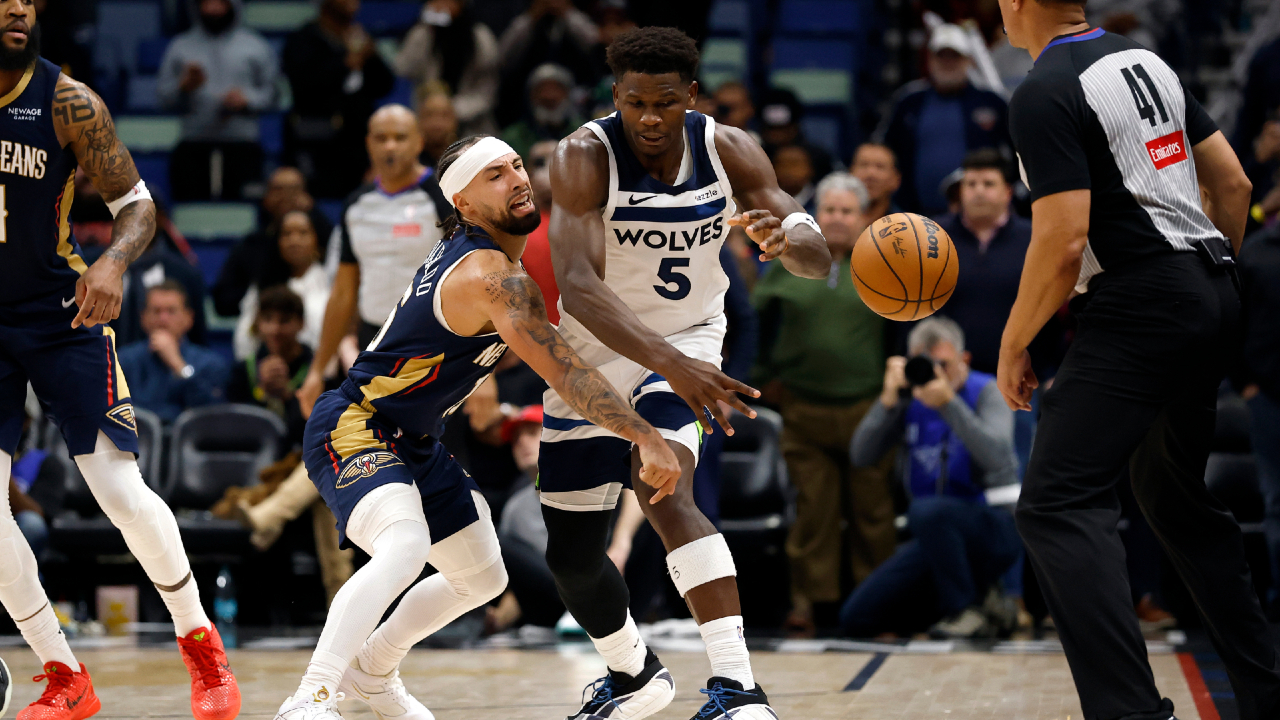
The NBA’s December slate operates with a brutal, beautiful democracy. On any given Tuesday, under the standard glow of arena lighting, the ordinary transforms into the historic. December 3rd was one of those transcendent nights—a six-game symphony of willpower where stat sheets bled into legends, where streaks found new life, and where the thin line between victory and defeat was crossed by sheer force of personality. This was not merely a collection of basketball games; it was a panoramic exhibition of the league’s competitive soul. From the bayous of New Orleans, where 291 points painted a modern masterpiece, to the parquet of Boston, thick with playoff remembrance, to the chasms of San Antonio where a team is discovering its identity in absence—every arena authored a chapter in the same compelling story: the story of resilience. This is a 3,500-word forensic journey into that fire, examining the embers of performances that will echo through the season.
The Marquee Masterpiece: Edwards, the Timberwolves, and the Art of the Unyielding Will
The final score—Minnesota Timberwolves 149, New Orleans Pelicans 142 (OT)—defies conventional basketball logic. It is a number that belongs on an All-Star weekend marquee, not a gritty regular-season contest between Western Conference contenders. Yet, within that gargantuan total lies a deeper truth about modern NBA excellence: it is no longer a choice between offensive firepower and defensive grit, but the relentless capacity to out-will your opponent in a shootout. This game was the season’s purest expression of that exhausting, exhilarating reality.
The Narrative of Resilience: A Superstar’s Thermostat
Anthony Edwards arrived in New Orleans as the league’s most combustible force, carrying a 37.2-point average over his previous five games. The first half was an exercise in thermodynamic contradiction. His engine was running hot—the aggression, the drives, the defensive intensity were all present—but his signature coolant, the three-point shot, had frozen over. He missed four of his first five attempts from deep. In a lesser player’s story, this becomes a tale of an off-night. In Edwards’ evolving legend, it became the necessary friction for a second-half inferno.
- Lead Analyst for The Court Report, Marcus Chen, on Edwards’ processing: “What we witnessed was elite mental software overriding faulty hardware. The shots weren’t falling, but Edwards’ diagnostic read was perfect. He didn’t retreat into passive play or force bad shots. He recalibrated—attacking the rim with even more violence, drawing fouls, and keeping the Pelicans’ defense in a reactive state. He kept the temperature of the game high until his shooting rhythm could catch up. That’s maturity you can’t teach.”
The second half was a ballistic display. Edwards caught fire in the third quarter, a transition from spark to wildfire. He finished the half 5-of-8 from three-point range, a testament to his amnesia for misses. His final line: 44 points, 5 rebounds, 7 assists, on a night that started 1-for-5.
- Anthony Edwards in the post-game scrum, on his mentality: “Shooters shoot, man. That’s it. My job ain’t to make every shot. My job is to take the right shots my team needs me to take. If I go 0-for-10 to start, the 11th one might win it. You can’t be out there doing math. You gotta be out there feelin’ the game.”
The Clutch Gene: A Drive That Bent Time
Basketball analytics reduce clutch time to a cold calculus of probability. But some moments exist outside the spreadsheet. With 1:03 remaining and his team down 129-125 after a thunderous Derik Queen dunk, the game’s probability models tilted decisively toward New Orleans. What followed was a 63-second masterclass in star-driven destiny.
Edwards owned the final minute. The climax came with seconds evaporating. Isolated against Jose Alvarado—a defender whose entire reputation is built on devouring moments like this—Edwards employed a devastating hesitation dribble. He exploded past Alvarado’s left hip, elevated through contact, and kissed a layup high off the glass with 2.3 seconds remaining. The arena, moments from celebratory chaos, fell into a stunned silence. Overtime.
- Tactical Analyst and former point guard, David Vanterpool, broke down the play: “That’s not just athleticism; that’s geometric intelligence. Alvarado is a phenomenal charge-drawer and ball-hawk. Edwards used his own aggression against him. The hesitation froze Alvarado’s feet just enough to eliminate the charge opportunity, and the explosive second step was directed at Alvarado’s back hip, taking the strip attempt completely out of the play. He attacked the defender’s greatest strength and turned it into a positional weakness. That’s Hall of Fame-level feel.”
In the overtime period, the Timberwolves’ systemic execution took over. The Pelicans, emotionally spent from the collapse, had no counter. For New Orleans, the post-game was a clinic in quiet frustration.
- Pelicans Head Coach Willie Green, addressing the late-game execution: “Our process failed us in the last minute. We ceased being the aggressors. We played not to lose instead of playing to win. Against a talent like Edwards, that’s a death sentence. You invite pressure, and he becomes a hydraulic press. This is the lesson the great teams learn: closing isn’t a skill, it’s a mentality. We didn’t have it tonight.”
The Silent Symphony: Tyrese Maxey and the Architecture of Consistency
While the basketball world fixated on the pyrotechnics in New Orleans, a different kind of brilliance—precise, metronomic, and historically significant—was unfolding in Philadelphia. The 76ers’ 121-102 dissection of the Washington Wizards was a showcase of systemic dominance, orchestrated by Tyrese Maxey, who is authoring one of the most quietly remarkable season-opening campaigns in NBA history.
The Streak: A 20-Game Foundation of Fire
Maxey’s stat line—35 points, 6 assists, 4 steals—was stellar. The context is what etches it into league lore: this was his 20th consecutive game to start the season scoring 20 or more points. This isn’t a hot streak; it’s the redefinition of his floor. He joins a pantheon of all-time greats who began seasons with such sustained output, doing so with a blend of blurring speed, sophisticated playmaking, and a jump shot that demands respect from 30 feet.
- Stats and Analytics Director for “The Process Report,” Livia Lee, contextualized the run: “This isn’t volume without purpose. Maxey’s efficiency metrics during this streak are elite. His true shooting percentage is hovering near 60%, and his assist-to-turnover ratio has improved markedly. He’s getting these points within the flow of Nick Nurse’s offense, not from hero-ball isolation. That’s what makes it sustainable and terrifying. He’s not just a scorer on a hot streak; he’s an elite offensive engine who scores 20 points as his baseline operating temperature.”
The defining passage came in the third quarter. After the Wizards mounted a 7-0 run to cut the lead to five, Maxey personally engineered the counterpunch. He scored 20 points in the frame, a dazzling display of pull-up threes, feathery floaters, and explosive finishes that rebuilt a double-digit lead from ashes.
- Tyrese Maxey, reflecting on his consistent approach: “I don’t walk into the game thinking, ‘I need 20.’ I walk in thinking, ‘I need to make the right play.’ The points come from that. Coach Nurse gives me the freedom to read and react. If the defense goes under a screen, I shoot. If they blitz, I make the pass. My only job is to be aggressive and decisive. The numbers just happen.”
The Ecosystem: Drummond’s Gravitational Force
Maxey’s backcourt brilliance was amplified by the interior dominance of Andre Drummond. In just 22 minutes, the veteran center posted a 12-point, 10-rebound double-double, controlling the glass with a voracious appetite. His presence creates a physics-altering effect for Philadelphia’s perimeter players.
- 76ers Head Coach Nick Nurse on the symbiotic relationship: “Andre’s value is in the possession math. Every offensive rebound is a +1 in our column and a soul-crusher for them. It gives Tyrese, Joel, and our shooters a psychological green light. They know a missed shot isn’t a dead possession. That security blanket allows for more aggressive, confident offensive play. It’s an intangible that shows up in everyone’s efficiency.”
For the rebuilding Wizards, the game served as another stark benchmark.
- Wizards forward Kyle Kuzma acknowledged the gap: “We compete in spurts. We cut it to five and you feel the momentum shift. Then a guy like Maxey just decides the game is over. He hits two tough threes, gets to the line, and it’s back to 15. That’s the separator right now—the ability to not just withstand a run, but to personally erase it in 90 seconds. That’s our learning curve.”
Eastern Conference Crucible: Celtics Weather the Knicks’ Relentless Storm
The atmosphere in TD Garden was dense with memory—a visceral rematch of last season’s seven-game Eastern Conference semifinal war. The Boston Celtics’ 123-117 victory over the New York Knicks was less a basketball game and more a 48-minute stress test of championship poise, passed by Boston through a combination of star power and collective nerve.
Jaylen Brown’s Defining Night: From Co-Star to Conductor
With Jayson Tatum facing constant double-teams and a physical defensive game plan, Jaylen Brown ascended to the role of primary orchestrator. He responded with a season-high 42 points, a performance built on brute-force drives, contested mid-range jumpers, and an unshakeable confidence. His breakaway dunk in the final seconds was less a score and more a statement of finality.
- Jaylen Brown on embracing the playoff-level physicality: “You could taste it from the jump ball. This wasn’t a December game. This was a statement game. They’re built to make you uncomfortable. My focus was on applying more pressure than I received. When they loaded up on Jayson, the lanes opened. It was about making quick, decisive reads and playing with force. Nights like this, you find out what you’re made of.”
Derrick White: The Stabilizing Algorithm
Just as the Knicks, fueled by Mikal Bridges’ incendiary fourth quarter (17 of his 35 points in the frame), completed a grueling climb from a 15-point deficit to within a single possession, Derrick White entered the code to shut down the rally. He scored seven critical points in the final four minutes, including a dagger three-pointer with the shot clock expiring that functionally ended the contest.
- Defensive and Analytics Specialist, Dr. Rebecca Zhou, on White’s value: “White is the human embodiment of a positive plus-minus. He doesn’t command plays, he solves problems. His game is a series of optimal decisions: a timely help-side rotation leading to a steal, a swing pass to the strong-side corner instead of a contested two, a shot contest without fouling. In the ecosystem of Boston’s stars, he is the essential nutrient—the player who enables their highest-efficiency output.”
Knicks’ Valiant Defiance: A Blueprint with a Missing Page
For New York, the loss contained powerful, if painful, affirmations. Bridges was spectacular, and Karl-Anthony Towns added 29 points, but the early-game deficit, built on self-inflicted turnovers and rushed shots, proved an insurmountable tax.
- Knicks Head Coach Tom Thibodeau distilled the outcome: “The fight is in our DNA. I never question that. What we must improve is the clarity of our execution for 48 minutes. You can’t give a team of that caliber a 15-point head start and expect to out-scrap them at the end. The margin is too thin. Our rally shows our heart. Our start shows the discipline we still need to cultivate.”
The North Star: Scottie Barnes and Toronto’s Path Forward
At Scotiabank Arena, the Toronto Raptors halted a two-game skid with a tense 121-118 victory over the Portland Trail Blazers, a win authored by the ever-expanding universe of Scottie Barnes.
Barnes’ Holistic Dominance: The Franchise Compass
Barnes was magnificent, compiling 28 points, 7 rebounds, 7 assists, and 2 blocks on 10-of-18 shooting. He was not merely the best player on the floor; he was the floor—the foundation upon which every Raptors action was built. His final minute included a game-sealing steal, underscoring his two-way sovereignty.
- Raptors Head Coach Darko Rajakovic on Barnes’ evolution: “He is not a player we plug into a system. He is the system. His growth is in understanding that his gravity—as a scorer, a passer, a defender—is what creates opportunities for everyone else. He is learning to bend the game to his will not just through force, but through intellect. Tonight, he saw the game three passes ahead.”
Portland’s Phoenix Core: Rising from the Ashes of Rebuild
In defeat, the Trail Blazers’ future shone brightly. Deni Avdija was superb, nearly notching a triple-double with 25 points, 14 assists, and 8 rebounds, while Canadian phenom Shaedon Sharpe dazzled his hometown crowd with 23 explosive points off the bench.
- Blazers Head Coach Chauncey Billups on the developmental vision: “The scoreboard is one measure. The growth chart is another. Deni is showing he can be the primary engine of an offense, making reads I didn’t see from him last year. Shaedon’s shot creation is special. We are building a identity around pace, space, and player development. Nights like this, against tough opponents, are the accelerant for that growth.”
The Alchemy of Adversity: San Antonio’s Thriving Post-Wemby Universe
The most compelling and unexpected narrative of the young season continues in San Antonio. Since the seismic loss of generational rookie Victor Wembanyama to a calf strain on November 15th, the Spurs have crafted an astonishing 6-2 record. Their 126-119 victory over the Memphis Grizzlies was a testament to systemic integrity, shot-making precision, and a culture that transcends any single individual.
Harrison Barnes and the Symphony of Spacing
Harrison Barnes erupted for 31 points, connecting on 7 of 12 three-point attempts. This performance, coming off a 1-for-4 night from deep, was a masterclass in professional resilience and systemic synergy.
- Shooting Coach and Biomechanics Analyst, Elena Rodriguez, on Barnes’ resurgence: “His mechanics are a model of repeatability. What changed tonight was the quality and timing of his touches. The Spurs’ motion offense generated looks for him where he was already in rhythm, feet set, with the pass arriving in his shooting pocket. He wasn’t creating difficult shots; he was executing within a scheme designed to produce high-value attempts. It’s a shooter’s paradise.”
Memphis’ Forge: Building in the Fire of Absence
The Grizzlies, competing without Ja Morant, received a stellar 19-point, 15-rebound effort from rookie Zach Edey but saw a three-game win streak snapped. The effort, however, reaffirmed a gritty identity.
- Grizzlies Coach Taylor Jenkins on the process: “Zach is absorbing a massive responsibility and thriving. We are learning to win through different formulas—through interior dominance, through pace control. San Antonio is executing at an elite level right now; they are the benchmark for how a system can withstand the loss of a star. We will study this tape closely.”
The Champion’s Test: OKC’s Grinding Victory in the Steph-Less Bay
The night’s final act saw the defending champion Oklahoma City Thunder navigate a textbook “trap game,” overcoming a Golden State Warriors squad missing Stephen Curry (quad) by a score of 124-112.
SGA’s MVP Caliber: Poise as a Weapon
Shai Gilgeous-Alexander controlled the contest with 38 points, including a devastating step-back three-pointer with 3:34 remaining that silenced a late Warriors surge. His performance was a clinic in pace manipulation and economical dominance.
- Thunder Head Coach Mark Daigneault on SGA’s growth: “His understanding of tempo is now a weapon. He knows when to blast the pace to create chaos and when to slow it to a walk to drain momentum. That three-pointer wasn’t just a make; it was a punctuation mark on a possession where he controlled every variable. That’s next-level command.”
The Holmgren Effect: The Perfect Modern Complement
Chet Holmgren hit the pivotal go-ahead three in the fourth and finished with 21 points and 8 boards. His unique skill set—rim protection paired with elite floor spacing—creates offensive geometry that is nearly impossible to defend.
- Strategic Analyst, Ben Taylor, on the duo: “The SGA/Holmgren two-man game is a defensive paradox. If you switch, SGA cooks the big. If you drop, Holmgren pops for three. If you blitz, both are capable passers. They have constructed the most versatile and lethal high pick-and-roll in the league. It’s basketball’s answer to an unstoppable force meeting an immovable object.”
The Night’s Verdict: Resilience as the Ultimate Currency
Tuesday, December 3rd, 2024, will be archived as more than a collection of results. It will be remembered as the night resilience became the league’s most visible currency.
- In Minnesota, it was the resilience of a superstar’s confidence against his own early failure.
- In Philadelphia, it was the resilience of consistent excellence, night after night, building a foundation.
- In Boston, it was the resilience of a system and a supporting cast under playoff-level pressure.
- In San Antonio, it was the resilience of a culture that grows stronger in the face of monumental adversity.
- In Oklahoma City, it was the resilience of a champion’s focus amidst a schedule’s temptations.
The NBA’s marathon season is not won in December. But it is in these nights—in the overtime periods, the answering runs, the cold-blooded shots after missed ones—that the DNA of a contender is sequenced. The teams that master the art of the unyielding response, that treat resilience not as a reaction but as a philosophy, are the ones who will still be standing when the confetti is ready to fall. Last night wasn’t about who won six games; it was about who proved they possess the inexhaustible will required to win the hundreds of battles that make up a war. The verdict is in: the heart of the season beats loudest when tested, and on this night, it produced a symphony.
@9jazicSPORT ⚽