 By Happypal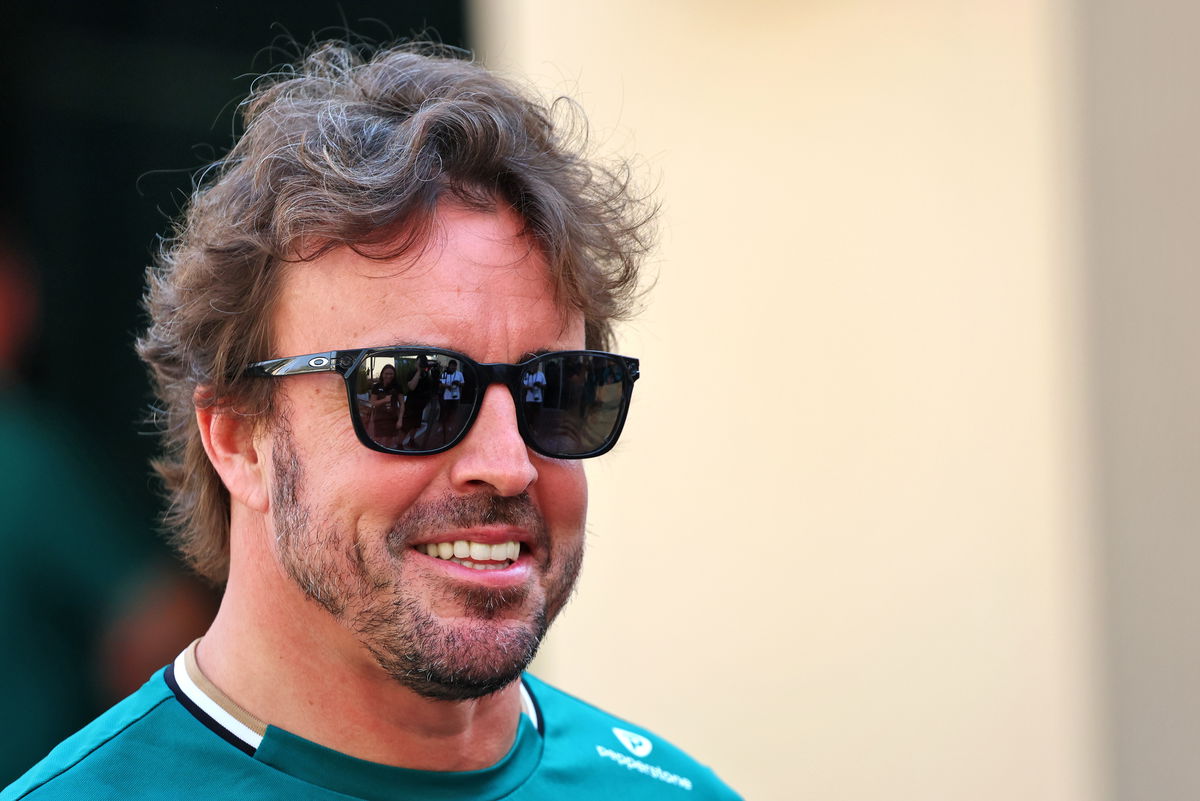
Abu Dhabi, UAE – In the shimmering twilight of the Yas Marina Circuit, amid the gleam of construction on next year’s cars and the murmur of pre-season speculation, a voice from the past has cut through the noise with the cold, sharp clarity of experience. Fernando Alonso, the wily two-time champion turned elder statesman of the Formula 1 grid, has drawn a direct, unsettling parallel between the impending 2025 title showdown and the most painful chapter of his own career: his devastating, last-gasp loss to Sebastian Vettel in the 2010 decider.
His message, delivered with the gravitas of a man who has seen it all, is not one of prediction, but of warning. “Nothing is guaranteed until the very last lap, the very last corner,” Alonso stated, his words hanging heavy in the desert air. “In Formula 1, the mathematics of a points lead can lie. The pressure of Abu Dhabi writes its own story.”
This isn’t just veteran commentary; it’s a narrative missile aimed at the heart of the 2025 championship battle. With the current standings suggesting a titanic, two-driver fight likely to roll into next season’s finale, Alonso has invoked the ghost of 2010 to remind everyone – leaders, chasers, teams, and fans – that in Abu Dhabi, fate has a cruel sense of irony.
Part 1: The Ghost of 2010 – Alonso’s Unhealed Wound
To understand the weight of Alonso’s warning, one must first revisit the scar tissue of 2010. It remains, for many, the most dramatic and strategically complex season finale in the sport’s modern history.
Heading into the Abu Dhabi Grand Prix, the final race of the season, four drivers from three different teams were mathematically in contention: Fernando Alonso (Ferrari), Mark Webber (Red Bull), Sebastian Vettel (Red Bull), and Lewis Hamilton (McLaren). Alonso held the points lead. The scenario was clear: start ahead of his rivals, manage the race, and a third world title was his.
Ferrari’s strategy, however, became ensnared in a web of midfield traffic. When Vitaly Petrov’s Renault – a car notoriously difficult to overtake on the then-tight Yas Marina layout – emerged ahead of Alonso after an early pit stop, the race unravelled. For lap after agonizing lap, Alonso sat trapped, his championship bleeding away in real-time as a young Sebastian Vettel, running a clean alternate strategy, swept into the lead and into his first world title.
“We lost the championship there,” Alonso would reflect years later, the frustration still palpable. “Not because we were not fast enough that day, but because in one moment, one decision, the dream of millions of tifosi and our team vanished. I learned that day that the best car, the best season, means nothing if the last race eats you alive.”
The psychological imprint is profound. Alonso saw a 15-point lead evaporate. He experienced how Abu Dhabi’s unique layout—a second sector of flowing sequences followed by a tight, technical final sector—could become a strategic minefield. He felt how the pressure of a decider could tighten the shoulders of even the most experienced teams.
Part 2: The 2025 Landscape – A Title Fight Forged in the Present
Fast forward to the present. While the 2024 season is still unfolding, the structural narrative for 2025 is already crystallizing. Max Verstappen, despite Red Bull’s recent challenges, remains the benchmark. Lando Norris at McLaren and Charles Leclerc at Ferrari have emerged as consistent, race-winning threats. The regulatory stability into 2025 means this competitive tension is not a flash in the pan—it’s a simmering war set to boil over across an entire campaign.
The Alonso Theorem directly applies here. Let’s project: Imagine Verstappen enters Abu Dhabi 2025 with a 10-12 point lead over Norris. The media narrative will be one of inevitability. “Verstappen Needs Only a Podium,” the headlines will scream. The chasing team, however, faces the “Abu Dhabi Gambit”—do they go aggressive on strategy, knowing a safety car or a slice of luck can rewrite history? This is precisely the volatile cocktail Alonso remembers.
Furthermore, the 2026 regulatory revolution looms large. 2025 is the “Last Dance” for this generation of cars, adding an unprecedented layer of “now or never” pressure for teams and drivers who have yet to seal a championship in this era. This isn’t just another title; for some, it’s the final verdict on a five-year cycle of development.
Part 3: Deconstructing the “Not Guaranteed” Warning – More Than Just Words
Alonso’s commentary is a masterclass in psychological warfare and astute observation. Breaking it down reveals multiple layers:
1. The Pressure of the Hunted vs. The Freedom of the Hunter:
“The driver leading the championship arrives with a calculator in his head,” Alonso has often noted. “The chaser arrives with only a sword.” This mental dynamic is everything. The leader must balance risk versus reward, constantly running scenarios. The chaser has only one instruction: Go for the win. This dichotomy can lead to uncharacteristic errors from the favourite or inspired, nothing-to-lose brilliance from the underdog. Vettel in 2010 was the hunter. In 2012, Alonso was the hunter, taking a inferior Ferrari to the final round. He knows both roles intimately.
2. Abu Dhabi’s Architectural Trap:
The Yas Marina Circuit, despite modifications, retains its core character as a “strategy-track.” Overtaking, while improved, is still highly dependent on the Drag Reduction System (DRS) zones and tire offset. A well-timed pit stop under a Virtual Safety Car, or getting stuck behind a stubborn midfielder on a different strategy (a la Petrov, 2010), can still decide a title. Alonso’s warning is a tacit reminder to teams: your race simulation models cannot account for every human and mechanical variable on the day.
3. The Team as a Pressure-Cooker:
Alonso’s 2010 loss was as much a Ferrari strategic collapse as it was his own. In the cauldron of a title decider, radio communications become strained, pit stops lengthen by milliseconds, and strategic consensus can shatter. “You hear it in the voices on the radio,” Alonso observed. “When the tension rises, the pitch changes. Decisions that take 10 seconds in May take 30 in Abu Dhabi. And in those 20 seconds, a championship can pass you by.”
Part 4: Case Studies in Decider Drama – The Alonso Warning in Action
History is littered with proof of Alonso’s axiom:
- 2010: Alonso/Ferrari (Favorite) – LOST. Trapped by strategy and traffic.
- 2014: Nico Rosberg (Hunter, 17 points down) – Needed a miracle. A mechanical issue for Lewis Hamilton gave him a win, but the points gap was too great. The pressure on Hamilton’s car, however, was real.
- 2016: Hamilton (Hunter) – Chasing Rosberg, needed him to finish P3 or lower. Hamilton dominated, but Rosberg, with the weight of the lead, clinically secured P2 and the title by 5 points. The pressure was immense, but contained.
- 2021: Max Verstappen (Hunter, level on points) – The ultimate example. Entering the final lap behind Lewis Hamilton, a controversial Safety Car restart turned the world order upside down. Nothing was guaranteed until the car crossed the line. Alonso himself watched, undoubtedly seeing the ghosts of his own past.
The through-line is undeniable. The Abu Dhabi decider is a narrative black hole, bending logic and probability.
Part 5: The 2025 Protagonists – Who Should Fear the Alonso Prophecy?
Applying Alonso’s lens to the expected 2025 contenders is fascinating:
- Max Verstappen: Historically ice-cool under pressure, but has been the hunter in his deciders (2021). How would he cope as the hunted in a tight, season-long duel with Norris or Leclerc? Red Bull’s strategic acumen under pressure would be tested like never before in this new competitive era.
- Lando Norris: The brilliant chaser. Alonso’s warning is arguably empowering for him. It validates the “never give up” mentality. McLaren’s strategy team, however, would need to prove they can execute flawlessly on the sport’s most nerve-wracking day.
- Charles Leclerc: Carries the weight of Ferrari’s storied history—the same weight that arguably crushed the team in 2010 and 2012. Has he and the team learned from those scars? Alonso’s words are a direct echo from Maranello’s past.
- The Dark Horse (An Oscar Piastri, a George Russell): What if a third driver from a top team is close enough to spoil the party? Alonso’s 2010 was ruined by Petrov, a midfield driver with his own race to run. This variable remains ever-present.
Part 6: Beyond the Headline – Alonso’s Lasting Legacy as F1’s Prophet of Chaos
In many ways, Fernando Alonso has transitioned from title contender to F1’s foremost “Narrator-in-Chief.” His value now lies not just in his relentless driving, but in his profound, contextual understanding of the sport’s ecosystem. His warnings carry weight because they are not baseless provocations; they are evidence-based thesis statements drawn from a living library of experience.
When he says “not guaranteed,” he is gifting the 2025 narrative a crucial depth. He is pre-injecting drama into a future event, reminding fans to watch the war rooms on the pit wall as closely as the battle on track. He is giving every headline writer and pundit the perfect framing device for the entire season: “Will the Ghost of 2010 Walk Again?”
Conclusion: The Final Lap Awaits
As the sun sets on another Abu Dhabi test, Fernando Alonso’s words don’t fade; they amplify. They travel from the paddock, through the media centre, and into the strategic brains of every team principal and race engineer planning for 2025. They are a timeless reminder that Formula 1 championships are won by speed, but they can be lost by a thousand tiny cuts—a delayed pit call, a lock-up into the chicane, a stubborn backmarker, a radio malfunction.
The 2025 season will be a story of innovation, rivalry, and sheer speed. But thanks to a sage warning from a warrior who has lived its darkest twist, we now know its final chapter will be about something more primal: survival.
For the driver who lifts the trophy on that December night in Abu Dhabi, the path to glory will have been paved not just with talent, but with the nerve to navigate a minefield where, as Fernando Alonso so chillingly confirms, nothing is ever guaranteed.
@9jazicSPORT ⚽