 By Happypal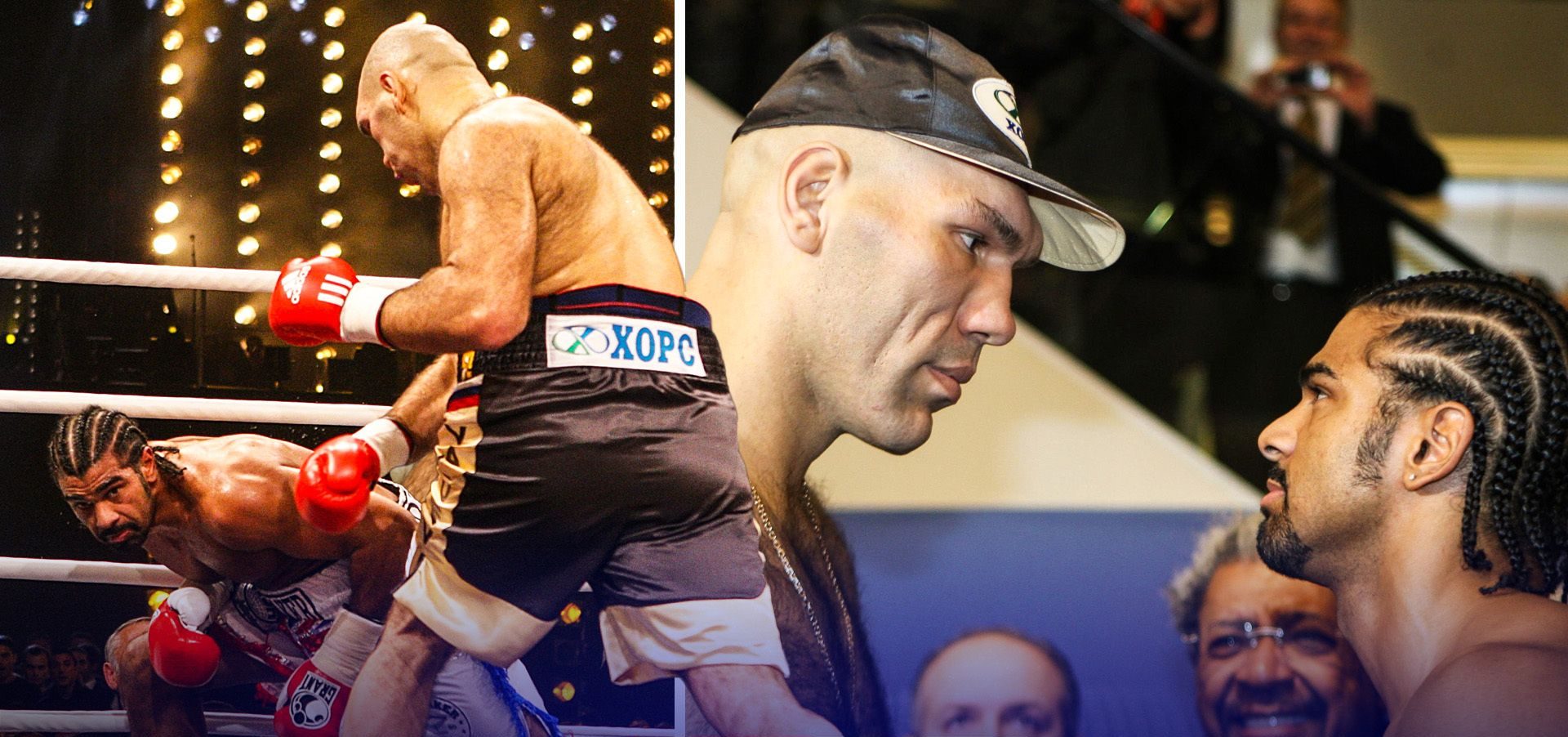
Introduction: A Night When David Slayed Goliath
It’s been sixteen years since David Haye etched his name into boxing history with one of the most remarkable heavyweight victories of the modern era. On that unforgettable night, November 7, 2009, in Nuremberg, Germany, the British fighter — nicknamed “The Hayemaker” — stepped into the ring against Nikolai Valuev, the seven-foot, 23-stone Russian giant, in a fight that embodied the classic “David vs Goliath” story.
What unfolded that night wasn’t just a boxing contest. It was a tactical masterpiece — a blend of courage, strategy, and sheer athletic brilliance. Haye, who weighed nearly 100 pounds less than his opponent, defied the odds to become WBA heavyweight champion of the world.
Today, we look back on that extraordinary night — not just to remember the punches thrown, but to celebrate the legacy it left on British boxing, and the way it redefined what was possible in the sport’s most unforgiving division.
The Build-Up: A Battle Few Believed Could Be Won
In 2009, David Haye was already a household name among British fight fans. He had conquered the cruiserweight division in spectacular fashion, unifying the belts before moving up to heavyweight — a move that many saw as ambitious, if not reckless.
The heavyweight division had long been dominated by giants — men like Lennox Lewis, Vitali Klitschko, and Wladimir Klitschko — all towering figures with powerful jabs and reach advantages that intimidated smaller fighters. But Nikolai Valuev was something else entirely.
Standing at 7 feet tall and weighing around 320 pounds, Valuev was not only the tallest and heaviest world champion in history but also a man whose sheer physical presence could make even elite athletes look ordinary. His jab, more like a battering ram than a punch, kept most challengers at bay.
Haye, at 6’3” and 217 pounds, was stepping into a mismatch on paper — but boxing isn’t fought on paper. It’s fought with intelligence, speed, and heart.
“I’ll Beat the Giant” – Haye’s Confidence Never Faltered
From the moment the fight was announced, Haye’s confidence became part of the story. The Londoner, known for his charisma and psychological warfare, went on the offensive in the media. He taunted Valuev’s size, calling him “a circus act” and “the Beast from the East”, but always with a smile that suggested he knew exactly what he was doing.
His verbal jabs weren’t just for show — they were psychological preparation. Haye understood that to beat Valuev, he needed to do more than outbox him; he had to get inside his head.
Speaking before the fight, Haye said:
“People look at him and think he’s unbeatable because of his size. But size doesn’t win fights — skill, speed, and timing do.”
It was a bold statement, and on fight night, he lived up to every word.
The Strategy: Speed Over Strength
Haye’s game plan was simple but brilliant: don’t get hit, and make every punch count. He and trainer Adam Booth spent weeks studying Valuev’s slow, lumbering style, identifying opportunities where the giant left himself open during transitions.
Knowing that Valuev couldn’t match him for agility or reflexes, Haye decided to fight the perfect tactical fight — one built on movement, counter-punching, and explosive bursts.
From the opening bell, Haye circled constantly, using lateral movement to frustrate Valuev. Every time the Russian tried to close the distance, Haye darted out of range, landing sharp counters before disappearing again.
It was boxing at its most disciplined — a masterclass in hit-and-don’t-get-hit.
Round-by-Round: The Night the Hayemaker Struck Gold
The early rounds set the tone. Valuev, accustomed to dictating the pace, found himself chasing shadows. Haye’s footwork was dazzling — constant pivots, feints, and sudden angles that kept the bigger man guessing.
By round four, Haye had found his rhythm, peppering Valuev with clean left hooks and right hands over the top. The crowd in Nuremberg, initially roaring for their champion, grew quieter as they realized the tide was turning.
In round seven, Haye landed one of his best punches of the fight — a lightning-fast right hand that snapped Valuev’s head back. The giant barely reacted, but it was a signal that Haye’s strategy was working.
The later rounds were tense but increasingly one-sided. Valuev tried to press forward, but his punches were telegraphed and slow. Haye, staying composed, continued to pick him off with precision shots.
Then came round twelve, a moment that remains etched in boxing memory. With just seconds left, Haye unleashed a thunderous left hook that rocked Valuev — the first time anyone had ever visibly hurt the towering Russian in his career. For a brief second, the unthinkable nearly happened: the giant looked ready to fall.
The bell saved him, but the message was clear — David Haye had conquered the giant.
The Decision: History Made
When the final bell rang, there was a tense silence. Both men raised their hands, but the crowd sensed the inevitable.
The judges’ scorecards read: 116-112, 116-112, and 114-114 — a majority decision victory for David Haye.
As his arm was raised, Haye fell to his knees in emotion. He had done what few believed possible — becoming only the second British fighter ever to win titles at both cruiserweight and heavyweight, after Evander Holyfield.
Haye later described the feeling:
“It was surreal. I’d dreamed about nights like that since I was a kid. I wasn’t supposed to win, but I knew I could. I just had to prove it to the world.”
Aftermath: Respect Earned, Legacy Sealed
Valuev, ever the sportsman, was gracious in defeat. Despite being booed by parts of the crowd, he praised Haye’s performance, saying:
“He was too fast. I couldn’t catch him. He deserved the win.”
Haye’s victory sent shockwaves through the boxing world. British fans celebrated across the country, and for the first time in years, the heavyweight division had a champion who combined speed, charisma, and knockout power.
His triumph inspired a new generation of fighters — proving that strategy and belief could overcome even the most daunting physical odds.
The Afterglow: From Underdog to Superstar
In the years that followed, David Haye became a global superstar. His reign as WBA champion was marked by his confidence, his promotional flair, and his ambition. He successfully defended his title against John Ruiz, before losing to Wladimir Klitschko in 2011 in a unification bout that drew massive pay-per-view numbers.
But even in defeat, Haye’s star never dimmed. He had revived British interest in heavyweight boxing at a time when it was dominated by Eastern European champions.
His win over Valuev remains one of the defining moments of 21st-century British boxing — a performance that balanced intellect, bravery, and execution at the highest level.
Valuev’s Perspective: The Gentle Giant’s Final Bow
For Nikolai Valuev, the fight marked the end of his professional career. After losing to Haye, he never fought again, officially retiring in 2009 with a record of 50 wins, 2 losses, and 1 draw.
Outside the ring, Valuev transitioned into politics and television in Russia, but his legacy as the “Giant Champion” lives on. Despite being outmaneuvered by Haye, he remains one of boxing’s most unique figures — a symbol of size and power in an era of skill and speed.
How the Fight Changed Boxing
Haye’s win changed perceptions of what was possible in the heavyweight division. It reminded fans that boxing isn’t just about power — it’s about precision, movement, and adaptability.
For smaller heavyweights, the fight became a blueprint for how to handle bigger opponents: use your legs, stay sharp, and never get drawn into brawls.
The bout also marked a turning point for British boxing. It set the stage for future champions like Anthony Joshua and Tyson Fury, who would later carry the nation’s heavyweight legacy to even greater heights.
Sixteen Years Later: The Legacy Lives On
Today, when fans revisit the footage of that night, they see more than a fight. They see the story of belief — of a man who dared to challenge the impossible and succeeded through discipline and heart.
Haye’s triumph over Valuev remains one of the sport’s great underdog tales. It’s a story retold every time a smaller fighter steps up to take on a seemingly invincible opponent.
Even now, Haye speaks fondly of that night, calling it “the proudest moment of my career.” He may have fought bigger names later on, but none carried the same sense of history, danger, and triumph as that November night in Nuremberg.
The “Hayemaker” Effect
Beyond the belts and the headlines, Haye’s win changed the way fighters approached preparation and self-belief. His training methods — emphasizing speed, explosiveness, and tactical awareness — became influential across the sport.
He inspired countless fighters to think smarter, not just stronger. The “Hayemaker” wasn’t just a punch; it was an attitude — a blend of flair, strategy, and fearlessness that defined a generation.
Final Thoughts: A Legend Forged in Courage
Sixteen years on, David Haye vs Nikolai Valuev stands as a timeless reminder of what makes boxing so compelling. It’s not always the biggest, strongest, or most intimidating fighter who wins. Sometimes, it’s the one with the sharpest mind and the bravest heart.
Haye’s victory that night transcended sport. It became a metaphor — proof that with preparation, belief, and courage, even the biggest challenges can be overcome.
It remains, to this day, one of the greatest nights in British boxing history.
More from 9jazic Sports
- Denver Broncos Edge Out Las Vegas Raiders in Tight NFL Thriller
- Calm Amid the Storm: Aston Villa vs Maccabi Tel Aviv Goes Off Without Major Incident
- Kyrgios vs Sabalenka: The ‘Battle of the Sexes’ Showdown Everyone’s Talking About