 By Happypal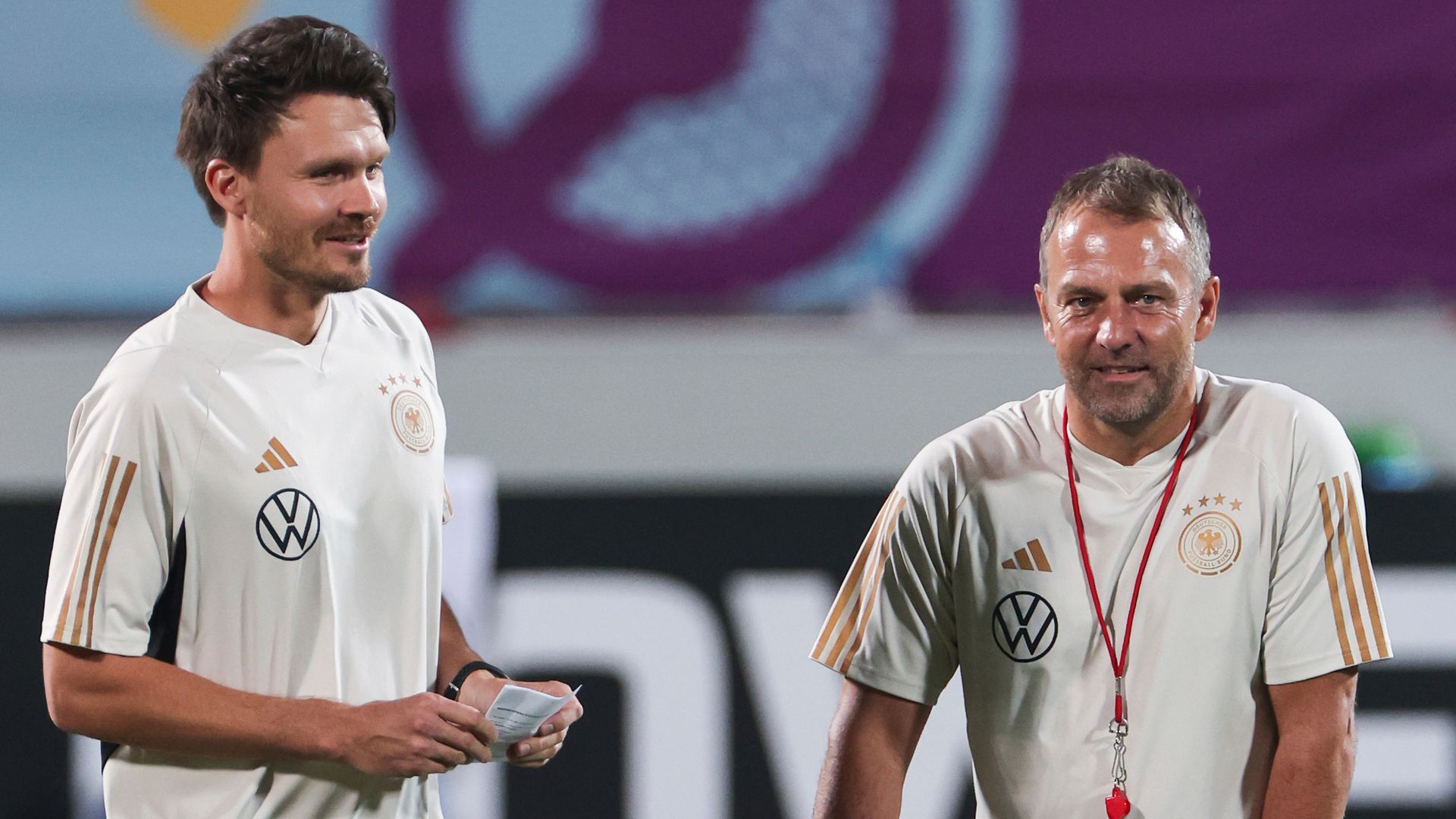
When Rangers manager Danny Röhl revealed he had received a simple but meaningful “good luck” message from Barcelona head coach Hansi Flick, it was more than just a friendly exchange — it was a reflection of mutual respect, mentorship, and the shared philosophy of two of Europe’s most progressive minds in football.
As Röhl continues his promising journey in Scottish football, his relationship with Flick — one of Germany’s most respected tacticians — has become a fascinating subplot to his rise. Behind that short message lies years of collaboration, trust, and shared footballing ideals that have shaped both men’s approaches to the modern game.
Let’s explore how Röhl’s connection with Flick developed, how it continues to influence his career, and what it means for Rangers’ evolving identity in the Scottish Premiership and beyond.
The Mentorship Behind the Message
“Good luck.”
Two simple words, yet profoundly symbolic. For Danny Röhl, those words from Hansi Flick carry the weight of years spent learning, growing, and redefining what it means to lead.
Before taking over as Rangers head coach, Röhl had already earned the reputation of being one of the brightest young minds in European football. But his tactical education — and his coaching philosophy — were heavily influenced by Flick, under whom he worked as assistant coach at both Bayern Munich and the German national team.
Their partnership began when Flick was appointed Bayern manager in 2019. Röhl, then just in his early 30s, joined his backroom staff as a key analyst and strategist. What followed was a historic season — one that saw Bayern claim a treble, including the UEFA Champions League, Bundesliga, and DFB-Pokal titles.
Flick often praised Röhl for his tactical intelligence, eye for detail, and innovative approach to match preparation. The “good luck” message, therefore, was not just friendly courtesy — it was the acknowledgment of a mentor watching his protégé step into full command.
“Danny was one of the sharpest young minds I’ve worked with,” Flick said during his Bayern tenure. “His ability to read the game, to analyze opponents, and to motivate players is world-class.”
Danny Röhl: From Analyst to Leader
Danny Röhl’s rise through the coaching ranks has been nothing short of meteoric. Born in Zwickau, Germany, Röhl never enjoyed a professional playing career at the top level. Instead, his footballing journey began through analysis, strategy, and study — areas where he quickly made his mark.
He began as a video analyst at RB Leipzig, a club famous for nurturing analytical minds and modern coaching methods. There, Röhl learned the importance of high pressing, structured transitions, and data-driven decision-making.
His sharp insights soon caught the attention of top-tier coaches, including Ralph Hasenhüttl, who brought him along to Southampton in the Premier League. Röhl’s tactical input played a crucial role in shaping Southampton’s pressing style — a philosophy that still carries echoes of the Red Bull football DNA.
By the time Hansi Flick came calling, Röhl was more than an assistant — he was a trusted tactical partner. The two built a relationship based on shared principles: intensity, preparation, and player empowerment.
Now at Rangers, Röhl brings all that experience to the Scottish game, blending German efficiency with Scottish grit.
Flick and Röhl: A Shared Vision of Modern Football
To understand their connection, you have to understand their shared football ideology.
Both Flick and Röhl are disciples of the German tactical renaissance — a footballing philosophy rooted in pressing, positional fluidity, and team cohesion. Their blueprint emphasizes:
- Structured aggression: Winning the ball high and transitioning instantly into attack.
- Collective intelligence: Every player understanding multiple roles and movements.
- Fitness and intensity: Sustained energy throughout all 90 minutes.
- Adaptive strategy: Reading the opponent and adjusting tempo and shape dynamically.
At Bayern, this approach led to total dominance. Röhl was instrumental in fine-tuning opposition analysis — studying movement patterns, pressing triggers, and player matchups with forensic precision.
When Flick moved on to manage Germany, he brought Röhl along, trusting him to help modernize the national team. While their stint together had its challenges, it was another learning curve that prepared Röhl for leadership on his own terms.
Now at Rangers, Röhl’s fingerprints are already visible — in the team’s pressing shape, transitional play, and focus on fitness.
“We want to play brave football,” Röhl told reporters at Ibrox. “That means intensity, control, and clarity — the kind of football that excites fans and challenges opponents.”
A German Touch in Scottish Football
Rangers’ appointment of Röhl represented a calculated gamble — but one filled with promise. The Scottish Premiership, long defined by its physicality and emotional intensity, rarely sees managers with such deep tactical lineage from the German system.
Yet, Röhl’s arrival has brought freshness to the club. His focus on data-driven training, match simulations, and dynamic transitions has modernized Rangers’ footballing approach.
Players have noted the difference. Training sessions are sharper, the tactical instructions more precise. Röhl’s analytical mind ensures that every drill, every match plan, is purposeful.
And though still early in his tenure, results have shown signs of evolution — not just in scorelines, but in style and mentality.
His connection with Hansi Flick gives him credibility — but it’s Röhl’s own courage and adaptability that are earning him respect in Glasgow.
Inside the Flick-Röhl Relationship: Mutual Respect and Influence
While Röhl has often been described as Flick’s protégé, their relationship has evolved into one of mutual respect.
When Flick took charge of Barcelona, the world of football took notice — a German tactician bringing his precision and pressing football to Spain’s most stylistic club. Among those watching closely was Röhl, who publicly congratulated his mentor and expressed admiration for his journey.
Their communication continues regularly, and Flick’s “good luck” message ahead of Röhl’s key fixtures with Rangers reflects a friendship grounded in shared ambition.
Both men value the human side of coaching — motivating players, building relationships, and fostering trust. Röhl has adopted many of Flick’s player-first leadership traits, including open communication, emotional intelligence, and team inclusivity.
How Röhl’s Rangers Reflect His German Schooling
At Rangers, Röhl’s football philosophy is becoming clearer with each passing week. His systems borrow from the tactical DNA he helped refine under Flick:
- High Pressing and Compact Defense
- Röhl’s Rangers aim to suffocate opponents in midfield, with the forward line initiating the press and defenders maintaining tight distances between the lines.
- Vertical Transitions
- Once the ball is recovered, the team moves vertically — quickly and decisively — exploiting gaps before opponents can reset.
- Fluid Formations
- Depending on opposition shape, Röhl often alternates between a 4-2-3-1 and 3-4-2-1, allowing for both stability and creative expression.
- Youth Development and Squad Depth
- Like Flick, Röhl places great emphasis on nurturing young players, giving them confidence and structure to perform.
These strategies are slowly helping Rangers re-establish dominance, both domestically and in European competitions.
The Emotional Element: Why ‘Good Luck’ Matters
Football is as much about emotion as it is about tactics. For Röhl, receiving that “good luck” message from Flick wasn’t just about encouragement — it was about recognition.
It symbolized a passing of the torch — from mentor to student, from assistant to leader. It also reinforced the camaraderie that exists within the modern coaching fraternity.
In a sport often characterized by rivalry and ego, the mutual respect between Flick and Röhl is refreshing. It highlights how shared philosophy and genuine mentorship can transcend clubs, leagues, and even borders.
Barcelona’s Flick and Rangers’ Röhl: Parallels in Progress
While Flick now leads Barcelona, one of Europe’s most decorated clubs, and Röhl steers Rangers, Scotland’s most successful team, their journeys run in parallel.
Both are tasked with rebuilding traditional giants — restoring identity, reigniting passion, and modernizing tactical play.
At Barcelona, Flick faces the challenge of integrating youth into a squad shaped by financial limits and high expectations. At Rangers, Röhl confronts similar tests — balancing experienced leaders with emerging talents while pushing for trophies.
Their shared blueprint — possession with purpose, pressing with precision — could soon make both clubs standard-bearers for modern football in their respective leagues.
Röhl’s Leadership: Calm, Calculated, and Confident
What makes Röhl special isn’t just his tactics — it’s his demeanor. Players and pundits alike describe him as calm under pressure, analytical yet approachable.
He commands respect not through authority, but through authenticity. Much like Flick, Röhl treats players as partners in a shared mission, not pawns on a tactical board.
Behind his quiet confidence lies an obsessive work ethic. Röhl is known for studying hours of match footage, creating tailored tactical plans for each opponent. It’s this meticulousness that convinced Rangers’ hierarchy to hand him the reins.
“Danny is a modern coach — intelligent, adaptable, and relentless,” said one club official. “He’s not just managing games — he’s building a culture.”
What the Future Holds for Röhl and Rangers
As Röhl’s project takes shape, expectations are rising. Supporters have embraced his fresh approach and commitment to attacking football.
But challenges remain — consistency, depth, and handling the intensity of title races will test Röhl’s mettle. Yet, with his background and mentality, few doubt his ability to rise to the occasion.
His connection to Flick will continue to serve as both an inspiration and a resource. Whether it’s tactical advice, moral support, or simple encouragement, that “good luck” message symbolizes an ongoing mentorship rooted in mutual growth.
And for Röhl, it’s a reminder that greatness doesn’t happen alone — it’s built on shared knowledge, respect, and relentless pursuit of excellence.
Conclusion: More Than a Message — A Legacy in Motion
Danny Röhl’s revelation of Hansi Flick’s “good luck” message might seem like a small detail in the grand theater of football, but it represents something deeper — the enduring bond between two football minds united by vision and respect.
Röhl’s journey from analyst to head coach, from understudy to leader, mirrors the evolution of modern coaching itself — collaborative, data-informed, and emotionally intelligent.
And just as Flick took his methods from Munich to Barcelona, Röhl is carrying that same DNA from Germany to Glasgow — reshaping Rangers into a team that plays with both intensity and identity.
So while the words may have been brief, the meaning was vast. In football, sometimes the smallest messages carry the greatest weight — and in Röhl’s case, “good luck” was a reminder that the best is yet to come.
More from 9JAZIC Sports
- 🔗 Dubois to Fight for World Title Shot with Sanchez Talks Set to Begin
- 🔗 How Sprints Could Decide the F1 Title Battle
- 🔗 Mikaela Mayer Plans to Settle Rivalry with Lauren Price Early Next Year