 By Happypal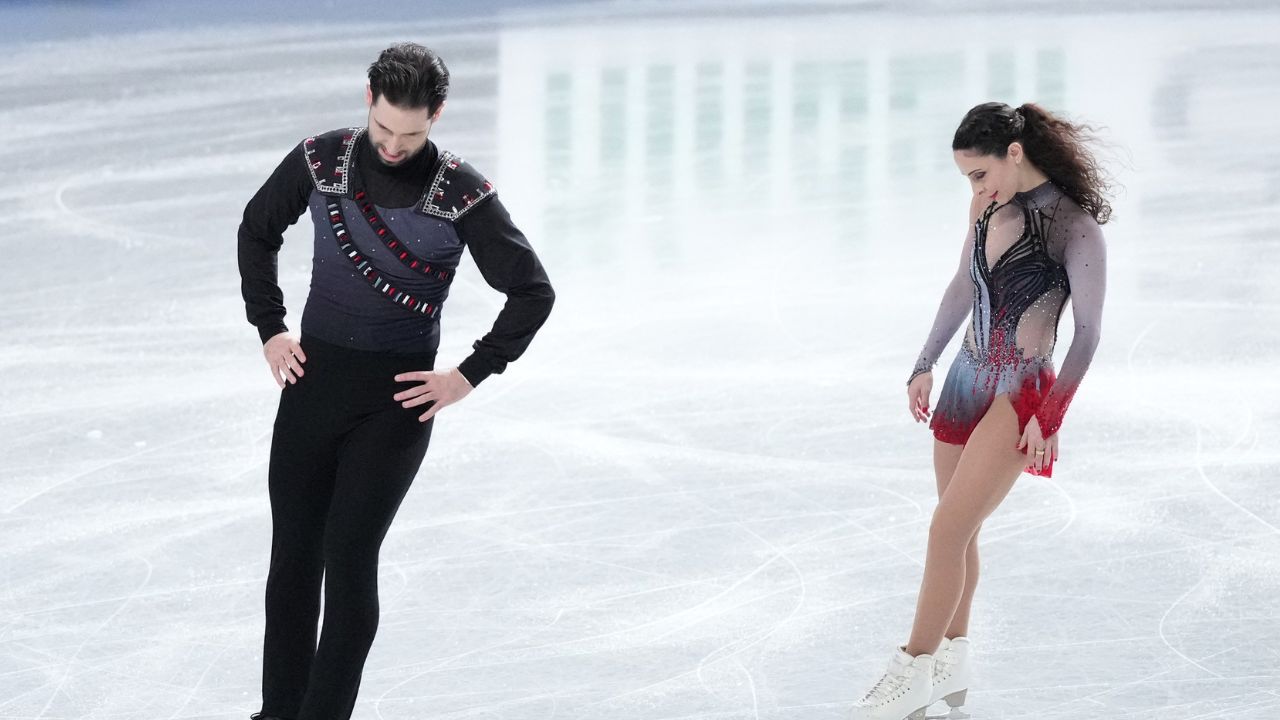
NAGOYA, Japan — In the hushed, expectant atmosphere of the Nippon Gaishi Hall, where every breath is visible in the chilled air and the ice surface gleams under a constellation of spotlights, the difference between triumph and tribulation is measured in millimeters and milliseconds. For Canada’s premier pairs team, Deanna Stellato-Dudek and Maxime Deschamps, the Grand Prix Final—the exclusive showdown for the season’s top six qualifiers—was to be the definitive statement of their gold-medal credentials ahead of the Olympic cycle. Instead, a single, costly error in their free skate transformed it into a lesson in the relentless pressure of the sport’s summit. Finishing in sixth place with 194.36 points, the duo’s performance, shadowed by a fall, served as a stark reminder that in figure skating’s most technical and treacherous discipline, perfection is not an aspiration but a requirement.
The result marks a poignant step back for the two-time Grand Prix medalists, who claimed bronze at this very event in 2023. As Japan’s reigning world champions Riku Miura and Ryuichi Kihara ascended to the title with a majestic 225.21 points, followed by Italy’s Sara Conti and Niccolo Macii (223.28) and Germany’s Minerva Fabienne Hase and Nikita Volodin (221.25), the Canadians were left to dissect a performance that unraveled at a crucial moment. Yet, within this setback lies the compelling narrative of a team at a crossroads, their Olympic dreams intact but now facing a crucial test of resilience.
Part I: The Free Skate Unraveled – A Costly Error Under the Brightest Lights
Stellato-Dudek and Deschamps took to the ice for their free skate positioned to challenge for the podium. Their program, a complex tapestry of athleticism and artistry set to dramatic music, began with its characteristic boldness. Their side-by-side triple twists were secure, their throw jumps launched with formidable power. The connection between them—the 40-year-old Stellato-Dudek’s unparalleled competitive grit and Deschamps’ steadying strength—was palpable.
The Turning Point:
The stumble came on a foundational element: their side-by-side triple jumps. On the exit of the combination, Stellato-Dudek, slightly off-axis in the air, was unable to secure a clean landing. Her skate slipped from under her, sending her down onto the ice. In pairs skating, where elements are interlinked like dominoes, a fall is catastrophic. It incurs an automatic deduction, disrupts flow and timing, and, most critically, shatters the program’s psychological confidence.
The Cascading Effect:
While the team recovered admirably, completing their death spiral and lift sequences with professionalism, the error placed them in a defensive posture for the remainder of the program. The buoyancy required for supreme performance had evaporated. Subsequent elements, though technically landed, lacked the final flourish and grade of execution (GOE) needed to climb the rankings. The final score of 194.36 reflected not just the fall’s deduction, but the lost positive points on elements that followed.
Part II: The Champions’ Contrast – Miura and Kihara’s Commanding Statement
The victory of Japan’s Miura and Kihara provided a masterclass in what separates the top tier at this event. Skating with the confidence of defending World Champions and a home crowd behind them, their performance was a study in seamless integration.
- Technical Prowess: Their elements were not only completed but performed with exceptional height, synchronization, and ease. Their throw quad Salchow, a high-risk, high-reward element, was landed with stunning security, earning massive GOE.
- Artistic Cohesion: Their program was more than a collection of elements; it was a story told through unison. Their skating skills, edge quality, and emotional projection filled the entire arena, captivating judges and audience alike.
- Mental Fortitude: Competing as favorites on home soil carries its own immense pressure. Their ability to deliver a season’s best score (225.21) under these conditions underscores a championship mentality that Stellato-Dudek and Deschamps are striving to consistently emulate.
The silver and bronze medalists from Italy and Germany similarly showcased error-free skates packed with difficulty, highlighting the intensified competitive depth in the post-Beijing 2022 landscape.
Part III: The Canadian Context – A Setback on the Road to Milan 2026
For Skate Canada and the nation’s figure skating hopes, this result is a bump in the road, not a derailment.
The Unique Journey of Stellato-Dudek:
The story of Deanna Stellato-Dudek—returning to elite competition after a 16-year retirement to become a world medalist in her late 30s—is one of modern sport’s most inspiring. This sixth-place finish is a rare stumble in that remarkable second act. How she and Deschamps respond will define the next chapter. Their partnership, built on exceptional technical base values, now faces the challenge of delivering that content with unerring consistency against younger, ascending teams.
The Technical Analysis:
The fall exposed a recurring vulnerability under maximum pressure. The team and their coaches, including renowned specialist Brian Orser, will undoubtedly deconstruct the jump technique and mental approach to that specific element. The off-season will likely focus not on adding more difficulty, but on hardening the existing technical package against competitive stress.
The Olympic Timeline:
With the Milan-Cortina 2026 Winter Games now clearly on the horizon, this Grand Prix Final serves as a vital diagnostic. Better to encounter this pressure and falter now than in 2026. The experience, however painful, adds a critical data point to their preparation.
Part IV: The Broader Canadian Picture – Ice Dance Hope and Junior Promise
While the senior pairs result stung, the Grand Prix Final weekend carried brighter notes for Canada elsewhere.
- Piper Gilles and Paul Poirier: The veteran ice dancers delivered a sublime rhythm dance, sitting in a strong third place heading into Saturday’s free dance. As perennial world medalists, they represent Canada’s most consistent shot at a podium finish in Nagoya, carrying the flag for the nation’s storied ice dance tradition.
- Junior Promise: The future shines brightly. In junior ice dance, Layla Veillon and Alexander Brandys placed sixth after the rhythm dance, gaining invaluable experience. More notably, in junior pairs, Ava Kemp and Yohnatan Elizarov of Winnipeg impressed, sitting third ahead of the free skate. Their performance signals a healthy pipeline of pairs talent for Canada, ensuring the legacy continues beyond the current top team.
Part V: The Path Forward – Resilience and Refinement
For Stellato-Dudek and Deschamps, the immediate path leads to the Canadian National Championships, where they will be heavily favored, and then onto the World Championships in Boston. The response protocol is clear:
- Technical Refinement: Isolate the jump error. Was it a technical flaw, a timing issue with Deschamps, or a product of competitive nerves? The training focus will become microscopic.
- Psychological Reinforcement: Overcoming a public setback is part of champion development. Working with sports psychologists to frame this as a learning opportunity, not a defining failure, will be crucial.
- Program Reaffirmation: Their free program is strong. The task is not to scrap it, but to own it so completely that one error cannot unravel its power. This involves building even greater muscle memory and connection.
Conclusion: The Fall Before the Flight
In the elegant, brutal world of pairs figure skating, the journey is rarely linear. The sixth-place finish for Deanna Stellato-Dudek and Maxime Deschamps in Nagoya is not an epitaph for their ambitions; it is a plot twist.
It underscores the brutal truth of the Grand Prix Final: it gathers the best of the best, and on that day, the Canadians were not at their best. Yet, their body of work this season—their two Grand Prix medals—proves their quality remains among the world’s elite.
As the Japanese champions celebrated, and the Canadian ice dancers prepared for their moment, Stellato-Dudek and Deschamps were left with a score and a feeling that will fuel their fire. The road to Milan 2026 is long and paved with both triumph and travail. In Nagoya, they encountered a stretch of the latter. How they navigate it now—with analysis, grit, and a renewed hunger—will determine whether this Grand Prix Final is remembered as a mere stumble, or a necessary step in the making of Olympic champions.
@9jazicSPORT ⚽