 By Happypal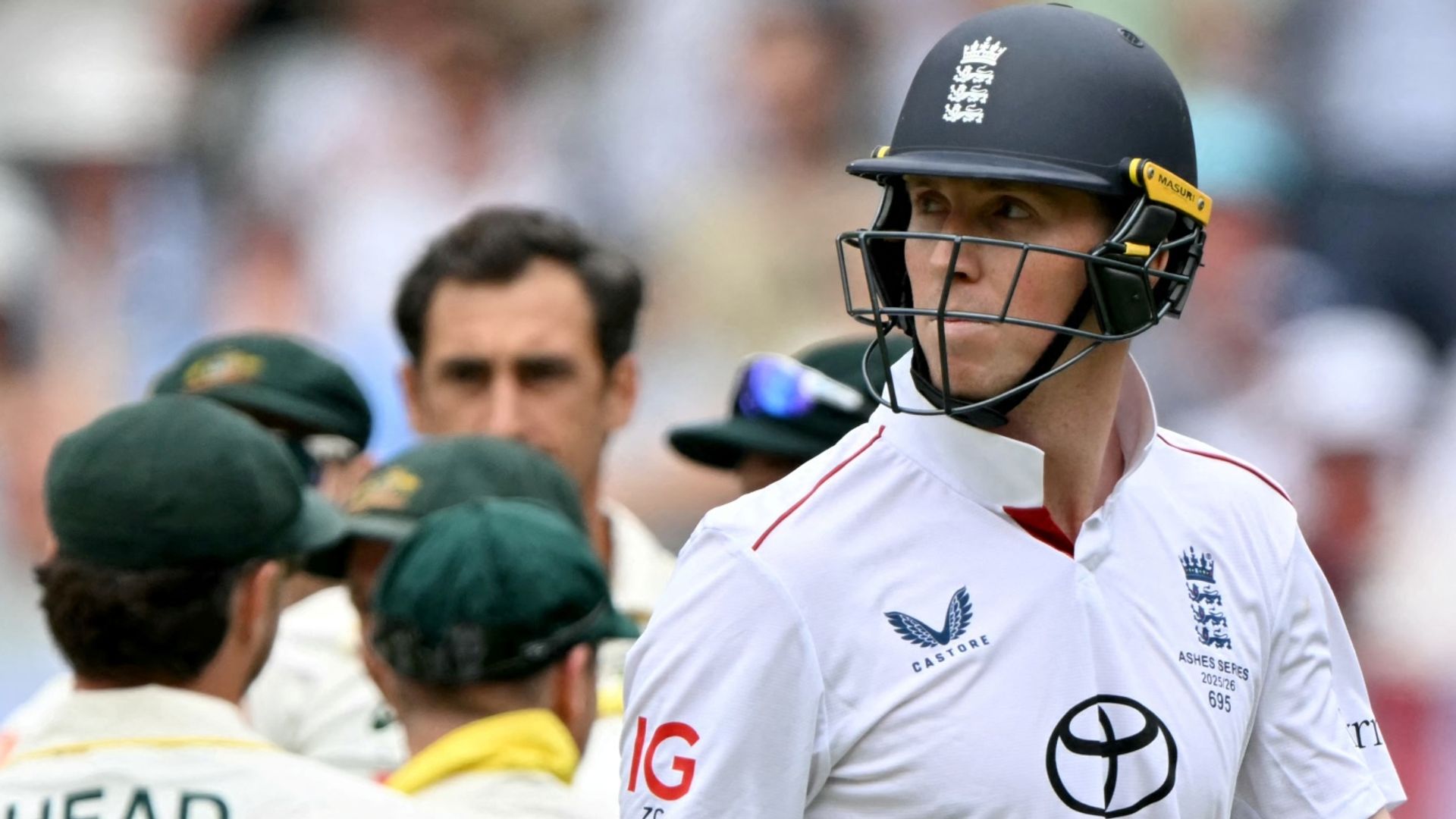
Cricket has always been a sport that worships numbers. Batting averages, strike rates, conversion percentages, wagon wheels — they all form the numerical skeleton of a player’s career. And yet, for all the analysis, for all the data, for all the graphs and debates, some cricketers simply cannot be understood through numbers alone. Some cricketers demand context, intuition, and faith.
Zak Crawley is one of them.
His Test statistics continue to trigger arguments at pubs, commentary boxes, analysis shows, and across every cricket-loving online debate space. Critics see the average in the mid-30s after 60 Tests and feel England are being stubborn. Supporters, including England’s management, argue that his value has nothing to do with numbers alone. To them, Crawley is more than a spreadsheet; he is a philosophy.
This is the story of why England still believe in Zak Crawley — and why his case might be one of the most fascinating modern cricket debates.
A Career That Defies the Spreadsheet
If Crawley’s career to date were placed in a vacuum and judged only by traditional Test metrics, he would not be the profile of a long-term opener. A Test opener is meant to shield the middle order, see off the new ball, and build a foundation. Crawley, however, walks to the crease with an entirely different blueprint.
He is tall, elegant, and aggressive. His cover drive has drawn admiration from some of cricket’s greatest eyes. His ability to dominate quality bowling in sessions is undeniable. His ceiling has always been obvious — perhaps too obvious, because every glimpse of brilliance creates expectation, and every failure fuels frustration.
You don’t usually associate a Test opener with volatility. But Crawley’s cricketing identity is built on volatility.
And England know that.
What England Actually Want From Him
To understand the support Crawley receives, you must understand England’s Test philosophy in the last few years.
England are no longer searching for traditional openers who bat 80 balls for 20 runs. They want enforcers. They want tone-setters. They want players who force opposition captains into defensive fields early, rather than waiting until the middle order is already in control.
In short, England want an opener who can:
- Change the pace of a session
- Disrupt bowler rhythm
- Force matchups
- Score quickly enough to move the game forward
- Feed the rest of the batting order with momentum
And on his day, Crawley does all of these — spectacularly.
When he gets moving, the entire character of the Test match changes. Bowlers shorten their lengths. Captains widen their fields. Slip cordons shrink earlier than they should. Suddenly, England are scoring at four runs an over in a format where three used to be a luxury.
This is Crawley’s purpose: to shape the match narrative, not just the scorecard.
A Player Built for England’s Modern Vision
England’s red-ball reset, led by a new generation of coaches and senior players, didn’t begin with the ideas of caution or conservatism. From the very beginning, the message was clear: England would play bold, decisive cricket. Even when conditions were tough. Even when expert panels disagreed. Even when numbers didn’t support the risk.
Crawley is the batting embodiment of that philosophy.
He is unpredictable, but never timid. He attacks the new ball, even when others would defend. He throws first punches, forces reactions, and sometimes collapses with the same aggression.
To some, that is reckless.
To England, that is bravery.
The Dual Nature of Crawley’s Strengths
Every strength in cricket has an opposite side. A player who can score 150 off 150 balls can also get out for 6 off 12. A player willing to drive on the up can pierce the covers or edge behind just as easily. A high-ceiling player always has a low-floor counterpart.
This duality defines Crawley:
- His elegance comes with risk
- His aggression comes with thin margins
- His momentum-shifting ability comes with volatility
- His ability to dominate pace can be neutralised by movement
You cannot have one without the other. England, unlike many fans, have accepted this trade-off.
Why the Critics Still Get Loud
It would be unfair to pretend the criticism comes from nowhere. England’s opening partnerships have been fragile for years. Fans remember the stability of Strauss and Cook, or even the earlier periods when openers were less flashy but more reliable.
Crawley challenges all of that.
His dismissals can be frustrating. His shot selection often raises eyebrows. His patches of poor form last longer than traditional openers. The frustration builds because the talent is so clear — and that is always the most difficult kind of player to judge.
But whereas critics see inconsistency, England see evolution.
They see technique that has sharpened.
They see better decision-making.
They see mental resilience.
They see good series against strong attacks.
They see a player who, despite the noise, keeps delivering key innings.
The Value of the Big Innings
Crawley has produced some truly significant innings across his career — the kind that shift perceptions and justify backing:
- The fast-paced hundreds that stunned world-class bowling attacks
- The momentum-changing knocks that transformed the tone of a series
- Innings where his scoring rate set up victory margins
- Days when he looked untouchable, reminding everyone why England keep selecting him
England don’t view him as a player who averages 35. They view him as a player whose contributions often outweigh numerical averages.
When you look closely, his big innings have repeatedly come in major series, against top-tier teams, under high pressure. These are not empty runs. They are statement runs.
The Psychology of Backing a Player Like Crawley
Backing Crawley is not a statistical decision — it is a psychological one.
England value a player who:
- Survived intense public scrutiny
- Withstood criticism that would have broken others
- Continued trusting himself despite national debate
- Shows no visible fear when walking into the toughest job in cricket
- Doesn’t shrink under expectation
Crawley’s mental strength, more than any other attribute, is one of the reasons England keep choosing him.
In elite sport, confidence is currency, and Crawley has never lacked it. When he fails, he does not retreat. When he succeeds, he does not get carried away. He stays in the middle, steadying himself against the storm of opinions around him.
England respect that.
Technical Evolution: Crawley is Not Static
While critics often claim he isn’t improving, the truth is far more nuanced. Crawley has made several technical adjustments over the years:
- A more compact stance
- Better alignment when playing through the off-side
- More selective driving against fuller deliveries
- Improved balance against high pace
- Enhanced footwork when judging bounce and length
These changes haven’t been created for style; they’ve been built for survival.
England know his technique is still developing, but they also know that his potential, when fully realised, is rare for an opener in this generation.
Why England Prefer Upside Over Stability
Traditionally, teams prefer stable openers who block, grind, and absorb. But modern Test cricket is shifting faster than people realise. Playing time is reducing. Run rates are rising. Captains are becoming braver. And match results increasingly depend on speed of scoring rather than mere survival.
England decided early on that they did not want a passive opener.
They wanted someone who could:
- Punish loose bowling
- Capitalise on fast outfields
- Create scoreboard pressure
- Take control of morning sessions
- Disrupt the opposition’s entire game plan
Crawley fits perfectly into this modern identity.
If he scores 70 off 80 balls, that contribution is often more valuable than a traditional 40 off 150 deliveries.
This is why England are comfortable with the risks.
Leadership Sees What Fans Don’t
Those inside the England dressing room have a better perspective of Crawley than anyone else. Coaches, analysts, teammates — they see:
- His discipline in training
- His footwork sessions
- His dedication against the bowling machine
- His preparation for new-ball swing
- His constant adjustments
- His willingness to take responsibility
There is no indication he is complacent or entitled. Instead, England see a player who works tirelessly and absorbs feedback.
From their perspective, dropping him would not only be hasty — it would be wasteful.
Crawley’s Role in England’s Emotional Identity
There is a narrative element to Crawley that England care deeply about.
He represents:
- Freedom at the top of the order
- Fearlessness
- Aggressive cricket
- Confidence in the face of adversity
- A long-term investment
- A reminder that England’s philosophy is about more than numbers
England’s Test resurgence has been built on characters, not statistics. Crawley is one of those characters.
Removing him would feel like abandoning the philosophy that rebuilt the team.
The Influence on the Middle Order
Another reason England back Crawley is because his presence takes pressure off the middle order. When he gets off to a rapid start, the players behind him — Root, Stokes, Bairstow, Brook, or others — walk in with freedom rather than crisis management.
Even when Crawley scores 25–35 quickly, he often:
- Changes the ball condition
- Softens the early pressure
- Forces the opposition to rotate bowlers
- Gives the next batter a less hostile environment
These small contributions rarely show in averages, but they shape innings.
When the Stars Align: The Zak Crawley Experience
There is something magnetic about Crawley when everything clicks:
- His forward stride is elegant
- His timing appears almost effortless
- His cover drive becomes a signature
- His back-foot punch scythes through point
- His judgment outside off-stump sharpens
- His scoring becomes relentless
On such days, he looks like a world-class opener — not a promising one, but a complete one.
These glimpses make it impossible for England to give up on him.
The Long-Term Vision: England Believe the Journey Isn’t Finished
England believe Crawley is still far from his ceiling. They believe:
- His biggest years are still ahead
- His technique is maturing
- His temperament is strengthening
- His cricketing intelligence is sharpening
- His best series are coming, not past
A Test opener with 60 matches under his belt is reaching the point of experience where breakthroughs happen. Many great openers matured late; Crawley may be on a similar trajectory.
England’s long-term view matters more than short-term frustration.
The Reality: Crawley Will Always Divide Opinion
There will always be two versions of Zak Crawley in public perception:
The critics’ Crawley:
- Inconsistent
- Frustrating
- Too loose outside off stump
- Too reliant on pretty strokes
- Not the average of a long-term Test opener
England’s Crawley:
- Fearless
- Momentum-changing
- Mentally resilient
- Rare talent
- Perfect fit for modern Test cricket
Both perspectives contain truth.
But only one of them determines team selection — and England have made their choice.
Why Dropping Him Would Be a Mistake
Removing Crawley now would:
- Waste years of investment
- Disrupt team identity
- Force a return to conservative opening styles
- Remove an attacking option England rely on
- Send a message that long-term vision means nothing
- Potentially hand another nation a player England developed
Crawley has become too important — symbolically and tactically — to discard because of a numerical average.
The Bigger Picture: Zak Crawley Represents Modern Cricket’s Shift
Crawley is more than a player; he is a representation of where Test cricket is going:
- Faster
- Bolder
- Less predictable
- More entertainment-driven
- More momentum-based
- More aggressive in mentality
Cricketers like Crawley won’t always look clean in the scorebook. But they will shape sessions, series, and strategies in ways numbers cannot explain.
Final Thoughts: Why England Will Keep Backing Him
The curious case of Zak Crawley isn’t really about numbers at all. It’s about trust. Identity. Belief. Direction.
England believe Crawley is:
- A match-shaper
- A momentum generator
- A long-term investment
- A symbol of their philosophy
- A player with the potential to dominate
- A cricketer whose best is still to come
And until that potential is fully exhausted, England will continue backing him — despite the noise, despite the flak, and despite the debate that follows his name everywhere he goes.
Crawley is a reminder that cricket is not just a sport of numbers; it is a sport of people, potential, and moments.
And England believe he will deliver more of those moments than most.
@9jazicSPORT ⚽