 By Happypal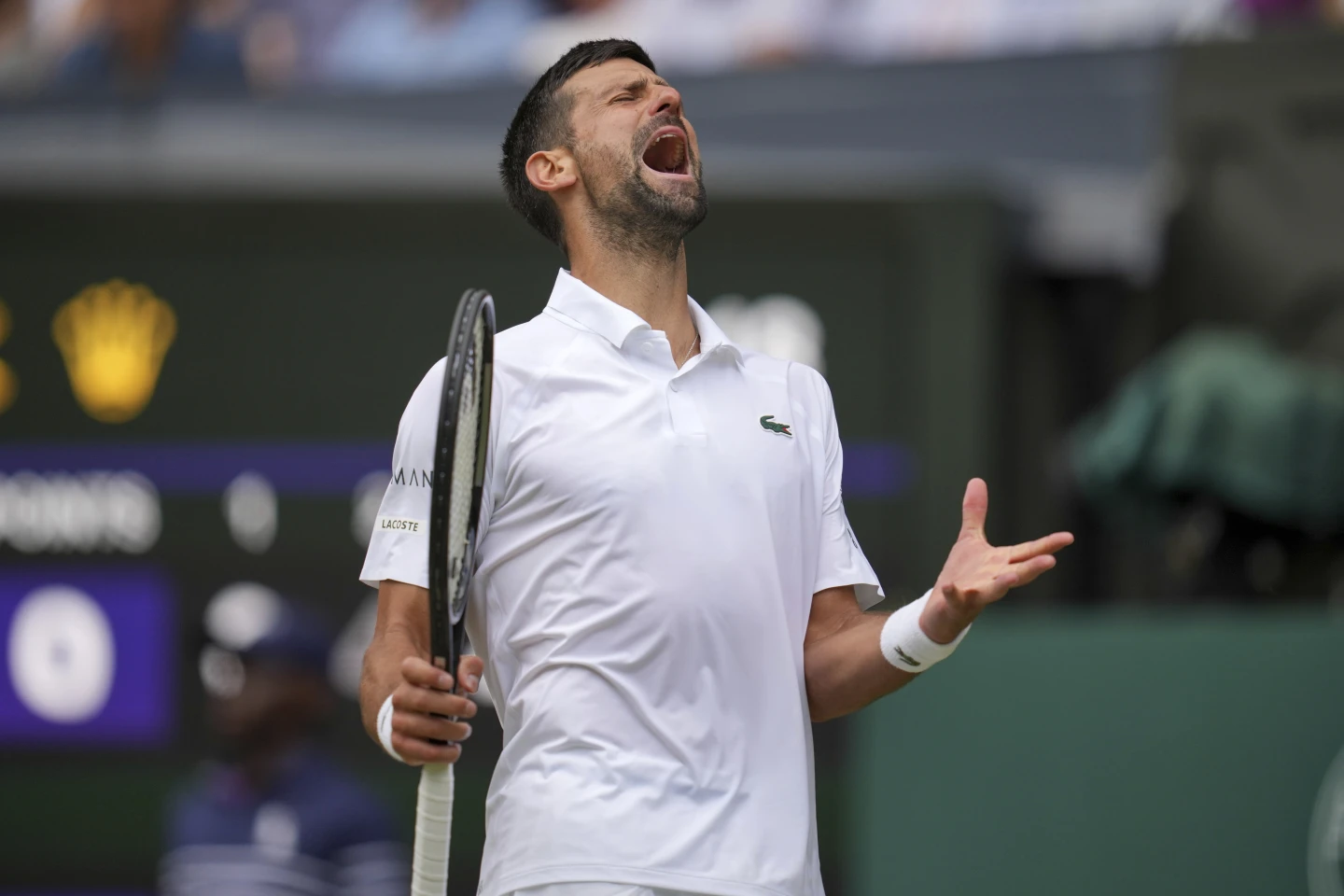
In-Depth Analysis: Inside the Psychological Arms Race Transforming the Sport
LONDON, THE ALL ENGLAND CLUB – The stage is set. Two players, physically pristine, their techniques honed to a razor’s edge. They have endured identical training regimens, their diets are scientifically perfect, and their physios have declared them in peak physical condition. The match begins, and for the first set, they are inseparable. Then, a single disputed line call. A missed overhead. A moment of chaos. One player tightens his grip, his gaze turning to flint. The other’s shoulders slump, his frustration palpable. The match, once a dead heat, spirals in one direction.
This is the modern battleground of tennis. While the thunderous aces and breathtaking rallies capture the headlines, the definitive war is waged not with forehands and backhands, but between the ears. The baseline is no longer just a line on the court; it is the frontier of psychological endurance. In an era where physical and technical margins are thinner than ever, mental strength has emerged as the ultimate performance differentiator.
This is not merely about “mental toughness” as a vague cliché. This is a sophisticated, coached, and trainable skillset—a psychological infrastructure that separates the champions from the contenders. This is an in-depth exploration of the unseen battle that is redefining the game.
The Data Doesn’t Lie: Quantifying the Mental Edge
For decades, the mental game was an intangible, spoken about in hushed tones but rarely measured. Today, sports psychologists and data analysts are quantifying its impact with startling clarity.
- The Tie-Break Phenomenon: Statistically, the win rate of the top-ranked players in tie-breaks is disproportionately high. Novak Djokovic, for instance, has historically held a win percentage in tie-breaks that defies normal distribution. This isn’t luck; it’s a pattern of elevated performance under maximum pressure.
- Break-Back Statistics: Analysts now track the percentage of times a player wins the subsequent game immediately after being broken. The greats—Rafael Nadal, Serena Williams—consistently post high “break-back” rates. This is a direct measure of resilience, the ability to reset mentally after a setback rather than allowing it to trigger a collapse.
- The Fifth-Set Specialist: In the gruelling arena of best-of-five-set tennis, certain players develop a legendary status in deciders. Their physical conditioning is a given, but their fifth-set record is a pure testament to their psychological stamina, focus, and tactical clarity when fatigue sets in for both players.
As explored in a recent 9jazic.com data deep dive, “The Clutch Gene: Analysing the Statistics of Pressure in Tennis”, the numbers unequivocally show that the world’s top five players consistently outperform their lower-ranked rivals in high-pressure moments, despite often having similar, or even inferior, raw serving or winners statistics for the match overall. The difference is almost entirely contextual performance.
The Pillars of the Modern Mental Game
So, what constitutes this modern mental framework? It’s a multi-faceted discipline built on several core pillars.
1. Emotional Regulation: From Fire to Focus
The days of the perpetually fiery, emotionally volatile champion, like a John McEnroe, are fading. While passion remains, uncontrolled emotion is now seen as a tactical liability.
- The 20-Second Rule: The time between points, governed by the shot clock, is the most critical window in a player’s mental process. Top players use a strict ritual: a deep breath, a deliberate turn away from the point of error, a focused look at their strings, and a clear plan for the next point. This ritual is a hard reset, preventing negative emotion from bleeding into the next rally.
- The Poker Face: Players like Carlos Alcaraz, for all his explosive energy, have mastered the art of the in-point “poker face.” They rarely show frustration or elation until a set is won. This denies their opponent any psychological feedback or encouragement.
2. Process Over Outcome: The Mantra of the Greats
Ask any top player about their goal, and you will rarely hear “win Wimbledon.” You will hear: “Focus on my serve.” “Play each point.” “Stick to the process.”
This is a deliberate cognitive reframing. The outcome—winning a title—is a distant, overwhelming prospect. The process—executing a specific serve, following a game plan—is immediate, controllable, and manageable. By focusing entirely on the process, players insulate themselves from the paralysing pressure of the result.
Dr. Rebecca Symons, a leading sports psychologist working with several ATP and WTA players, explains: “We work on building a ‘bubble of focus.’ Inside that bubble, the only things that exist are the player, the ball, and the immediate tactical objective. The crowd, the scoreboard, the title—they are all outside the bubble. The skill is in maintaining its integrity, point after point.”
3. Embracing Vulnerability and Mindfulness
A surprising, yet crucial, evolution in the mental game is the acceptance of vulnerability. The “iron man” persona who never admits to fear or pressure is an outdated model.
- Iga Swiatek’s Honesty: The Polish world number one has been remarkably open about her struggles with pressure and the impostor syndrome she felt after rising to the top. By acknowledging these feelings, she and her team could address them directly with a psychologist, rather than letting them fester as a hidden weakness.
- Mindfulness and Meditation: Novak Djokovic is the most famous proponent, but he is far from alone. Players like Stefanos Tsitsipas and Naomi Osaka have spoken extensively about using meditation and mindfulness to stay present. This isn’t new-age fluff; it’s a practical tool for quieting the “monkey mind” that ruminates on past errors or fears future outcomes.
For a deeper look at these techniques, 9jazic.com‘s profile, “The Mind of a Champion: Inside the Meditative Routines of the Tennis Elite”, details the specific practices players use to cultivate present-moment awareness.
Case Studies in Psychological Warfare
The Ultimate Metronome: Novak Djokovic
Djokovic’s physical prowess is undeniable, but his true dominion is psychological. His game is built on the foundation of relentless pressure. He returns serves from impossible positions, elongates rallies, and exudes an aura of impenetrable calm. Opponents are forced to play closer to the lines, to take greater risks, because they know a single error will not be enough to win a point against him. He turns matches into a test of who can withstand the psychological torment of his consistency longer. The famous “Djokovic Smash”—his occasional, uncharacteristic miss on an overhead—is so notable precisely because it is a rare crack in an otherwise impervious mental facade.
The Phoenix: Rafael Nadal
Nadal’s mental signature is his legendary resilience and his ritualistic focus. His pre-serve routines are a public display of his need for order and control. But his greatest strength is his ability to embrace the struggle. While other players hope to win comfortably, Nadal expects a war. He is psychologically prepared for suffering, for setbacks, for facing match points. This reframing of adversity as an inevitable and even welcome part of the journey is what has powered his countless comebacks. He doesn’t fight the battle; he is the battle.
The New Guard: Carlos Alcaraz
Alcaraz represents the synthesis of the old and new. He possesses the fiery passion of a young Nadal, but it is channeled through a modern, process-oriented mindset coached by Juan Carlos Ferrero. His ability to smile in high-pressure moments, to attempt audacious shots at critical junctures, shows a mind unburdened by fear. He plays with a joyful freedom that is, in itself, a powerful psychological weapon, disarming opponents who are mired in the gravity of the moment.
The Cost of the Crisis: When the Mind Falters
The flip side of this mental arms race is the intense toll it takes. The spotlight on psychology has also illuminated the profound struggles players face.
- Naomi Osaka’s Brave Stand: Osaka’s openness about her battles with depression and social anxiety forced the entire sporting world to confront the immense psychological pressure placed on athletes. Her decision to prioritise her mental health over mandatory press conferences was a watershed moment, sparking a global conversation.
- “Choking” Under Pressure: This is the spectre that haunts every player. Modern understanding views “choking” not as a character flaw, but as a failure of the cognitive process under stress—often an overthinking of automated skills. The yips on a serve or a simple volley are a stark physical manifestation of a psychological breakdown.
The tennis community is slowly evolving its response. As discussed in the 9jazic.com investigative piece, “Breaking the Stigma: The WTA’s Pioneering Approach to Mental Health”, governing bodies are now implementing structured mental health support, providing licensed therapists and creating a safer environment for players to seek help without judgment.
Building the Fortress: How the Mental Game is Coached
Gone are the days when a coach was solely a technical advisor. The modern coaching team is incomplete without a sports psychologist or a coach who is psychologically literate.
- Scenario Training: Players no longer just practice serves and returns. They practice specific psychological scenarios: “You’re down a break in the third set, simulate it.” “You just had a bad line call, now play the next three points.”
- Cognitive Behavioral Techniques (CBT): Players are taught to identify and reframe negative thought patterns. “I always lose to this player” becomes “I have the tools to challenge this player today.”
- Breathing and Biofeedback: Wearable technology can monitor heart rate variability (HRV), giving players real-time data on their stress levels. They then use breathing techniques learned in training to lower their HRV, directly linking a mental technique to a physiological outcome.
The Future: The Mind as the Final Frontier
As technology continues to advance, the next frontier is the brain itself. Neurofeedback training, where players learn to control their brainwave patterns to enhance focus and relaxation, is on the horizon. The potential for personalised mental conditioning, tailored to a player’s unique psychological DNA, is immense.
The conclusion is inescapable. The player of the future will be forged not just on the practice court, but in the mind gym. They will be part athlete, part Zen monk, part cognitive scientist. They will understand that the six inches between their ears is the most important real estate in the sport.
The game has evolved from a test of skill, to a test of skill and athleticism, to the ultimate triathlon of skill, athleticism, and mind. The player who can master all three will not just win matches; they will define eras.
For more on the evolving science of performance, don’t miss our ongoing series on 9jazic.com, “Peak Performance: The Science of Sustained Sporting Excellence”.