 By Happypal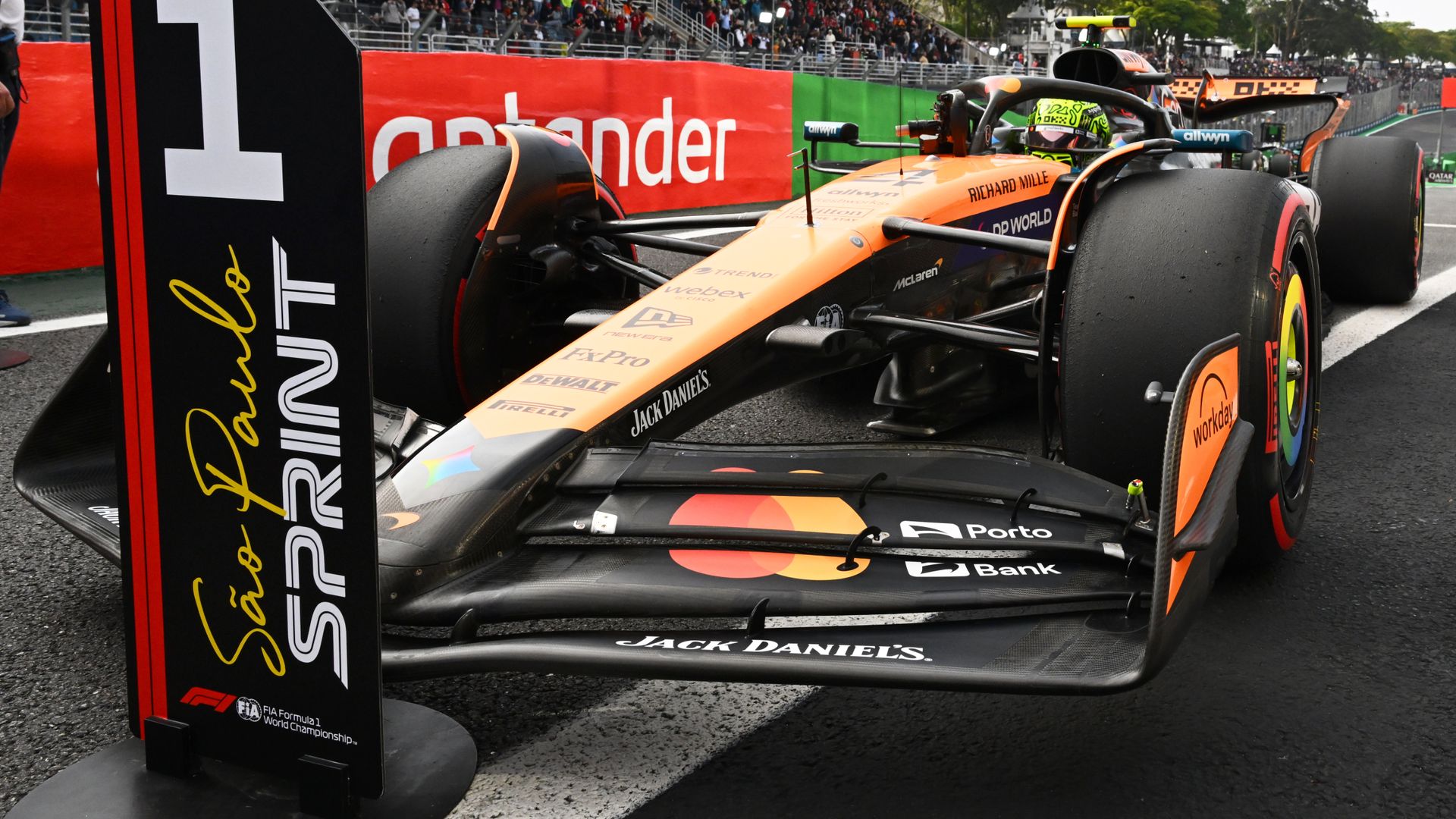
Introduction: Sao Paulo Awaits the Storm
Formula 1 never lacks drama — and as the sport rolls into São Paulo for another electrifying Brazilian Grand Prix weekend, the weather might once again steal the spotlight. Heavy clouds hang over Interlagos, and forecasts suggest that Sprint Saturday could be one of the most unpredictable sessions of the entire season.
Rain has long been a defining feature at this circuit. From Senna’s legendary wet-weather masterclasses to more recent chaos that reshaped championship outcomes, Brazil has always been synonymous with the unexpected. But this year, the stakes are even higher.
With a three-way title battle between Lando Norris, Max Verstappen, and Oscar Piastri still alive, any weather disruption could turn the grid upside down — and the championship picture with it.
For teams, it’s a logistical nightmare. For drivers, it’s a test of nerve. For fans, it’s a spectacle waiting to unfold.
As Sprint Saturday looms, Interlagos may yet again prove why it’s one of Formula 1’s most dramatic stages.
Weather Warning: Rain, Wind, and Chaos Forecast
Meteorologists have sounded the alarm. Saturday’s weather charts for São Paulo’s Autódromo José Carlos Pace are painting a picture of potential mayhem.
- Chance of rain: 80%
- Wind gusts: up to 45 km/h
- Humidity: 95%
- Track temperature: fluctuating between 18°C and 23°C
These conditions are treacherous for Formula 1 machinery. Strong winds can dramatically affect car balance, especially through Interlagos’s sweeping corners, while heavy rain can cause standing water in key braking zones.
Teams have already begun contingency planning — revising tyre strategies, adjusting downforce setups, and running simulations for wet-to-dry transitions.
As one engineer put it:
“At Interlagos, rain doesn’t just change grip — it changes everything: tyre wear, brake temperatures, pit window timings. You can go from hero to zero in one lap.”
That unpredictability is precisely what makes the Sprint format even more thrilling this weekend.
Sprint Format: Why This Saturday Matters More Than Ever
Formula 1’s Sprint format, introduced to add extra excitement across race weekends, gives drivers a chance to collect valuable championship points before the main event. But it also means there’s little margin for error.
In dry conditions, the short, fast-paced 24-lap Sprint already demands perfection. Add rain into the mix, and the challenge becomes immense.
Drivers have just one practice session before entering Sprint qualifying — the “Shootout” — followed by the Sprint itself. That leaves minimal time for setup tweaks.
If the rain hits during the Shootout, qualifying could turn into a lottery, with track evolution dictating who gets through. The brave could be rewarded; the cautious could find themselves near the back.
With title points on the line, every risk — every lap — will count.
Interlagos: A Circuit Built for Drama
The Interlagos circuit has always thrived in chaos. Nestled in the heart of São Paulo, its 4.3-kilometre layout winds through elevation changes, off-camber corners, and unpredictable microclimates that make weather forecasting nearly impossible.
Rain clouds often gather over the Senna S, even when sunshine breaks through on the opposite side of the track. That unique geography makes it a nightmare for strategists — and a dream for fans.
Famous moments etched in Interlagos history include:
- 2008: Lewis Hamilton’s final-corner championship win over Felipe Massa.
- 2012: Sebastian Vettel’s comeback drive through rain to secure his third title.
- 2016: Max Verstappen’s wet-weather masterclass to finish on the podium despite spinning earlier.
- 2022: George Russell’s maiden Grand Prix win after a Sprint victory.
In every case, rain played a decisive role. Saturday could be no different.
Drivers’ Reactions: Excitement Meets Nerves
Lando Norris (McLaren):
“You never want to wish for chaos, but Interlagos in the wet? It’s unpredictable — and that’s what makes it special. We’ve shown pace here, but we’ll have to stay sharp.”
Norris, now in the thick of the title hunt, thrives in mixed conditions. His ability to read grip levels early has often given him the edge when the track changes rapidly.
Max Verstappen (Red Bull):
“We’ve seen how fast McLaren have become. For us, it’s about staying calm. The weather could make it tricky, but I like racing in the rain. You just adapt.”
Verstappen has a history of dominance in the wet — from his Brazil 2016 heroics to his control in Germany 2019 — and few doubt his ability to manage chaos.
Oscar Piastri (McLaren):
“It’s my first Sprint weekend here. I love this track, but I’ve heard stories about the rain! Whatever happens, it’s going to be fun.”
For the young Australian, this could be a defining test of composure.
Team Strategies: Balancing Risk and Reward
McLaren: Rolling the Dice
McLaren’s rise this season has been extraordinary, but wet-weather setups could test their newfound consistency. The car performs best in cooler conditions, but excessive rain could neutralize their aero advantage. Expect them to go aggressive on tyre calls — especially if Norris qualifies in the top three.
Red Bull: Calculated Control
Red Bull’s focus will be on damage limitation. With Verstappen leading but under pressure, expect the team to prioritize clean points over risky gambles. However, if visibility becomes an issue, Verstappen’s experience could prove invaluable.
Mercedes: Searching for Redemption
Lewis Hamilton has always excelled in Brazil. After a tough campaign, he sees this as a chance to turn momentum around. The team may opt for a balanced setup, trading top speed for stability. If rain arrives mid-session, Hamilton’s wet-weather genius could shine once again.
Ferrari: Weather-Dependent Wildcard
Ferrari’s form has been inconsistent, but Charles Leclerc’s ability to extract speed in tricky conditions can’t be underestimated. A wet Sprint could offer him an unexpected shot at a podium start for Sunday.
The Science Behind F1 Rain Races
Formula 1 cars are engineering marvels designed for dry asphalt, but when rain hits, everything changes.
- Tyres: The Pirelli wet and intermediate compounds have deep grooves designed to displace up to 85 liters of water per second — yet even that may not prevent aquaplaning in Interlagos’ downhill sectors.
- Visibility: The spray generated from the diffuser can completely blind drivers, reducing visibility to less than 20 meters.
- Downforce: Teams often increase rear wing angle to generate more grip, sacrificing top speed for stability.
- Brakes: Cooling becomes a challenge. Cold carbon brakes lose efficiency, forcing drivers to adjust braking points.
In essence, a wet race is as much about mental adaptability as mechanical setup.
The Stakes: Championship Implications
With only a handful of races left, every point matters.
| Driver | Points | Position |
|---|---|---|
| Max Verstappen | 374 | 1st |
| Lando Norris | 331 | 2nd |
| Oscar Piastri | 309 | 3rd |
| Charles Leclerc | 275 | 4th |
| George Russell | 261 | 5th |
The Sprint offers eight points to the winner, which could significantly alter the standings if either Norris or Piastri outperform Verstappen.
A wet Sprint, full of variables, might be the McLaren duo’s best chance to close the gap before the full Grand Prix on Sunday.
History Repeats? When Rain Changed Championships
Brazilian rain has rewritten F1 history before.
In 2003, Giancarlo Fisichella won a rain-shortened, chaotic race after multiple red flags. In 2012, the season finale saw collisions, strategy gambles, and Vettel’s miraculous recovery.
Those races remind us that in Brazil, anything can happen. The difference between victory and disaster often comes down to a single pit stop or a moment’s hesitation.
Even the greatest champions — from Senna to Hamilton — have called Interlagos in the wet one of the hardest challenges in motorsport.
The Fans: Sao Paulo’s Unmatched Passion
Few venues in motorsport rival the passion of Brazilian fans.
Rain or shine, the grandstands around Interlagos will be packed with thousands waving flags, singing, and chanting the names of their heroes. Despite no home driver currently in F1, the spirit of Ayrton Senna still lingers — every cheer, every banner, every yellow flag is a tribute to Brazil’s racing icon.
That energy often lifts the drivers. For many, racing here feels special — emotional, even spiritual.
As one paddock insider put it:
“You can feel Senna here. When the rain falls, it’s almost like he’s reminding everyone — this is Brazil, this is where legends are made.”
Expert Insight: What To Expect on Sprint Day
Former F1 engineer turned pundit Marc Priestley analyzed what could unfold:
“The Sprint will probably start on intermediates, but with Interlagos, you can’t trust forecasts. The risk is the crossover point — when to switch tyres. Get it right, and you can gain ten seconds. Get it wrong, and you’re out of the points.”
He added:
“Teams like McLaren will be aggressive. Red Bull will play safe. But one thing’s certain — we’ll see a shake-up.”
Indeed, Saturday’s Sprint could set the stage for a spectacular Grand Prix finale.
What Happens If It Pours?
If conditions worsen significantly, F1 regulations allow for delays or shortened sessions.
- If the Sprint Shootout is washed out: Grid positions will be based on current championship standings or FP1 results.
- If the Sprint is delayed or halted: Race control can reduce distance or award half points if under 75% of laps are completed.
However, drivers are eager to race. Rain adds unpredictability — but also opportunity.
Predictions: Who Thrives in the Wet?
| Driver | Predicted Sprint Finish | Key Advantage |
|---|---|---|
| Max Verstappen | 1st | Master of wet-weather control |
| Lando Norris | 2nd | High confidence and adaptability |
| Lewis Hamilton | 3rd | Exceptional record in wet races |
| Charles Leclerc | 4th | Late-braking precision |
| Oscar Piastri | 5th | Steady under pressure |
Still, predictions mean little under rain-soaked skies — Interlagos has a way of tearing them apart.
Related Posts from 9jazic Sports
- Norris the New Favourite in F1’s Title Race as Crunch Time Looms
- Why Special Interlagos is Sure to Provide F1 Title Battle Drama
- Denver Broncos Edge Out Las Vegas Raiders in a Defensive Thriller
Final Thoughts: Chaos Awaits in Sao Paulo
Every year, the Brazilian Grand Prix delivers something unforgettable — and this weekend’s Sprint Saturday promises to be no exception.
The blend of high stakes, volatile weather, and fearless racing at Interlagos makes it the perfect recipe for drama. One wrong tyre call, one safety car, one burst of rain — and the entire season narrative could shift in an instant.
As the clouds gather over São Paulo, the teams prepare, the fans wait, and the drivers steel themselves. Rain may be coming, but so too is another chapter in Formula 1’s ever-evolving story of speed, strategy, and survival.