 By Happypal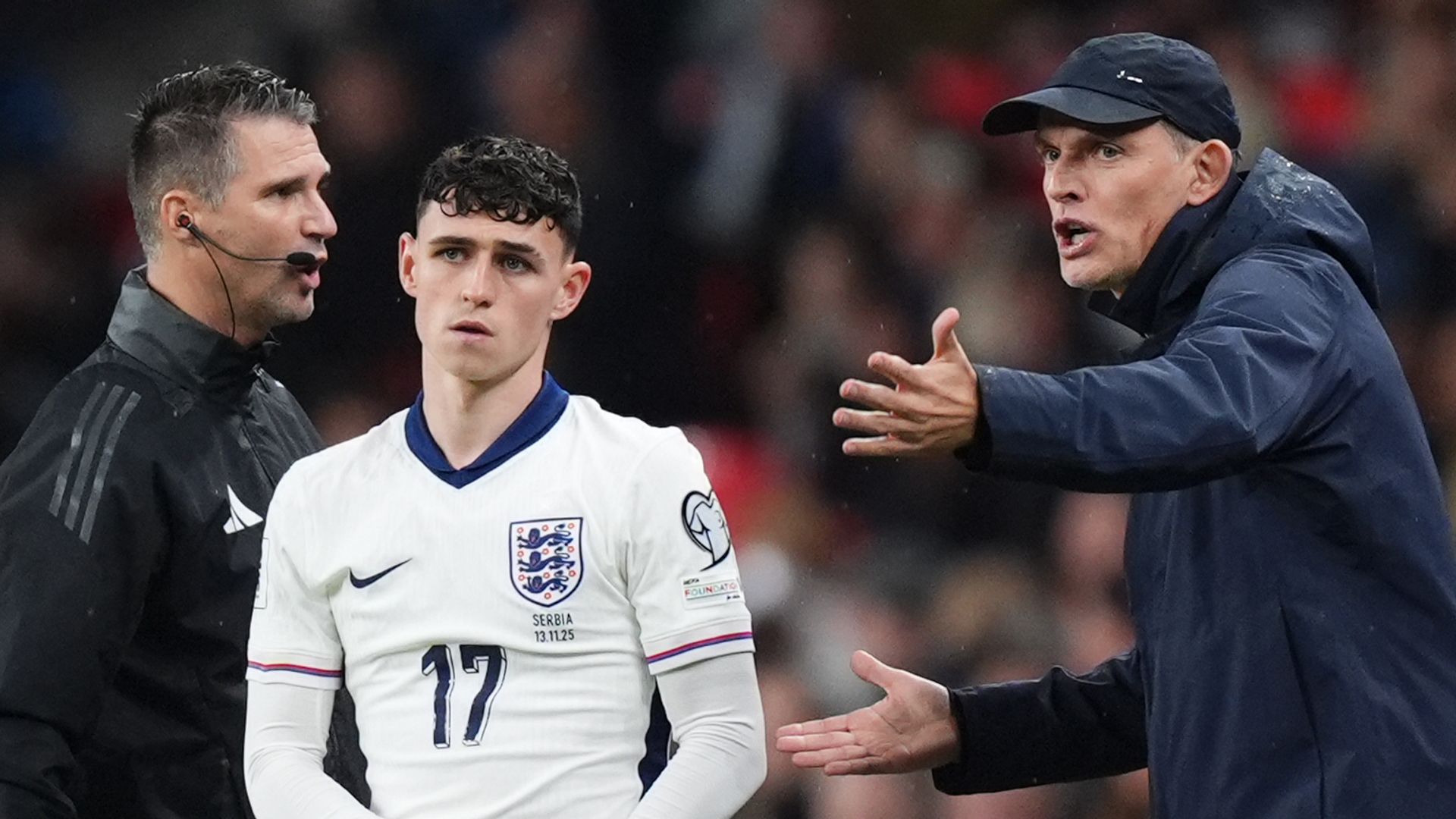
England’s recent matches have sparked debate about Phil Foden’s evolving role under Thomas Tuchel and how it intersects with Harry Kane’s presence—or potential absence—up front. Tuchel’s comments suggest a willingness to experiment, even positioning Foden as a central striker or as Kane’s supporting partner in attack. But is this a sustainable strategy, or a short-term solution tailored to specific opponents?
This article dives into the tactical implications, player profiles, match scenarios, historical comparisons, and expert insights to understand how England might deploy Foden in a more central, influential role while maximizing Kane’s impact.
Foden as England’s Central Striker

Tuchel indicated he would have “no problem” deploying Foden as a central striker, particularly if Kane is unavailable. This approach relies on Foden’s creativity, agility, and vision, allowing him to link midfield play directly with goal-scoring opportunities.
Key Attributes Supporting This Role
- Positional Awareness: Foden can exploit spaces between defenders, drawing attention away from other attackers.
- Link-Up Play: His ability to combine with wingers and midfielders makes him an ideal conduit for transitional play.
- Finishing Ability: While traditionally a playmaker or winger, Foden’s recent goal contributions for Manchester City highlight his potential to function centrally.
Tactical Considerations
- England could adopt a false nine system, with Foden dropping deep to draw defenders out of position, freeing wide players like Sterling, Rashford, or young emerging talents.
- If Kane is present, Foden’s role shifts to that of an ‘accomplice’, acting as the creative spark behind the striker.
Harry Kane: The Pivot Point

Kane’s positioning dramatically affects how Foden is utilized. When Kane is available, Foden’s movement can enhance Kane’s goal-scoring opportunities by:
- Drawing defenders wide to create space for Kane in the penalty area.
- Linking with Kane in tight channels for quick one-twos or flick-ons.
- Exploiting second balls and rebounds from Kane’s aerial duels.
Tuchel has repeatedly stressed the need to maximize Kane’s efficiency while also integrating Foden’s creativity. The challenge lies in balancing these roles to maintain structural integrity without leaving defensive gaps.
Tactical Breakdown: How It Could Work
Formation Options
- 4-3-3 with False Nine:
- Foden as central striker dropping between defensive lines.
- Kane operating just behind or slightly ahead depending on movement.
- Wingers stretching the defense and creating crossing lanes.
- 4-2-3-1 with Foden Behind Kane:
- Foden as an attacking midfielder functioning as Kane’s ‘accomplice’.
- Allows England to maintain midfield control while increasing attacking fluidity.
- Dynamic Rotation System:
- Mid-match swapping of positions between Kane and Foden to confuse opposition markers.
- Encourages versatility and unpredictability in attacking sequences.
First Half Dynamics: Traditional Setup
In fixtures where Kane starts, England tends to play a more structured first half, focusing on controlling possession and stretching the opposition. Foden, operating on the wing or in a supporting role, contributes to:
- Early ball progression through midfield channels.
- Interlinking with full-backs to overload defensive flanks.
- Quick pressing to regain possession high up the pitch.
Impact: This allows Kane to conserve energy for finishing opportunities in the second half while Foden acts as a creative buffer.
Second Half Dynamics: Foden Central
Deploying Foden centrally mid-game can have several benefits:
- Increased Offensive Pressure: By shifting Foden into Kane’s zone, England can overload defensive lines and create numerical advantages.
- Exploiting Tired Defenders: Foden’s agility and quick decision-making can exploit space as opposition fatigue sets in.
- Fluid Midfield Linkage: Foden’s ability to drop into midfield facilitates ball circulation, maintaining possession and tempo control.
Player Analysis
Phil Foden
- Strengths: Vision, quick footwork, decision-making, creativity, shooting accuracy.
- Weaknesses: Physical presence is less compared to traditional strikers; may require support in aerial duels.
- Potential: If deployed centrally, Foden could evolve into a hybrid striker-playmaker, combining goal-scoring with assist creation.
Harry Kane
- Strengths: Positioning, finishing, aerial ability, link-up play.
- Weaknesses: Slight decline in pace compared to younger forwards; requires creative support to maximize efficiency.
- Role Impact: With Foden’s support, Kane can focus on finishing while Foden destabilizes defensive lines.
Supporting Cast
- Jude Bellingham: Can provide midfield cover and link play to Foden or Kane.
- Declan Rice: Anchors midfield, allowing Foden freedom to move centrally.
- Wingers / Full-backs: Exploit spaces created by Foden and Kane’s interchanging positions.
Historical Comparisons
- Lionel Messi & Sergio Agüero (Argentina/City): Messi often dropped deep to link play while Agüero remained central; similar dynamic can be mirrored with Foden and Kane.
- Kevin De Bruyne & Lukaku (Belgium): Central playmaker supporting a primary striker, creating flexibility in attacking patterns.
These comparisons illustrate the viability of Foden’s central role if England can maintain structure while maximizing movement and spacing.
Pundit Perspectives
Analysts have suggested:
- Foden’s adaptability makes him ideal for fluid attacking systems.
- Kane remains crucial as the focal point, while Foden can act as the destabilizer of defensive lines.
- Success hinges on midfield balance, with players like Rice and Bellingham ensuring defensive security during transitions.
Potential Risks
- Defensive Exposure: Foden moving centrally may leave gaps if midfielders do not cover.
- Inconsistency in Execution: Requires precise understanding between Foden, Kane, and wingers.
- Over-reliance on Creativity: Opponents may predict Foden’s central movement, neutralizing danger without sufficient rotation.
Mitigating these risks involves:
- Structured rotation in training.
- Clear communication during matches.
- Reinforcing defensive coverage by midfielders.
Related Posts
- England’s Emerging Talents for 2026 World Cup
- Tuchel’s Tactical Innovations in Modern Football
- Phil Foden: Evolution from Playmaker to Hybrid Forward
Conclusion
Deploying Phil Foden as a central striker or as Kane’s accomplice is a strategically sound option for England, offering:
- Greater attacking fluidity and unpredictability.
- Enhanced utilization of Kane’s finishing prowess.
- Opportunities for emerging talents like Rogers and Bellingham to integrate seamlessly.
Challenges remain, primarily around maintaining midfield stability and defensive balance. However, Tuchel’s tactical flexibility and the squad’s adaptability suggest that England is capable of implementing this system effectively, particularly in high-stakes qualifiers and the upcoming 2026 World Cup.
Ultimately, Foden’s evolution demonstrates how modern football demands hybrid players—creative, intelligent, and versatile. England’s ability to integrate him centrally while leveraging Kane’s experience could define the next chapter in their international success.