 By Happypal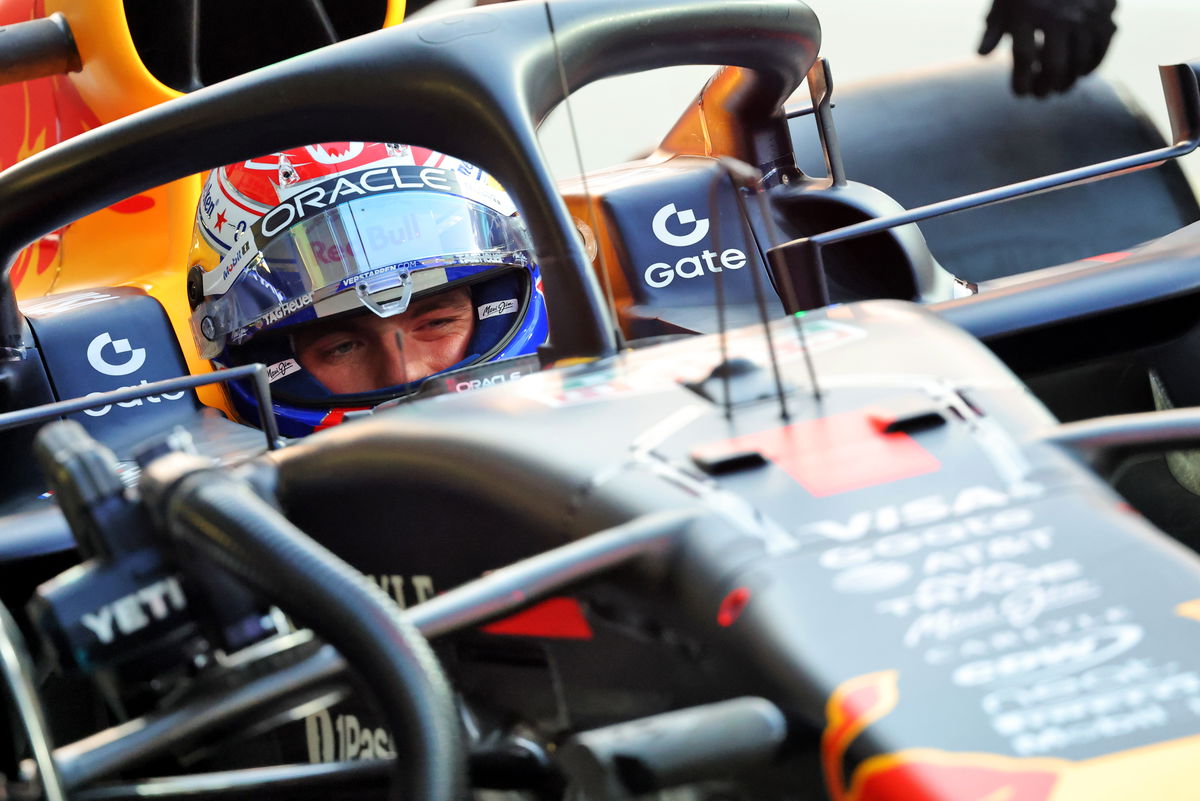
ABU DHABI, UAE – The desert twilight at the Yas Marina Circuit is a spectacle of serene beauty, painting the endless grandstands and shimmering hotel complex in soft hues of orange and purple. Yet, in the heart of the Red Bull Racing garage, amidst the cool glow of data screens and the scent of burnt hydrocarbons, a less picturesque reality was taking shape. Max Verstappen, the driver who has dominated Formula 1’s landscape for half a decade, emerged from Friday practice with a furrowed brow and a pointed diagnosis. The aura of invincibility that has trailed his RB21 for much of the 2025 season had, for a critical moment, flickered. The issue wasn’t outright speed, but something more fundamental, more ominous for a team built on precision: a profound and unsettling lack of balance.
“Simply not good enough,” Verstappen stated, his tone matter-of-fact yet carrying the weight of significant concern. “The biggest problem is the balance. It’s just extremely difficult to drive. We are sliding too much, the rear is very nervous, and I have no confidence in the high-speed [corners]. We are losing a lot of time there.” This was not the typical Friday sandbagging or strategic pessimism. This was the three-time world champion pinpointing a vulnerability with the chilling clarity that has made him the sport’s benchmark.
In the context of the Abu Dhabi Grand Prix—a circuit demanding aerodynamic efficiency, razor-sharp change of direction, and tire-preserving stability—Verstappen’s warning is a flare shot into the Arabian night. It reveals a Red Bull machine seemingly at odds with itself, setting the stage for a tense 48-hour engineering battle to reclaim its throne before qualifying definitively reshapes the championship narrative.
Part I: The Diagnosis – Deconstructing the “Nervous Rear”
Verstappen’s feedback is a technical treatise in a soundbite. A “nervous rear” in F1 parlance is a critical flaw, especially at Yas Marina.
What It Means Physically:
The car’s rear axle is losing grip unpredictably, particularly during corner entry and mid-corner. This “nervousness” manifests as sudden oversteer—where the rear tires lose adhesion before the front, causing the car’s rear to step out. For a driver, this demands constant, minute corrections on the steering wheel, eroding confidence and punishing tire life.
Why It’s Catastrophic at Yas Marina:
The circuit’s final sector is a winding, technical sequence of low and medium-speed corners (turns 11 through 17) that demands a point-and-squirt driving style. A nervous rear here is a time-bleeding disaster. It prevents the driver from applying early throttle on exit, as any aggressive input could snap the car into a spin. The time loss compounds through each corner. Furthermore, the long, multi-apex Turn 3 and the high-speed sweeps of Turns 6 and 9 require a planted, stable car. Instability here forces a driver to lift, sacrificing crucial tenths.
The Setup Conundrum:
The issue points to a fundamental setup miscalculation. The team may have pursued a rear-downforce level or mechanical balance (via suspension or anti-roll bars) that works in theory but not with the current track conditions—likely a track surface with lower grip than anticipated or higher ambient temperatures affecting tire behavior. Verstappen’s comment about sliding indicates they are operating outside the tire’s optimal operating window, causing graining or overheating.
Part II: The Data Doesn’t Lie – A Glance at the Timing Sheets
While headline lap times on Friday are often deceptive due to varying fuel loads and engine modes, the underlying data trends were telling.
- Sector Analysis: Verstappen’s sector times, particularly in Sector 3, were consistently off the pace set by the McLarens and the resurgent Ferraris. This directly correlates with his complaint about the car’s behavior in the twisty final sequence.
- Long Run Pace: More alarming for Red Bull would have been their performance on the high-fuel race simulations. A nervous car destroys its tires. If the rear tires are sliding excessively, they will overheat and degrade rapidly, turning a one-stop strategy into a desperate two-stop. Early indications suggested the McLaren of Lando Norris and the Ferrari of Charles Leclerc held a marginal but consistent advantage in race-pace consistency.
- Telemetry Traces: Engineers would have been studying the steering and throttle traces. A jagged, saw-toothed steering input trace through high-speed corners is the tell-tale sign of a driver fighting an unstable platform. Verstappen’s would have been a seismograph of discontent.
Part III: The Competitors’ Response – McLaren and Ferrari Smell Blood
Across the paddock, Verstappen’s public concerns would have been met with renewed vigor.
McLaren’s Confident Edge:
Lando Norris, who topped the timesheets in FP2, presented a stark contrast. “We hit the ground running,” he reported. “The car feels planted, especially in the last sector. We can attack the curbs, get on the power early. It’s a nice feeling heading into the weekend.” For a team that has chipped away at Red Bull’s dominance all season, this is a pivotal moment. Their MCL38, with its prodigious low-speed mechanical grip, is perfectly suited to exploit Red Bull’s weakness.
Ferrari’s Late-Season Surge:
Carlos Sainz and Charles Leclerc also looked strong, with the SF-25 appearing to have solved its early-season tire degradation woes. Ferrari’s aggressive, downforce-heavy package was finding sweet spot around Yas Marina. “The car is reacting well to changes,” said Sainz. “We are in the mix.”
The psychological blow of Verstappen’s frustration cannot be understated. For two years, his Friday debriefs were masterclasses in subdued confidence. Now, he has handed his rivals a potent mental edge: the champion is beatable this weekend.
Part IV: The Red Bull War Room – A Night of Calculus and Compromise
The period between Friday practice and Saturday qualifying is where championships are often won or lost in the engineering suite. For Red Bull’s technical director Pierre Waché and his team, the night would be long.
The Trade-Off Dilemma:
Fixing a nervous rear often involves trading one strength for another. They could:
- Increase Rear Downforce: Add more wing, sacrificing straight-line speed on the long two straights.
- Soften the Rear Suspension: This improves mechanical grip and compliance but can hurt aerodynamic platform stability and slow-corner responsiveness.
- Shift Balance Forward: Adjust brake migration or differential settings to make the car more stable on entry, but risk understeer (front-end push) on exit.
Each fix has a consequence. The art is finding the compromise that loses the least time overall. Verstappen’s role is critical—he must feedback on every change, searching for a “driveable” car over a theoretically fast one.
The Historical Ghost:
The team will be painfully aware of the 2021 season finale on this same track, where a setup misstep left them vulnerable to Lewis Hamilton’s Mercedes. The memory of that tactical defeat, albeit in different circumstances, will sharpen their focus.
Part V: The Stakes – More Than Just a Season Finale
While the 2025 drivers’ and constructors’ titles may already be decided, Abu Dhabi 2025 carries immense weight for the narrative arc heading into 2026.
- Momentum for the Off-Season: Ending the season with a dominant win cements supremacy. Ending it with a struggle, or even a defeat, provides rivals with a blueprint of vulnerability and a winter’s worth of motivation.
- The 2026 Development Signal: This race is the final data point before teams fully lock in their concepts for the revolutionary 2026 regulations. A weakness exposed here could influence design philosophy for the next generation of cars.
- Verstappen’s Standard: The Dutchman’s criticism is a reflection of his own relentless standards. He is holding the team to the same level of excellence he delivers on track. A failure to rectify the issues would be a rare crack in the team-driver symbiosis that has been their greatest strength.
Conclusion: The Ultimate Test of a Champion Team
As the lights of the Yas Marina circuit glitter against the night sky, the Red Bull garage remains a hive of intense, quiet activity. Max Verstappen has done his job: he has identified the enemy with sniper-like precision. The enemy is not Norris, Leclerc, or Sainz. The enemy is the RB21’s own recalcitrant balance.
The coming hours will test Red Bull’s pedigree as fiercely as any Sunday afternoon duel. They must diagnose, innovate, and solve. They must turn Verstappen’s concern into confidence. For in Formula 1, speed is a product of many things, but none more so than balance. And a champion out of balance is, for the first time in a long while, a champion within reach.
This Abu Dhabi Grand Prix is no longer just a season finale. It is a stress test for a dynasty. And the first signs, from the mouth of its king, suggest it is a test they did not see coming.
@9jazicSPORT ⚽