 By Happypal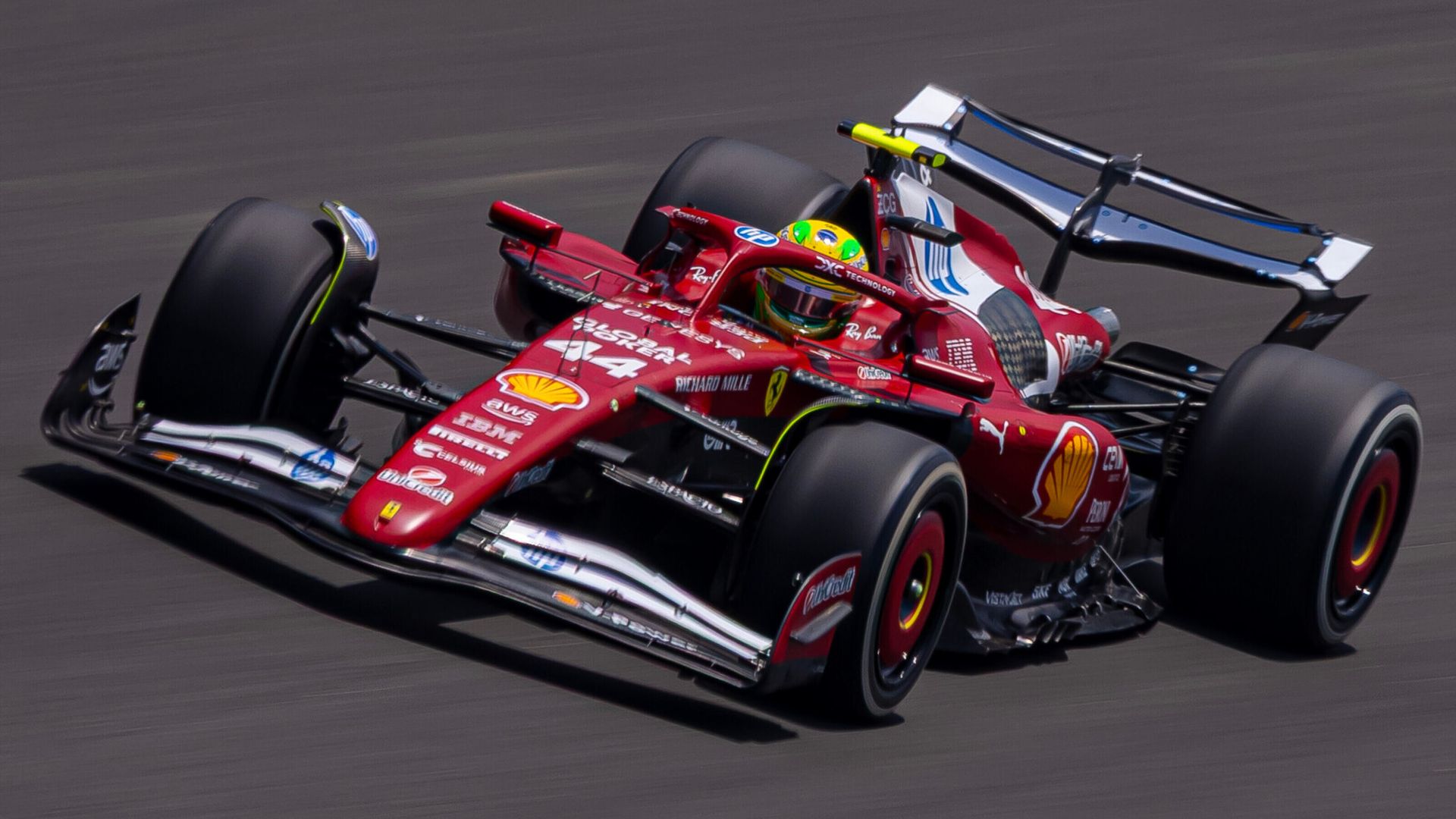
Ferrari’s turbulent Formula 1 season took another discouraging turn at Interlagos, as both Lewis Hamilton and Charles Leclerc endured a challenging Sprint Qualifying session that left the Scuderia looking vulnerable in Brazil. What was once a campaign brimming with optimism has now turned into a fight to simply stay relevant in the upper midfield, as the team’s persistent struggles with consistency, tyre degradation, and setup balance continue to haunt them.
A Weekend That Began With Hope
Heading into the Sao Paulo Grand Prix, there was genuine optimism at Ferrari’s Maranello base. The engineers believed that the short, undulating circuit of Interlagos — with its mix of medium-speed corners and long straights — would play into the SF-25’s strengths. But from the opening laps of practice, it was clear that Ferrari were fighting an uphill battle.
Hamilton, still adjusting to life at Ferrari after his blockbuster move from Mercedes, voiced frustration early on, complaining of unpredictable rear-end behavior. Meanwhile, Leclerc was caught in a setup dilemma — the Monegasque couldn’t find the right balance between straight-line speed and cornering grip, a problem that has plagued Ferrari all season.
“The car just feels disconnected,” Hamilton reportedly told his race engineer during the session. “There’s no confidence on entry, and we’re losing time everywhere.”
That feeling of helplessness mirrored the mood inside the Ferrari garage.
Sprint Qualifying: A Struggle for Stability
The Sprint Qualifying session at Interlagos served as a microcosm of Ferrari’s season. Despite showing glimpses of pace during Q1, both drivers were quickly outclassed as the track evolved. McLaren’s Lando Norris and Oscar Piastri looked composed, Red Bull’s Max Verstappen was untouchable, and even Mercedes seemed to have a better handle on the changing conditions.
Hamilton managed to scrape into the top ten, but Leclerc was left frustrated after missing out by mere tenths. “We’re pushing hard, but we’re not extracting the potential,” he said after the session. “We need to find something that works, because right now, we’re stuck.”
The “something” Leclerc referred to is the consistent issue that has plagued Ferrari — a lack of adaptability. The team’s car appears fast on paper but is extremely sensitive to track temperature, surface grip, and fuel load. This makes it difficult for the engineers to predict performance swings, often leaving them guessing when making setup calls.
Ferrari’s Balance Problem
Ferrari’s ongoing battle with car balance has been well-documented throughout the 2025 season. When the car works, it shines — as seen during Leclerc’s impressive podium in Suzuka — but when conditions shift, it collapses dramatically.
At Interlagos, the car’s flaws were magnified. The SF-25 understeered heavily in Sector 2, losing precious tenths in the medium-speed turns, while its drag-heavy setup left it exposed on the long pit straight.
Hamilton, typically one of the sport’s best at managing unpredictable machinery, couldn’t mask his frustration. “We’ve got good ingredients,” he said post-session, “but the recipe isn’t coming together. We’re cooking something that’s not ready yet.”
Ferrari’s technical director, Enrico Cardile, admitted that the team’s difficulties stem from a “fundamental aerodynamic imbalance.” Despite updates introduced earlier in the season, the car still suffers from instability under braking and mid-corner load shifts.
The Mental Toll on the Team
Ferrari’s issues are not just mechanical; they’re psychological. After yet another disappointing Sprint Qualifying, team morale visibly dipped. Mechanics moved around the garage quietly, engineers stared at data screens with frustration, and Hamilton was seen having a long discussion with Leclerc and team principal Frédéric Vasseur.
According to Sky Sports’ pit-lane reporter, Ferrari looked “despondent” — a word that has come to define their 2025 season.
“Ferrari’s body language tells the story,” former driver and Sky Sports pundit Martin Brundle observed. “They look like a team unsure of its own direction. The car isn’t responding, and that leaves everyone — from drivers to strategists — questioning the fundamentals.”
Vasseur’s Leadership Tested
When Frédéric Vasseur took charge of Ferrari, he brought a no-nonsense approach to leadership. The Frenchman’s goal was to inject structure and discipline into a team often criticized for inconsistency. But as results stagnate, questions are being raised about whether his leadership can deliver the turnaround Ferrari needs.
Vasseur defended the team’s approach, saying, “We are making progress, but it’s not always visible. The midfield is tighter than ever, and small margins make big differences. We will keep pushing.”
That determination is commendable, but the results tell another story. Ferrari currently trail both McLaren and Mercedes in the constructors’ standings, and their chances of challenging Red Bull for victories appear slim.
What’s Gone Wrong Technically
Ferrari’s technical weaknesses can be traced to two main areas: aerodynamic inconsistency and power unit inefficiency under load. The team’s new floor design, introduced in mid-season, was meant to improve rear stability — but instead, it has created a knife-edge car that punishes even minor setup missteps.
Meanwhile, the power unit’s energy recovery system (ERS) continues to deliver less deployment per lap than rivals. This was evident in Interlagos’ uphill main straight, where both Ferrari drivers lost valuable top speed to McLaren and Mercedes.
Hamilton’s comments summed up the frustration: “It’s like we’re driving with a parachute on the straights and ice tyres in the corners.”
Interlagos: The Perfect Storm
Interlagos is an unforgiving track. The altitude affects engine performance, the ever-changing weather keeps teams guessing, and the short lap amplifies even minor mistakes. For Ferrari, these conditions exposed every weakness in their 2025 package.
During Sprint Qualifying, the team struggled to generate tyre temperature — a problem that has persisted throughout the season. Hamilton repeatedly reported “no grip” on the fronts, while Leclerc described his rear tyres as “gone” halfway through the run.
As rain threatens the main race weekend, Ferrari could face even more unpredictability. Historically, the team has struggled in wet conditions due to poor downforce optimization — a scenario that could leave them at the mercy of McLaren and Red Bull once again.
The Drivers’ Perspective
Both Ferrari drivers have been open about the challenges this season. Leclerc, often Ferrari’s emotional heartbeat, remains cautiously optimistic but visibly worn by the constant setbacks.
“We’re not where we want to be,” he said, “but I still believe in the people here. We’re trying everything, and I know we’ll come back stronger.”
Hamilton, meanwhile, has taken a more pragmatic tone. The seven-time world champion has been through difficult rebuilds before and insists patience is key. “It’s a process,” he said. “You don’t turn around a team like Ferrari overnight. We’ve got to build piece by piece, learn from these weekends, and come back sharper.”
The Double Trouble: Internal and External Pressure
Ferrari’s “double trouble” isn’t just about car performance — it’s also about the mounting pressure from within and outside the team. Internally, tensions between engineering teams have reportedly surfaced over development priorities, with one camp favoring short-term upgrades and another pushing for a full concept reset for 2026.
Externally, the Italian media has been relentless, labeling Ferrari’s current state as “unacceptable for a team of its history.” Fans, too, are growing impatient — demanding accountability after years of missed opportunities.
Related Posts
- Threat of Heavy Rain Looms Over Sprint Saturday in Brazil
Unpredictable weather could be the great equalizer at Interlagos, as F1 teams brace for torrential rain and gusty winds that could change the weekend’s outcome. - Norris the New Favourite in F1’s Title Race as Crunch Time Looms
With McLaren’s surge in form and Red Bull’s dominance challenged, the Brazilian GP marks a critical chapter in this season’s thrilling title battle. - Why Special Interlagos is Sure to Provide F1 Title Battle Drama
The Sao Paulo Grand Prix remains one of F1’s most iconic and unpredictable races, where legends are made and titles are often decided.
The Road Ahead for Ferrari
As the 2025 season enters its final stretch, Ferrari must decide what kind of team it wants to be. Do they double down on incremental improvements, or do they take a bold step and rethink their car philosophy entirely?
With new regulations looming in 2026, the next six months could define Ferrari’s trajectory for years to come. For Hamilton and Leclerc, the goal remains clear — stay united, extract every ounce of performance from the current car, and help shape the foundation for a more competitive future.
But at Interlagos, amid the thunderclouds and the roars of rival engines, one truth is undeniable: Ferrari’s fight is far from over, but the mountain they must climb is steeper than ever.