 By Happypal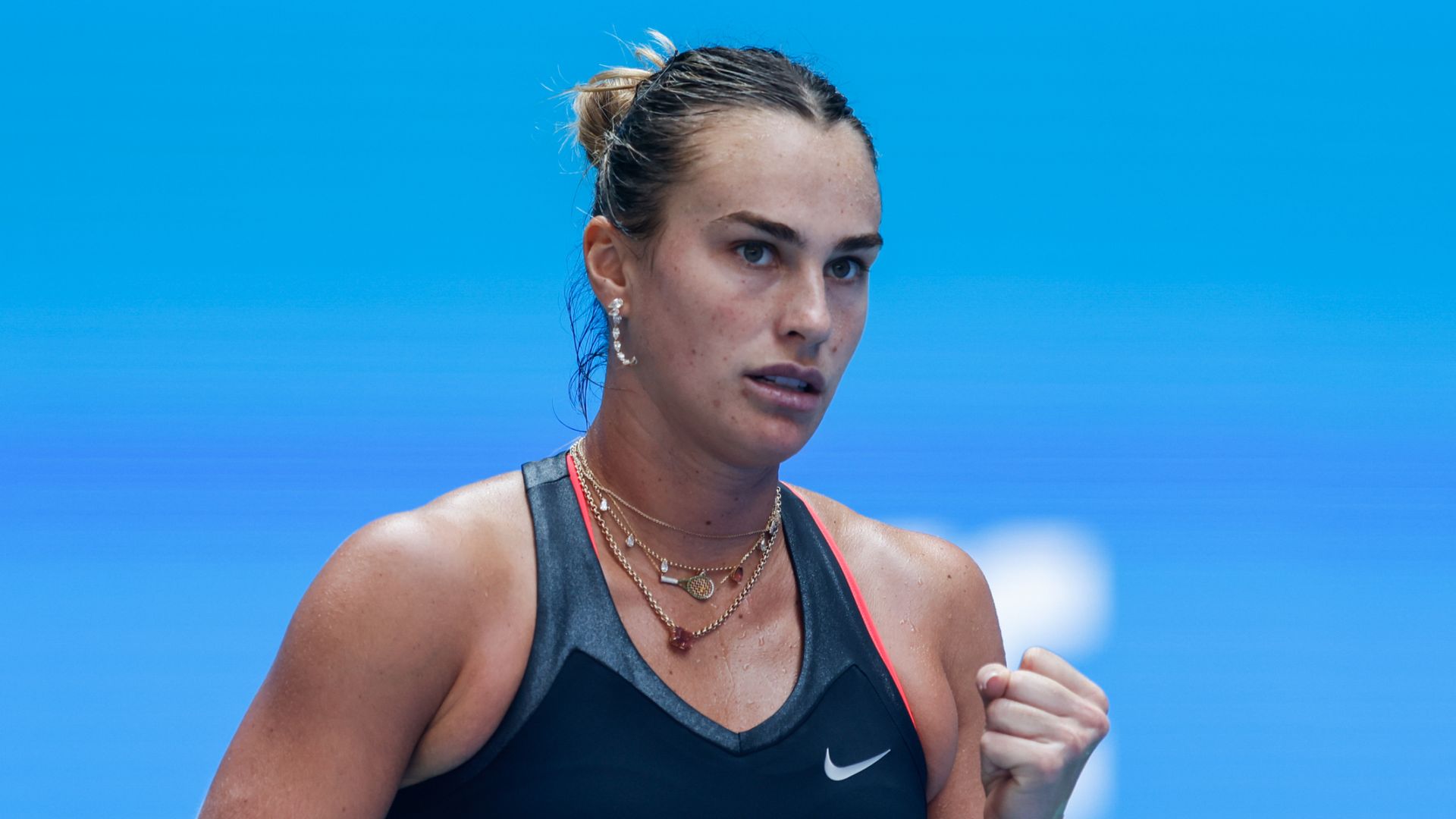
Introduction: The Queen of Wuhan Returns
Aryna Sabalenka has done it again. The Belarusian powerhouse extended her unbeaten run at the Wuhan Open to 20 matches, dispatching Kazakhstan’s Elena Rybakina in straight sets to book her place in the semi-finals. With her explosive forehand, relentless energy, and trademark roar echoing through the Chinese crowd, Sabalenka reminded everyone why this tournament has become her playground.
The Wuhan Open — a Premier-level event on the WTA calendar — often brings out the best in the world’s fiercest competitors. Yet few have managed to dominate it the way Sabalenka has. Every time she steps onto the hard court, she blends raw aggression with tactical brilliance. Her 6-3, 6-4 victory over Rybakina on Friday was not just another win — it was a statement: Sabalenka isn’t slowing down anytime soon.
A Rivalry of Firepower: Sabalenka vs Rybakina
The clash between Sabalenka and Rybakina had all the makings of a classic — two of the biggest hitters on tour, both top-10 talents with Grand Slam titles to their names. Fans anticipated a bruising baseline battle, and they got exactly that.
From the first serve, Sabalenka’s intensity was unmistakable. She ripped winners early, targeting Rybakina’s backhand and forcing errors with relentless pressure. Rybakina, to her credit, held her ground, firing aces and flattening forehands to stay within reach.
But where Rybakina faltered was consistency. Her first-serve percentage dipped below 60%, giving Sabalenka the openings she needed. “Aryna was on the front foot from the first point,” one commentator noted. “Once she breaks your rhythm, it’s hard to get back into the match.”
Sabalenka’s 20th consecutive victory in Wuhan is an extraordinary feat in modern tennis — not just a statistic, but a testament to her ability to thrive in familiar conditions and under pressure.
The Sabalenka Blueprint: Controlled Aggression
If there’s a term that defines Aryna Sabalenka’s approach to tennis, it’s controlled chaos. She plays with incredible power but channels it with purpose. Her Wuhan Open dominance reflects this evolution — the transformation from a raw talent to a polished champion.
In earlier years, Sabalenka’s emotional energy could turn volatile. A missed forehand might lead to frustration, and a lost game could spiral. But in 2025, we’re witnessing a calmer, sharper version of her. “It’s not about just hitting hard anymore,” she said in a recent press appearance. “It’s about choosing the right moments — knowing when to go for it and when to play smart.”
That mindset has made all the difference. Against Rybakina, she mixed her trademark power with unexpected finesse — sliced backhands, drop shots, and deep looping forehands that pinned her opponent behind the baseline. It wasn’t just about domination; it was about control.
Pegula Awaits: A Tactical Test Ahead
Next up, Sabalenka faces Jessica Pegula, the American tactician known for her consistency and counterpunching skills. Pegula’s run to the semi-finals has been built on smart, disciplined play — a sharp contrast to Sabalenka’s explosive style.
Their previous meetings have been intense chess matches. Pegula knows how to absorb pace, redirect shots, and expose impatience. Yet Sabalenka’s recent form suggests that she’s learned to manage those very traps.
“Jessica’s not going to give you free points,” Sabalenka said. “So you’ve got to earn everything. That’s the kind of challenge I love.”
If Sabalenka maintains her composure and first-serve rhythm, she’ll likely dictate the terms. But if Pegula can stretch rallies, force extra balls, and attack Sabalenka’s movement, the American might just disrupt the rhythm that’s powered 20 straight wins.
Wuhan Magic: A Love Affair with the Court
The Wuhan Open seems to bring out the best in Aryna Sabalenka every year. Maybe it’s the surface speed, maybe the atmosphere, maybe the confidence she carries from past triumphs. Whatever the reason, her body language at this event radiates control and belief.
“She looks at home here,” former WTA coach Darren Cahill observed. “Every time she plays in Wuhan, it feels like she knows exactly what the court will give her.”
The conditions — medium pace, predictable bounce, and just enough humidity to enhance topspin — suit her aggressive baseline game perfectly. She hits through the court, dictates tempo, and thrives in long rallies where stamina and aggression intersect.
Sabalenka’s record here mirrors that comfort: multiple titles, zero losses since her debut appearance, and a string of dominant wins over top-tier opponents.
The Mental Edge: Confidence, Not Arrogance
Sabalenka’s journey hasn’t been without turbulence. She’s faced early exits in Grand Slams, battled self-doubt, and even publicly discussed the emotional strain of carrying expectations. But 2025 feels like a turning point.
Her Wuhan streak isn’t just about physical dominance — it’s about mental mastery. “When I step on court, I trust my work,” she explained after the quarter-final. “It’s not arrogance. It’s belief. I’ve done the work, and now I just let it show.”
That mindset separates the elite from the rest. Confidence allows her to swing freely even when scores tighten, to laugh off double faults, and to bounce back instantly after errors.
It’s a transformation years in the making — and it shows.
Pegula’s Path: Consistency Meets Firepower
Jessica Pegula’s presence in the semi-finals is no surprise. The American has quietly become one of the most dependable players on tour. While others fluctuate with form and confidence, Pegula brings calm, precision, and patience.
Her ability to neutralize big hitters has made her a formidable opponent for Sabalenka in the past. Pegula’s game thrives on rhythm, early ball striking, and tactical discipline. Her success depends on forcing Sabalenka to hit one extra shot — and one too many risky forehands.
However, Pegula has also shown a more aggressive gear recently, stepping inside the baseline to dictate play. That evolution could make this semi-final more balanced than their previous encounters.
The Stakes: More Than a Semi-Final
For Sabalenka, reaching another Wuhan final could cement her as one of the most dominant hard-court players in modern WTA history. For Pegula, it’s a chance to break through against a rival who has often been just out of reach.
Beyond rankings and trophies, this match symbolizes something deeper — the modern WTA rivalry: power versus precision, aggression versus control, emotion versus calm.
Fans tuning in can expect fireworks, tension, and possibly one of the best matches of the season.
What Makes Sabalenka So Difficult to Beat
- Explosive First Serve – averaging over 115 mph, often unreturnable on hard courts.
- Fearless Forehand – her primary weapon; she can dictate from anywhere on the court.
- Improved Composure – fewer unforced errors compared to 2023-24.
- Adaptability – able to mix in spin and variety to disrupt rhythm.
- Emotional Drive – feeds off crowd energy, especially in high-stakes moments.
Her opponents know that beating Sabalenka requires not just skill but resilience. When she’s in rhythm, she can bulldoze through sets in under half an hour. But when she’s challenged — and learns to adapt mid-match — that’s when her true championship quality shines.
Historical Context: The Wuhan Open Legacy
Since its inception, the Wuhan Open has produced unforgettable battles — from Petra Kvitova’s early dominance to Naomi Osaka’s rise. But Sabalenka’s reign here is unprecedented.
Her 20-match win streak is approaching Serena Williams’ record for consecutive wins at a single WTA venue. That puts her in rarefied company, alongside legends who’ve carved their names into tennis history.
Fans and pundits alike are beginning to wonder: Is Wuhan becoming Sabalenka’s signature stage, the way Roland Garros was for Nadal?
The Fans’ Connection
What makes Sabalenka a fan favorite isn’t just her results — it’s her charisma. She interacts with the crowd, laughs between points, and exudes raw authenticity. “She plays with her heart on her sleeve,” said one young fan holding a Belarusian flag courtside. “You can feel her energy — win or lose.”
Social media erupted after her latest victory, with #Sabalenka20 trending globally. Clips of her celebration — a playful fist pump and heartfelt wave to the Wuhan crowd — quickly spread across TikTok and Instagram.
Looking Ahead: The Road to the Finals
If Sabalenka gets past Pegula, she’ll likely face a formidable opponent in the final — possibly Iga Świątek or Coco Gauff, depending on the draw. Both players have given her trouble before, but Sabalenka’s current form suggests she’s ready for anyone.
The Wuhan Open may be one stop on the calendar, but for Sabalenka, it’s more than that — it’s a proving ground, a statement that her dominance isn’t fleeting.
“Every year, someone says my streak will end here,” she said with a grin. “I like proving them wrong.”
Conclusion: The Unstoppable Force of the WTA
Aryna Sabalenka’s semi-final berth at the 2025 Wuhan Open isn’t just another notch in her career. It’s a reflection of her evolution — as an athlete, as a competitor, and as a symbol of modern women’s tennis.
Her journey from a fiery young talent to a composed champion mirrors the growth of the sport itself: faster, stronger, smarter, and more human than ever. As she prepares to face Jessica Pegula, one truth stands clear — when Sabalenka plays like this, she’s not just winning matches; she’s redefining dominance.