 By Happypal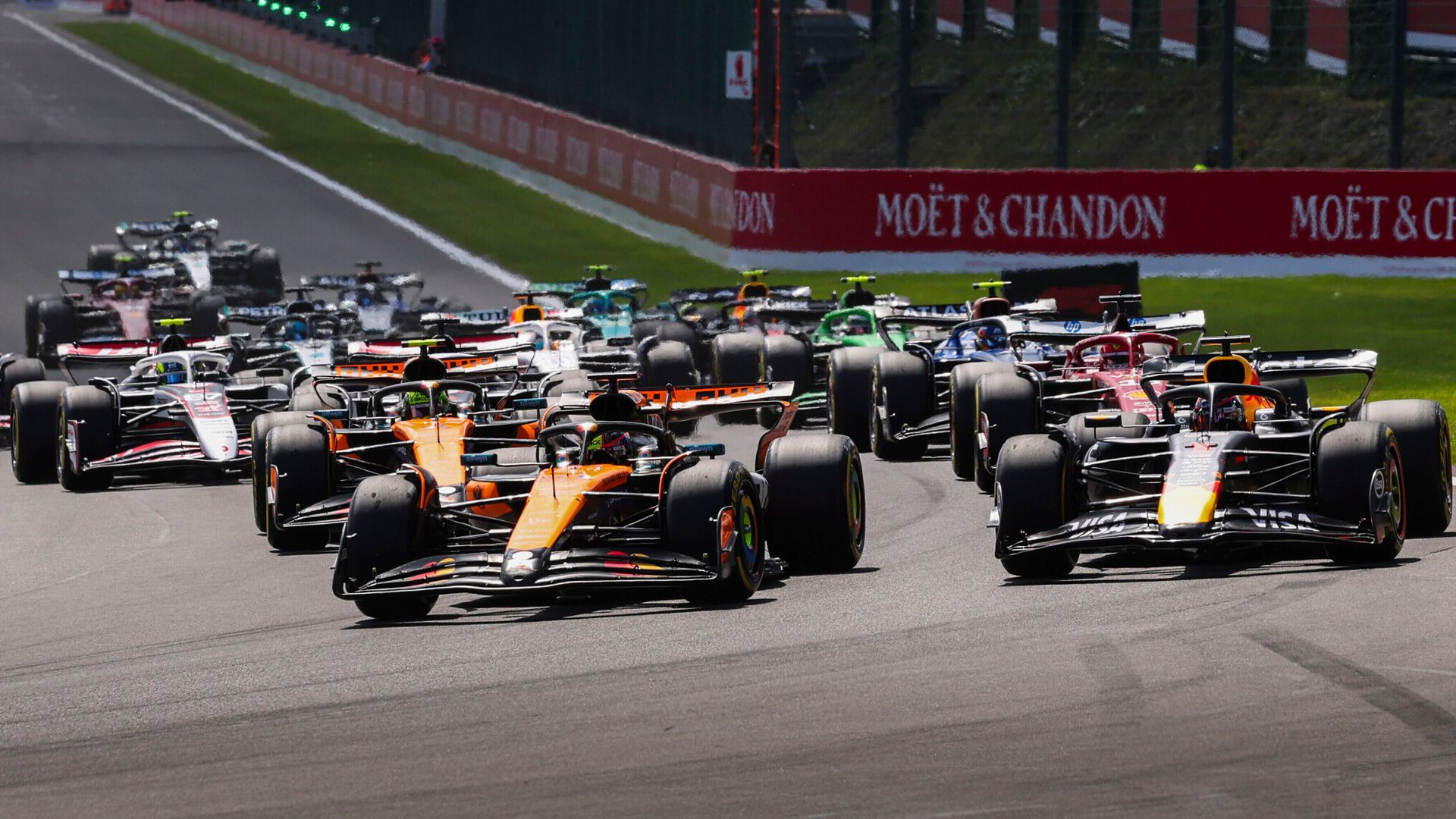
As if the climax of a tense battle for the 2025 Formula 1 drivers’ championship wasn’t enough, the introduction of three Sprint weekends across the final six rounds of the season is about to add a new layer of intrigue. Sprint races, which award additional points in a short, high-intensity format, have the potential to redefine the championship standings — rewarding precision, aggression, and strategy while punishing mistakes more severely than ever before.
With drivers and teams now facing a complex juggling act of qualifying, Sprints, and Grand Prix races, the 2025 season promises to be one of the most unpredictable in recent history.
Introduction: The Sprint Factor in a Title Race
Formula 1 has long thrived on unpredictability and drama, but the Sprint format introduces a new variable that could prove decisive in championship outcomes. These short, 100-kilometer races, typically held on Saturday, award points to the top eight finishers — meaning every position, every overtake, and every mistake carries tangible consequences for the title race.
In 2025, the title battle is tighter than ever, with multiple drivers in contention. Traditional race weekends now require teams to consider three layers of competition:
- Qualifying sessions — which determine the starting grid for the Sprint
- Sprint races — offering bonus points and crucial positioning for Sunday’s Grand Prix
- Main Grand Prix — where the bulk of championship points are awarded
This layered structure amplifies pressure on both drivers and teams. A single misstep in a Sprint could undo an entire weekend’s work, while a strong performance could vault a contender into championship favor.
Historical Context: Sprints and Their Championship Impact
Sprint races were first introduced in Formula 1 as an experiment in 2021, designed to add excitement to weekends and provide more on-track action for fans. While the format initially received mixed reactions from traditionalists, its strategic significance quickly became clear.
- 2021 Silverstone Sprint: Max Verstappen used the short race to leapfrog Charles Leclerc on the opening lap, securing crucial championship points that later proved decisive in his title fight.
- 2022 Monza Sprint: Unexpected incidents and tire strategies during the Sprint shuffled podium positions, demonstrating how short races can produce unpredictable outcomes.
- 2023 Sprint finales: Aggressive drivers seized points that ultimately impacted constructor standings and driver rankings, highlighting how Sprints reward calculated risk-taking.
For the 2025 season, the stakes are even higher. With three Sprint weekends in the final six rounds, each short race could influence not just individual weekend outcomes but the ultimate championship battle.
Understanding the Sprint Format: Rules and Points
To appreciate how Sprints could decide the 2025 title race, it’s important to understand their structure and scoring system:
- Distance: Sprint races cover approximately 100 kilometers, around one-third of a normal Grand Prix distance.
- Points: The top eight finishers receive points as follows: 8-7-6-5-4-3-2-1.
- Grid Determination: The starting grid for the Sprint is based on Friday’s traditional qualifying session.
- Impact on Main Race: Sprint finishing positions dictate the starting grid for the Sunday Grand Prix, creating a direct connection between Saturday’s performance and Sunday’s outcome.
This format introduces multiple strategic layers: drivers can push hard for Sprint points, risk tire degradation, or prioritize positioning for the main race. Every decision carries significant consequences in a championship context.
The 2025 Title Race: Drivers in Contention
The 2025 championship fight has been tight, tense, and unpredictable. Multiple drivers remain in contention as the season enters its final six rounds. Let’s break down the key contenders and their potential Sprint strategies:
Max Verstappen (Red Bull Racing)
- Strengths: Exceptional racecraft, aggressive overtaking, consistency under pressure.
- Sprint Strategy: Verstappen is likely to push for maximum points in Sprints, leveraging his experience in controlling wheel-to-wheel battles. His ability to maintain composure under high-pressure situations makes him a formidable force in the short race format.
- Potential Risks: Aggression could lead to collisions or tire degradation, compromising Sunday’s Grand Prix.
Lewis Hamilton (Mercedes-AMG)
- Strengths: Tactical intelligence, defensive driving, unmatched experience in pressure situations.
- Sprint Strategy: Hamilton may prioritize consistent finishes over risky overtakes, using Sprints to secure points while keeping his car intact for the main race.
- Potential Risks: Conservative tactics could allow rivals to gain more points in the Sprint, putting him at a strategic disadvantage.
Charles Leclerc (Ferrari)
- Strengths: Qualifying speed, precision, and adaptability.
- Sprint Strategy: Leclerc excels in short, high-intensity bursts, making him a strong contender to score maximum Sprint points. Ferrari may also use tire strategy to outmaneuver competitors in these condensed races.
- Potential Risks: Aggressive maneuvers in close racing could increase collision risk, especially on tight circuits.
Lando Norris (McLaren) & George Russell (Mercedes)
- Both drivers have consistently impressed in 2025, showing the ability to score points in challenging conditions.
- Sprint weekends could provide opportunities to leapfrog rivals in the standings or capitalize on mistakes from front-runners.
With the championship margins so slim, every Sprint point could be pivotal, particularly in shaping the final title outcome.
Team Dynamics: Constructors’ Strategies
Sprint weekends don’t just impact drivers — teams must carefully manage tire allocation, pit strategy, and driver orders. Constructor points are at stake, and a miscalculation can jeopardize both drivers’ and teams’ championship ambitions.
- Tire Management: Sprint races compress tire life decisions into shorter distances, forcing teams to balance performance and durability.
- Driver Orders: Teams may favor one driver in the Sprint to secure maximum points, creating internal strategic tension.
- Risk vs. Reward: Aggressive strategies could yield crucial points but also risk crashes that affect Sunday’s Grand Prix.
Red Bull, Mercedes, and Ferrari are expected to deploy meticulous planning and simulation analysis to optimize results across Sprint weekends.
Circuit Analysis: Where Sprints Could Be Decisive
Not all circuits favor the same drivers or teams in Sprints. Track characteristics, overtaking opportunities, and weather conditions can all impact outcomes.
- Monza: High-speed layout favors Red Bull’s power advantage; strategic drafting will be crucial.
- Suzuka: Technical corners reward precision and car balance, favoring drivers like Leclerc and Hamilton.
- Interlagos (Brazil): Variable conditions and tight sections make Sprint positioning critical for avoiding accidents.
Each Sprint weekend introduces unique challenges that could shift the championship balance unexpectedly.
Historical Lessons: How Short Races Influence Championships
Sprint races are designed to reward boldness and consistency, and history shows that small points advantages can decide titles:
- 2021 Verstappen vs. Hamilton: A single Sprint victory contributed to Verstappen gaining a psychological edge and crucial points.
- 2022 Ferrari miscalculation: Poor Sprint strategy cost Leclerc critical points, allowing rival teams to close the gap.
- 2023 Monaco Sprint: An incident-packed Sprint reshuffled positions, showing how unpredictable outcomes can alter title trajectories.
The lesson is clear: Sprint weekends are high-stakes opportunities that can make or break a championship.
Scenario Analysis: How Sprints Could Decide the 2025 Title
Let’s explore possible championship scenarios with three Sprint weekends remaining:
Scenario 1: Verstappen Dominates Sprints
- Points surge propels him ahead in the standings.
- Sunday races require consolidation rather than aggressive recovery.
- Psychological advantage puts pressure on rivals.
Scenario 2: Hamilton Plays the Long Game
- Consistent finishes in Sprints maintain parity while minimizing risks.
- Strategy focused on maximizing Sunday points could allow overtakes in final races.
- Risk of losing marginal Sprint points to aggressive competitors.
Scenario 3: Leclerc Uses Aggression
- Targets maximum Sprint points to offset potential main race disadvantages.
- Success depends on clean execution and avoiding collisions.
- Could dramatically alter the championship if rivals falter.
With only six rounds left, these Sprint points could determine the final champion, making every maneuver, overtake, and strategy critical.
Fan Reactions and Media Buzz
Fans and pundits are already speculating on how Sprints might influence the title fight:
- Social media discussions highlight risk vs. reward debates for top drivers.
- Analysts predict unpredictable podiums and potential chaos in standings.
- Commentators emphasize that Sprint performance could overshadow some Grand Prix results in the title race.
For fans, the combination of speed, strategy, and high stakes makes Sprint weekends some of the most exciting spectacles in Formula 1 history.
Psychological Factors: Pressure and Performance
Sprint races add psychological complexity to title battles:
- Drivers must manage nerves in high-intensity racing over short distances.
- Mistakes are magnified due to limited recovery opportunities.
- Champions must balance aggression with composure to maximize point haul.
The mental game is just as important as the physical and technical aspects of racing, particularly when the championship hangs in the balance.
Predictions and Expectations for 2025
While the outcome remains uncertain, expert predictions suggest:
- Aggressive front-runners like Verstappen may exploit Sprint races to solidify leads.
- Tacticians like Hamilton may focus on avoiding disasters while scoring consistent points.
- Young challengers like Norris and Russell may leverage risk-taking to climb the standings.
Ultimately, the 2025 title may be decided not just in Sunday Grand Prix races but in the intensity of Saturday Sprints.
Conclusion: Every Sprint Counts
As the 2025 Formula 1 season enters its final stretch, Sprint weekends are poised to play a decisive role in the championship. These high-pressure, points-rich races demand precision, courage, and strategic thinking from every driver and team.
- A perfect Sprint performance could vault a contender into championship favor.
- A single mistake could derail a title campaign.
- Fans are guaranteed excitement, unpredictability, and drama.
Whether it’s Verstappen asserting dominance, Hamilton playing the long game, or Leclerc taking calculated risks, Sprint weekends will shape the narrative of one of the most thrilling F1 seasons in recent memory.
In 2025, every point counts — and in Formula 1, the Sprints may well decide the title.
More from 9jazic Sports
- Has George Russell Become F1’s Next Best Driver After Verstappen?
- Formula 1 2025: Key Races That Could Decide the Championship
- How Teams Are Adapting to the New Sprint Format