 By Happypal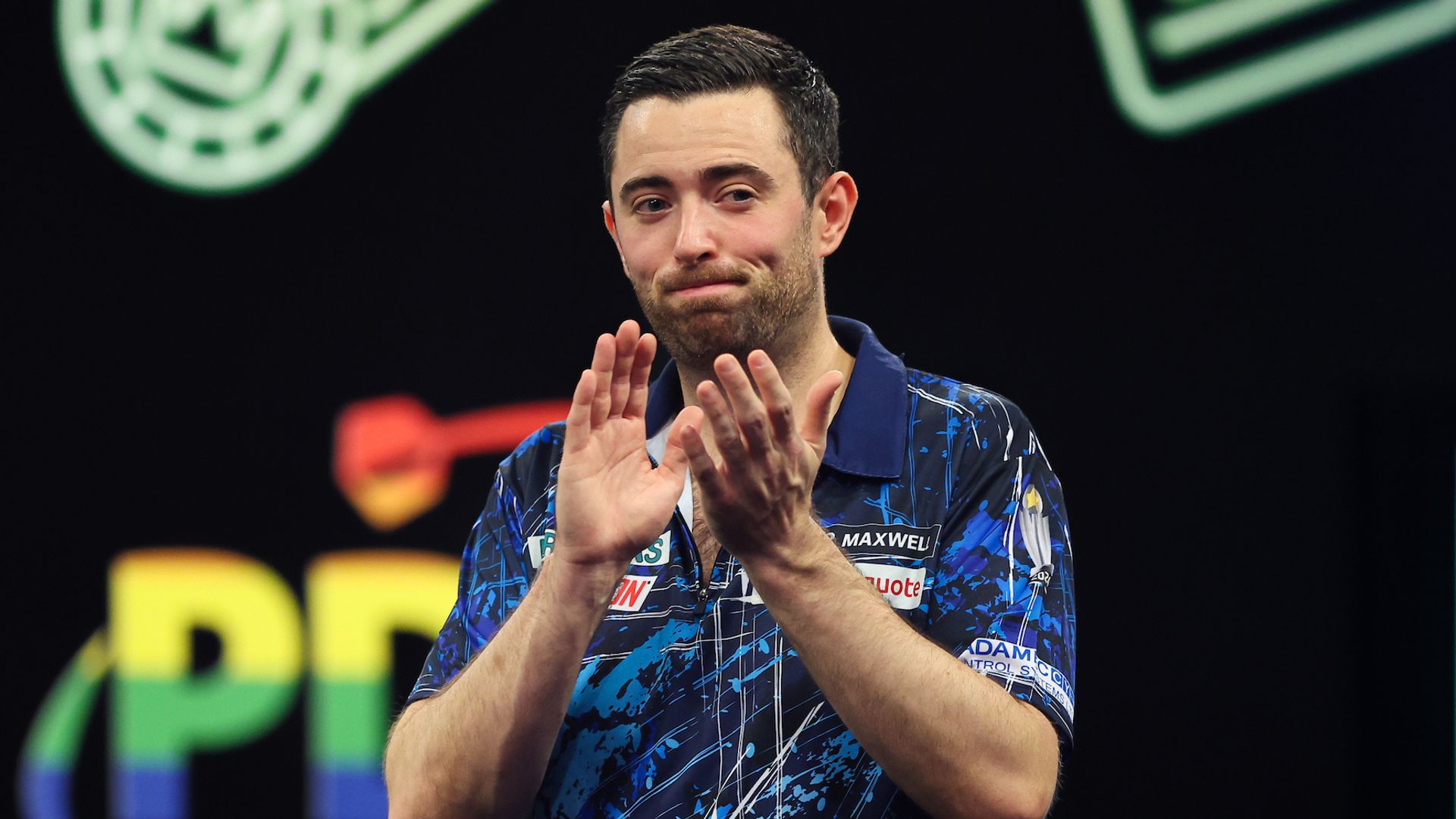
In elite sport, physical endurance often becomes a test of the mind as much as the body — and at the 2025 Grand Slam of Darts, Luke Humphries delivered a masterclass in both. The world number one, who looked untouchable in the group stages, stunned fans when he revealed that he had been battling what he called “crippling pain” before his last-16 clash — pain so severe that he briefly considered withdrawing from the tournament altogether.
It was a revelation that painted his latest victory not merely as another step toward glory, but as a story of resilience, grit, and the sheer human will to compete at the highest level, even when your body threatens to give way.
As Humphries stood at the oche under the bright lights of Wolverhampton’s Aldersley Leisure Village, few knew the struggle that had unfolded just hours earlier behind the scenes. But those who did — including his team, medical staff, and close confidants — say the 30-year-old’s decision to step onto the stage at all was nothing short of heroic.
The Agony Before the Throw
Humphries’ preparation for the last-16 match had been routine until late Tuesday night. Following a light training session, he began to feel sharp spasms across his lower back — discomfort that quickly turned into debilitating pain.
“I honestly thought I was done,” Humphries later admitted. “I couldn’t bend, couldn’t move properly. The pain was so bad that for a few hours I genuinely thought I’d have to pull out.”
By morning, the world number one was battling stiffness and spasms that made even basic movement a challenge. His physiotherapist was called in immediately, administering emergency treatment while event officials waited anxiously for word on whether he could play.
For a brief period, it looked like the Grand Slam might lose its top seed. But Humphries — ever the fighter — refused to surrender.
“I told myself, you’ve come too far to back down now. I didn’t know how I’d get through it, but I had to try.”
Playing Through Pain
When Humphries emerged on stage later that evening, fans saw the same focused expression and composed stance they had come to associate with “Cool Hand Luke.” But behind the calm exterior was a body in turmoil.
Observers noted slight differences — a tighter stance, smaller follow-throughs, and visible grimaces between throws. His usual rhythm was punctuated by short pauses, and he occasionally leaned on the table between legs for support.
Despite the discomfort, Humphries managed to produce moments of brilliance. His precision on the trebles held firm, and his finishing — especially under pressure — remained world-class.
At one point, commentator Wayne Mardle remarked:
“If this is Luke Humphries at 60 percent, it’s terrifying to think what he can do at 100.”
The victory that followed wasn’t just another result — it was a triumph of sheer determination. As he sealed the final leg, Humphries exhaled deeply, more in relief than celebration.
Inside the Mind of a Champion
Mental toughness has always been Humphries’ defining trait. From overcoming anxiety and mental health struggles earlier in his career to reaching the pinnacle of the world rankings, his journey has been one of constant self-confrontation.
The pain in Wolverhampton, however, was a new kind of challenge — one that required him to balance ambition with self-preservation.
“You start thinking, is it worth risking long-term damage? But when you’re in that position, on that stage, all you want to do is fight,” Humphries reflected after the match.
That mindset — the refusal to yield — is what separates champions from contenders. Even at his physical limit, Humphries found ways to adjust. He relied more heavily on rhythm throws, limited unnecessary movement, and focused on mental visualization between sets.
Sports psychologists often speak about “flow states” — moments when athletes transcend pain, fatigue, or distraction through sheer focus. Those who witnessed Humphries’ performance believe he achieved exactly that.
A Career Built on Overcoming
Humphries’ story has never been a straight path to the top. Before his rise in 2023, he openly battled depression and self-doubt, even stepping away from competitive darts for a short period. That break became the turning point of his career.
When he returned, he came back sharper, fitter, and mentally bulletproof. Within two years, he had claimed multiple PDC major titles, reached world number one, and established himself as the man to beat.
His transformation was not only physical but philosophical. Humphries often speaks about balance — between competition and life, between ambition and well-being. Ironically, that same philosophy was tested to its limits in Wolverhampton.
“You can do all the preparation in the world, but you can’t plan for something like that,” he said. “At some point, you just have to trust your body and your heart.”
The Support Behind the Scenes
While the spotlight was on Humphries, those closest to him know the importance of his team’s role in the recovery process. His physiotherapist, nutritionist, and coach worked together to devise a plan that would allow him to compete safely.
Pain relief, targeted stretching, and light mobility work were all part of the pre-match routine — designed not to eliminate pain completely but to make it manageable.
“It was about getting him through the match, not pushing him past the point of no return,” said a member of his team. “Luke’s threshold for discomfort is incredibly high, but we made sure every decision had long-term consequences in mind.”
Between sets, cameras caught him applying a heat pack to his back and occasionally rotating his shoulders to ease stiffness. Those small, quiet moments revealed the unseen effort behind the performance.
Fans Rally Around Their Champion
News of Humphries’ injury spread rapidly across social media once the post-match interviews aired. Messages of support poured in from across the darts world — from fans, fellow players, and even retired legends of the game.
Phil Taylor, the 16-time world champion, tweeted:
“Fair play to Luke Humphries. To go up there and win under those conditions takes heart. That’s the mark of a true champion.”
Fans echoed that sentiment, praising his resilience and calling his performance “the stuff of sporting folklore.”
In a sport where mental and physical precision intertwine, moments like this resonate deeply. They remind audiences that even in a game measured in millimeters, courage remains immeasurable.
The Fine Line Between Bravery and Risk
Despite the applause, some experts raised questions about whether Humphries should have played through such pain. Former world finalist Peter Manley cautioned:
“You have to admire the guts, but sometimes you’ve got to think about the bigger picture. He’s got a long season ahead — one wrong move could make things worse.”
Humphries, however, was quick to clarify that medical advice had been followed.
“I didn’t want to do anything stupid,” he said. “If the doctors had said it was unsafe, I would’ve withdrawn. But they gave me the green light, and I trusted them.”
That careful balance between caution and courage is something every top-level athlete must navigate. For Humphries, it seems the decision has paid off — at least for now.
Legacy of a Fighter
Every sport has its defining images — moments that encapsulate the essence of competition. For darts, Humphries’ performance through pain may well become one of them.
It wasn’t about averages, checkouts, or ton-plus finishes. It was about watching a man push beyond limits, refusing to let adversity dictate his story.
“Pain fades,” Humphries said quietly in a later interview. “But walking away from a fight — that stays with you.”
That line has already been picked up by fans, turned into quotes and graphics across social media — a rallying cry that captures the spirit of “Cool Hand Luke.”
A Message to Aspiring Players
For young players watching around the world, Humphries’ ordeal carries lessons far beyond the board. It’s about preparation, resilience, and knowing when to trust your instincts.
In darts — a game where margins are razor-thin and focus is everything — mental strength often makes the difference between victory and defeat. Humphries’ story reinforces that truth.
“Sometimes it’s not about how well you throw,” he explained. “It’s about how well you cope. The best players aren’t the ones who never face setbacks — they’re the ones who play through them.”
Those words resonate deeply in a sport that demands precision under pressure.
What’s Next for Humphries?
While his immediate priority is recovery, Humphries remains focused on finishing the Grand Slam strong. Medical staff continue to monitor his back, and he’s undergoing daily therapy to manage inflammation and mobility.
“I’m feeling better than I did earlier in the week,” he said. “Every day’s an improvement. Hopefully, by the next round, I’ll be close to 100 percent.”
His next opponent will face not just the world number one, but a man whose mental resilience has been tested and proven. And that, perhaps, is more dangerous than any injury could be.
If Humphries does go on to lift the trophy in Wolverhampton, it will be remembered not just as another title, but as a symbol of everything that defines him — courage, discipline, and an unbreakable will.
A Champion’s Mindset
As sports psychologists often say, pressure and pain reveal the truest version of an athlete. For Luke Humphries, the 2025 Grand Slam has revealed a competitor who doesn’t merely play to win — he plays to endure.
His journey through “crippling pain” may have started in agony, but it ends in inspiration. Whether or not he ultimately claims the title, his legacy from this tournament is already secure.
Because in that moment, when every instinct told him to quit, he chose to fight — and that decision defines champions.
Related Posts from 9JAZIC Sports
- Michael Smith Battles Arthritis to Reach Grand Slam Last 16
- MVG Survives Greaves Scare as Littler and Humphries Shine
- Hazlewood’s Injury Scare Adds Drama Ahead of Ashes Opener
- Lando Norris Hits Back at Critics After Sao Paulo Triumph
- Inside the Resilience of Modern Sports Stars: Playing Through Pain