 By Happypal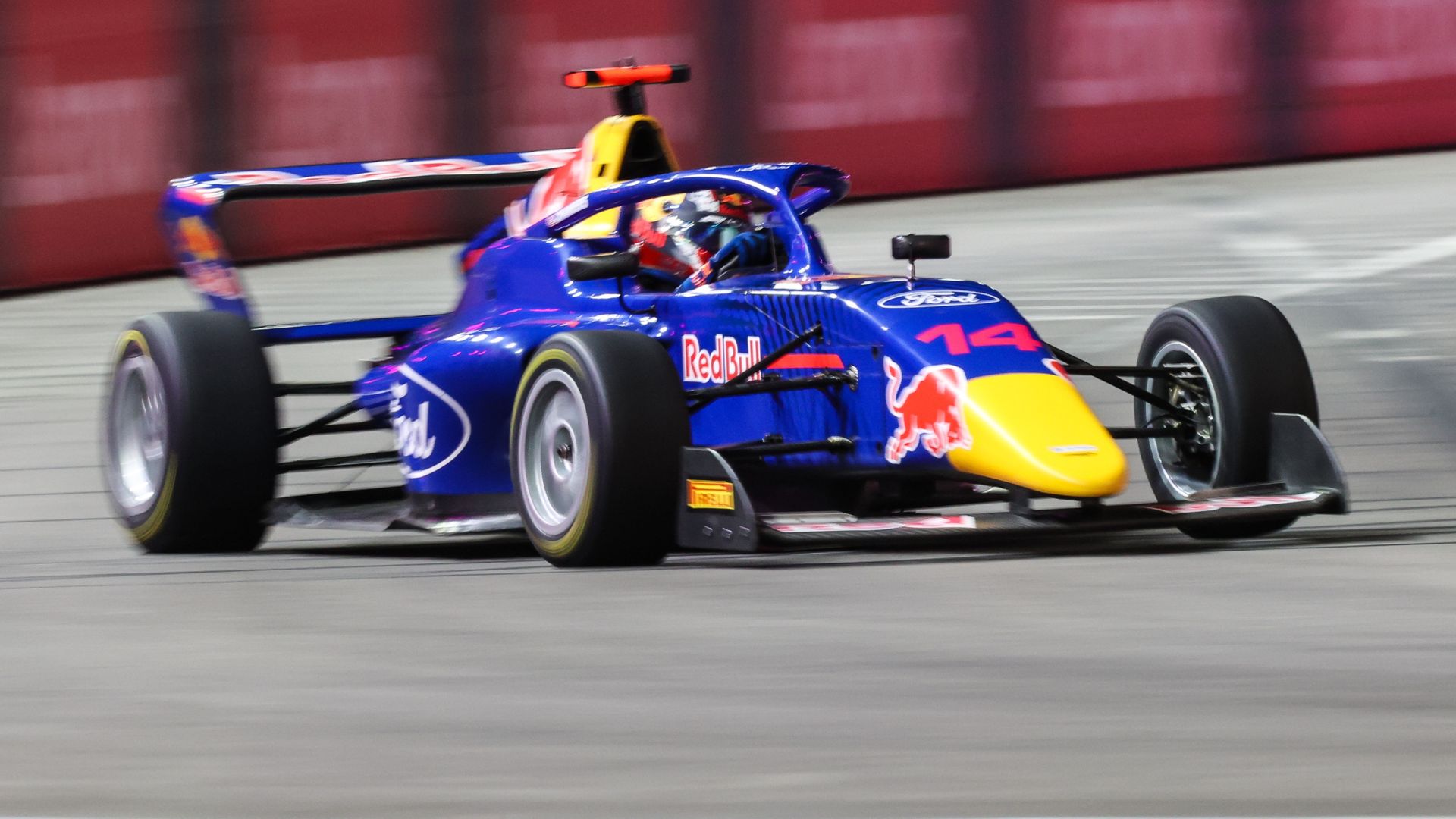
The Las Vegas F1 Academy finale delivered an electrifying display of speed, precision, and rising talent as Chloe Chambers claimed pole position in a masterful qualifying session. The atmosphere at the iconic street circuit was electric, with fans witnessing the next generation of female racing talent take center stage. But the headlines weren’t limited to Chambers alone — rookie Olivia Pin stunned the paddock by outqualifying Charlotte Weug, proving that experience alone isn’t always enough in high-stakes motorsport.
Chambers’ pole lap wasn’t just a result of raw pace; it was a demonstration of technical mastery, strategic insight, and psychological composure. From her first flying lap, she showcased remarkable consistency, exploiting the unique characteristics of the Las Vegas street circuit — tight corners, high-speed straights, and unforgiving barriers. Each sector was approached with precision, and her ability to extract maximum performance from the car was evident.
Sector-by-Sector Breakdown
Sector 1:
Chambers’ initial sector highlighted her clean braking and efficient acceleration out of the slower corners. Street circuits are notoriously tricky here, with walls that punish the smallest errors, but she navigated flawlessly. Pin and Weug both showed speed, but slight understeer and misjudged braking points cost Weug valuable tenths, giving the edge to Pin in this sector.
Sector 2:
The mid-section of the track demands rhythm and momentum management. Chambers maintained optimal lines, carrying speed through challenging bends while avoiding aggressive steering that could destabilize the car. Here, her experience on varied circuits was visible — she used her racing intelligence to set up overtaking opportunities even in a qualifying lap context, something few rookies can execute consistently.
Sector 3:
The final sector is often the decider at Las Vegas, with long straights and chicanes that test both engine performance and driver precision. Chambers’ impeccable exit from the preceding corner allowed her to maximize straight-line speed, setting up a lap that would ultimately secure pole. Pin’s efforts to match this pace were impressive, showcasing maturity and confidence far beyond her rookie status.
Technical and Tactical Mastery
Chambers’ performance highlighted several key aspects of advanced F1 Academy racing:
- Tire Management: Despite the all-out pace required for qualifying, Chambers preserved tire performance for potential race conditions. She struck a balance between aggression and control, ensuring she didn’t overheat the tires early in her lap.
- Brake Control: Street circuits demand flawless braking, and Chambers excelled. Her ability to brake later while maintaining stability allowed her to gain tenths crucial for pole.
- Aerodynamic Awareness: Maximizing downforce while minimizing drag on narrow street tracks is challenging. Chambers used subtle car positioning adjustments to optimize airflow, allowing for superior grip in corners without sacrificing speed on straights.
- Racecraft Anticipation: Even in qualifying, Chambers demonstrated strategic thinking by simulating potential race scenarios, setting up defensive and offensive maneuvers mentally to prepare for tomorrow’s final.
Pin’s outqualifying of Weug was equally significant. Despite limited experience, Pin executed a technically sound lap, highlighting her adaptability and learning curve. She managed throttle response, steering precision, and braking points with maturity, proving that rookies can challenge veterans when preparation and focus align.
Psychological Edge
Qualifying is as much about mental fortitude as technical skill. Chambers’ pole lap illustrated her ability to maintain composure under intense pressure. Street circuits like Las Vegas are notoriously unforgiving, with walls that leave no room for error, magnifying the psychological stress on drivers.
Pin’s performance also spoke volumes about the mental strength required to compete at the top level. Outqualifying a seasoned driver like Weug is as much about confidence and focus as it is about speed. The young driver showed poise, resilience, and the ability to remain calm despite the high-stakes environment.
Chambers’ and Pin’s composure will be critical for the race, where split-second decisions and unwavering focus can mean the difference between victory and missed opportunity.
Team Strategy and Paddock Insights
The Las Vegas F1 Academy qualifying session was a showcase of team coordination as much as driver skill. Teams worked tirelessly to optimize car setups for track conditions that change dramatically throughout the day. Data from practice sessions informed tire pressure, suspension adjustments, and aerodynamic tweaks that gave drivers the edge in qualifying.
Chambers’ team executed flawless communication throughout the session, providing her with precise timing and split information to maximize performance. Pin’s team also performed admirably, guiding the rookie through high-pressure moments and ensuring she had clear track space to complete her flying lap without interference.
Weug, while experienced, faced minor communication delays and track congestion that slightly hampered her performance, demonstrating that even elite drivers rely heavily on team execution during high-stakes sessions.
Historical Context: F1 Academy and Street Circuit Qualifying
The F1 Academy, since its inception, has focused on nurturing female talent in motorsport, providing a platform for drivers to demonstrate skill, gain exposure, and progress toward higher tiers of racing. Las Vegas has historically been a challenging venue, with street circuits testing precision, adaptability, and nerves.
Chambers’ pole position is a continuation of the trend where experienced drivers leverage technical mastery and composure to dominate qualifying. Pin’s performance represents the new wave of talent, showing that rookies can quickly close gaps when preparation, learning, and mental resilience align.
Past F1 Academy finals have seen tight margins deciding grid positions, and this session continues that tradition. With Chambers on pole, followed closely by Pin and Weug, the stage is set for an intense finale.
Race-Day Implications
Starting from pole gives Chambers a significant advantage. She can dictate the race pace, manage tire wear, and strategize overtakes from a position of strength. However, Las Vegas’ tight street layout means that precision is paramount — one miscalculation could erase the advantage immediately.
Pin and Weug, close behind, are poised to challenge from the start. Pin’s confidence from outqualifying a veteran will be crucial in executing an aggressive yet calculated race strategy. Weug will be motivated to reclaim her position, potentially leading to exciting wheel-to-wheel battles in the early laps.
Tire strategy, pit stop execution, and overtaking opportunities will define the outcome. The tight margins demonstrated in qualifying suggest that the race will be as much a mental challenge as a physical one.
Expert Commentary and Fan Reactions
Paddock analysts praised the session for showcasing a blend of experience, raw talent, and tactical intelligence. Motorsports commentators highlighted:
- Chambers’ ability to extract every fraction of speed from her car.
- Pin’s maturity and quick adaptation to street circuit demands.
- Weug’s consistency under pressure, despite being edged out.
Fans responded enthusiastically on social media, celebrating the emergence of new talent and the competitiveness of the F1 Academy. The combination of seasoned drivers and rookies delivering exceptional laps underscores the depth and excitement of the series.
Driver Comparisons and Season Overview
Chambers’ performance throughout the 2025 F1 Academy season has been consistently strong. Her qualifying pace, combined with strategic race management, places her as a leading contender for the championship. Pin’s progression this season has been remarkable, showcasing rapid learning, adaptability, and confidence, making her one to watch for future seasons.
Weug’s experience provides consistency and tactical awareness, and while she was outqualified this session, her ability to fight back during races remains significant. The interplay between these drivers highlights the growing competitiveness and talent depth within the F1 Academy.
Psychological and Emotional Context
The mental side of qualifying at a high-pressure street circuit cannot be overstated. Drivers must manage nerves, environmental distractions, and split-second decision-making while performing at peak physical capability. Chambers’ calm under pressure and Pin’s confident rookie approach illustrate different paths to success but converge in their demonstration of composure.
The stakes are heightened not only by championship considerations but also by personal and professional reputations. Street circuits magnify mistakes, and every lap becomes a test of character as much as skill.
Looking Ahead: The Las Vegas Finale
The Las Vegas finale promises an unforgettable race. Chambers’ pole position sets her up to control the race, but with Pin and Weug close behind, strategy, consistency, and decision-making under pressure will be decisive. Fans can expect tight racing, overtaking challenges, and the drama that street circuits uniquely provide.
This finale will also contribute to driver development. Young talents like Pin gaining confidence by outqualifying veterans indicates that the F1 Academy is succeeding in preparing its drivers for higher levels of competition. The championship implications and the opportunity to showcase skill in front of global audiences add layers of excitement and significance.
Conclusion
Chloe Chambers’ pole for the Las Vegas F1 Academy finale, coupled with Olivia Pin outqualifying Charlotte Weug, marks a defining moment in the 2025 season. The session highlighted technical mastery, mental resilience, strategic execution, and emerging talent, setting the stage for a thrilling street circuit showdown.
For fans, this qualifying session reinforces why the F1 Academy continues to grow in prestige and visibility. It showcased the perfect blend of seasoned excellence and rising stars, with each driver demonstrating speed, skill, and the psychological strength necessary to succeed at the highest level.
As race day approaches, all eyes will be on Las Vegas. Chambers, Pin, and Weug have shown they have what it takes to perform under pressure. The finale promises not just a competition of speed, but a showcase of the future of women’s motorsport.
Related Post:
- F1 Academy 2025: Rising Stars to Watch as the Season Reaches Its Climax
- Chloe Chambers’ Path to the Top: Pole Positions and Championship Contention in 2025