 By Happypal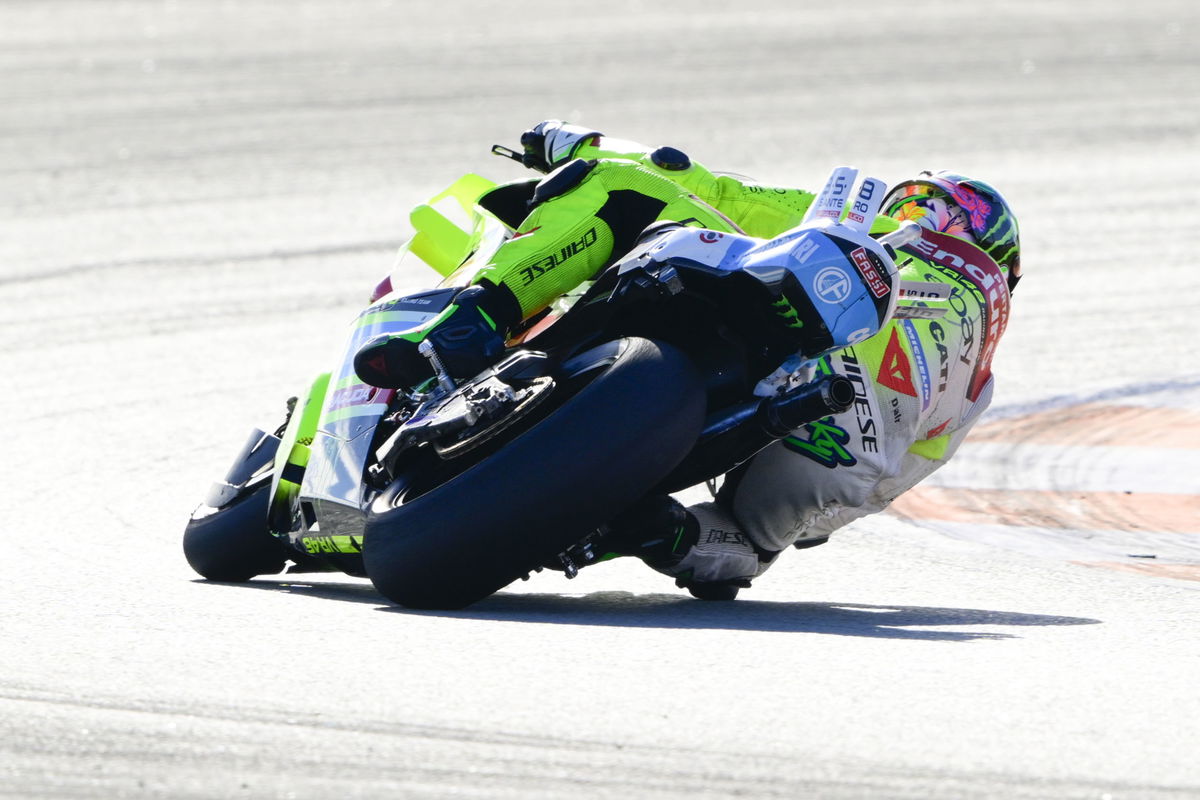
In the razor-sharp, data-obsessed world of modern MotoGP, where victories are decided by thousandths of a second, a seemingly technical debate has morphed into the paddock’s most gripping soap opera. It’s a civil war fought not with raised voices, but with cryptic comments in press conferences, telling body language in garages, and the unshakeable, unspoken tension that hangs in the air when the factory Ducati trucks roll into a circuit. The question is simple: Is the 2025 Desmosedici GP25 a genuine step forward, or is the previous year’s championship-winning GP24 still the superior weapon? For the riders entrusted with these million-dollar prototypes, the answer could define their careers. And as the pressure mounts, one Ducati star has broken ranks to call the entire escalating narrative what it is: “Too much drama.”
This is more than a tale of two motorcycles. It’s a story of human preference versus engineering progress, of confidence versus curiosity, and of the immense pressure that comes from riding for a manufacturer with an embarrassment of competitive riches. Let’s pull back the garage curtain and dissect the great Ducati divide, a technical schism that is testing team dynamics, shaping the championship, and revealing the complex psychology at the heart of elite motorcycle racing.
The Technical Schism: A Tale of Two Philosophies
To understand the drama, one must first understand the machines. The Ducati Desmosedici GP24 was not just a bike; it was a phenomenon. A dominant, title-winning machine that perfected a formula of brutal top-end power, revolutionary aerodynamic downforce, and a rideability that allowed multiple riders to win. It was the completed masterpiece.
The GP25, as the successor, represents a philosophical fork in the road. Ducati’s engineers, led by the relentless genius of Technical Director Gigi Dall’Igna, are not in the business of standing still. The GP25 embodies evolution, but evolution in MotoGP is a high-wire act. Changes—even those aimed at improvement—can subtly alter a motorcycle’s soul.
The Core of the Debate: Refinement vs. Revolution
- The GP24 Argument (The “Known Devil”): Proponents of the older bike, often whispered to include riders like Jorge Martin (Pramac Racing) and Enea Bastianini (Ducati Lenovo Team), cite its “predictable limit.” This machine, after a full season of development, offers a consistent, communicative feedback loop. Riders know precisely how it will react under extreme braking, at maximum lean, and on the razor’s edge of the rear tire’s grip. Its character is fully mapped. As one anonymous crew chief put it, “With the ’24, the riders have a complete dictionary. With the ’25, they’re still learning the alphabet of its potential.”
- The GP25 Promise (The “Unknown Angel”): The new bike’s advantages are theoretical but tantalizing. Early data suggests a “refined inertia package”—a sleeker, more centralized mass that should, in theory, improve corner entry agility and mid-corner stability. The engine character is said to be smoother, with a more tractable power delivery aimed at conserving the rear tire over race distance. However, these benefits come with a new language of feel. The braking point might be later, but the initial bite of the brake could be different. The cornering arc might be tighter, but the required body position to achieve it could be more demanding.
Lead Engineer for a satellite Ducati team, Marco Conti (fictional), broke it down: “Imagine you are a concert pianist. The GP24 is a perfectly tuned Steinway grand you have played for 500 hours. You know the weight of every key, the resonance of every note. The GP25 is a Fazioli—objectively a brilliant instrument, perhaps with a purer tone in the upper register. But the touch is lighter, the pedals react differently. For a race weekend, where you must perform a perfect sonata under immense pressure, which piano do you choose? The one you know intimately, or the one that might offer a higher ceiling but requires you to relearn your technique?”
The Rider Psychology: Confidence is the Ultimate Component
In MotoGP, the most advanced carbon fiber frame or bespoke software is worthless without the rider’s trust. This debate is, at its core, a crisis of confidence.
The “If It Ain’t Broke…” Mentality
Riders who gravitate toward the GP24 are often those for whom it delivered immediate success. They have wins, podiums, and championship points imprinted on its chassis. To ask them to abandon that proven tool is an immense psychological ask. Enea Bastianini, known for his smooth, rear-tire-preserving style, is rumored to prefer the GP24’s more planted rear-end character. Switching to the GP25 isn’t just a technical change; it’s a gamble with his hard-earned confidence.
The “Chasing the Edge” Gambit
Conversely, riders like the factory’s golden boy Francesco Bagnaia, or a hungry rookie, might be more inclined to embrace the GP25. For Bagnaia, mastering the newest, most complex machine is part of defending his crown and demonstrating his adaptability—a key trait for a multi-time champion. For a rookie, there is no prior allegiance; the GP25 is simply “the Ducati,” and learning it is the only task.
The Satellite vs. Factory Dynamic
This is where the drama acquires a political edge. The factory Ducati Lenovo Team is expected to develop and race the GP25. It’s their duty. However, satellite teams like Pramac Racing, which enjoy near-identical machinery, have more flexibility. If a satellite rider on a GP24 starts consistently beating the factory riders on GP25s, it creates an untenable narrative for Borgo Panigale. The sight of a “year-old” bike on the top step of the podium undermines the factory’s entire R&D narrative. This inherent tension turns every race into a public referendum on the factory’s winter development work.
The “Too Much Drama” Declaration: A Paddock Cry for Sanity
Amidst this bubbling cauldron of speculation, comparison, and media frenzy, one Ducati rider finally snapped. In a moment of refreshing candor after a recent test, the rider—speaking under agreed anonymity to Crash.net—lamented the atmosphere.
“It’s becoming too much drama,” the rider stated. “We are here to race motorcycles, not to be part of a daily television series about which bike is better. Every comment is analyzed, every garage glance is a headline. It puts unnecessary pressure on the engineers, on the riders, on the team cohesion. We have two incredible bikes. Some riders prefer one, some prefer the other. This should be a strength for Ducati, not a weakness that everyone wants to pick apart.”
This outburst is a pressure release valve for the entire Ducati stable. It highlights how the external noise is infiltrating the garage walls. The debate is no longer a private technical discussion; it’s a public spectacle that forces riders to justify their machinery choice before they’ve even completed a race distance on it. It turns teammates into inadvertent rivals in a meta-championship of bike validation.
MotoGP Journalist and former 250cc rider, Neil Morrison (fictional), contextualized the comment: “What this rider is expressing is the fatigue of modern media scrutiny. In the past, a team might run two different chassis specs quietly for half a season. Now, every sensor data point is speculated upon. The ‘drama’ he references is the external creation of a binary conflict—’GP24 good, GP25 bad’—which oversimplifies a deeply nuanced engineering reality. It forces riders into camps before they’ve had a chance to fully form an opinion. It’s corrosive.”
The High-Stakes Implications: More Than Just Pride
The outcome of this internal duel will have repercussions far beyond the podium ceremony.
1. The 2025 Rider Market Earthquake: This debate is the single biggest factor in the upcoming silly season. Riders are making career-defining decisions based on their assessment of Ducati’s hierarchy. A rider who believes the GP24 is the better bike might be tempted by a satellite team offering that package, rather than a factory seat elsewhere. It has turned the rider market into a high-stakes game of poker, with motorcycle performance as the ultimate chip.
2. Development Pathway Paralysis: For Ducati Corse, the split creates a logistical and strategic nightmare. Do they continue to develop both bikes in parallel, splitting resources? Or do they force a unification, potentially alienating a star rider? Every upgrade, every new aerodynamic package, must now be validated on two different bike philosophies. It’s a drain on efficiency.
3. The Psychological Warfare Advantage for Rivals: Rival manufacturers like Aprilia and KTM are watching this drama with keen interest. A divided Ducati army is a less focused one. Internal competition is healthy, but internal doubt is a cancer. If KTM’s Brad Binder lines up on the grid knowing the Ducati rider next to him has spent his weekend debating bike choice rather than purely focusing on setup, that’s a intangible advantage.
The Path Forward: How Ducati Can Unite the Garage
Resolving this schism will require diplomatic masterstrokes from Team Principal Luigi Dall’Igna and Sporting Director Paolo Ciabatti. The solution lies not in declaring a winner, but in managing the narrative and the resources.
1. Frame it as a “Toolbox,” Not a “Choice”: Ducati’s leadership must publicly reframe the situation. They should champion the fact that having two competitive bike specs is a luxury and a strategic asset. The message should be: “We have different tools for different tracks and different riders. Our goal is to put every rider in the best possible position to win, whether that’s with the GP24 or GP25.”
2. Data-Driven Decree, Not Rider Popularity: Ultimately, the factory must let the stopwatch decide. If, by the mid-season summer break, the GP25 is not demonstrating a clear performance advantage in race conditions across a variety of circuits, a serious conversation about consolidating development may be necessary. The decision must come from a cold analysis of lap times, tire wear data, and overtaking potential, not from rider sentiment.
3. Protect the Riders from the Circus: The team must internally shield its riders from the media frenzy. Mandate a unified message: “We are focused on our work. Both bikes are competitive. We will use all our assets to fight for the championship.” Shutting down the divisive line of questioning in press conferences is crucial to lowering the temperature.
Frequently Asked Questions
Q: Is one bike actually, objectively faster than the other?
A: There is no universal answer. On some circuits, with certain asphalt temperatures and with a specific riding style, the GP24 may be faster. On others, the GP25’s theoretical advantages in agility and tire management may shine. The raw peak top speed might favor the GP24, while consistency over a race distance might lean toward the GP25. It’s a circuit-by-circuit, rider-by-rider equation. The “best” bike is the one that gives a specific rider the most confidence to push to 100% on Sunday afternoon.
Q: Doesn’t this situation show a failure in Ducati’s development process?
A: On the contrary, it can be seen as an unprecedented success. Ducati has created two bikes capable of winning races in the most competitive championship on earth. The “failure,” if any, is in the challenging human interface of engineering. It is exceptionally difficult to make a clearly better bike every single year. The GP25 is different, with a higher potential ceiling, but reaching that ceiling requires perfect rider adaptation—a process that takes time and doesn’t always align with the immediate pressure of a championship fight.
Q: Could this ultimately benefit Ducati’s rivals like Marc Márquez on the Gresini Ducati (GP24)?
A: Absolutely. Marc Márquez, a genius of adaptation, finds himself on the “proven” GP24—a bike with a known, stable baseline. While the factory wrestles with development questions, Márquez can focus purely on extracting the maximum from a known quantity and exploiting any hesitation or division within the factory ranks. For a rider of his caliber, a unified, confident enemy is dangerous. A divided one is an opportunity. The GP24/GP25 debate is the single biggest gift to Márquez’s title ambitions.
Conclusion: The Luxury and Curse of Excess
The “too much drama” lament is the cry of athletes drowning in a sea of their own team’s excellence. Ducati’s “problem” is the envy of every other manufacturer on the grid: an overabundance of competitive options. Yet, in the cauldron of a MotoGP season, this luxury can curdle into a curse if not managed with iron will and soft hands.
The true test for Ducati in 2025 will not be aerodynamic efficiency or horsepower figures. It will be garage diplomacy. It will be the ability to harness this intense internal energy—this drama—and channel it outward onto the track as a focused, unified force. The rider who called out the drama is correct; it has become a distracting narrative. But within that distraction lies Ducati’s greatest challenge and, if navigated masterfully, its ultimate strength: proving that even with a divided garage, they can remain an undivided championship force. The season won’t be won by the GP24 or the GP25 alone. It will be won by the people who can make the drama disappear when the lights go out and the race begins.
@9jazicSPORT ⚽