 By Happypal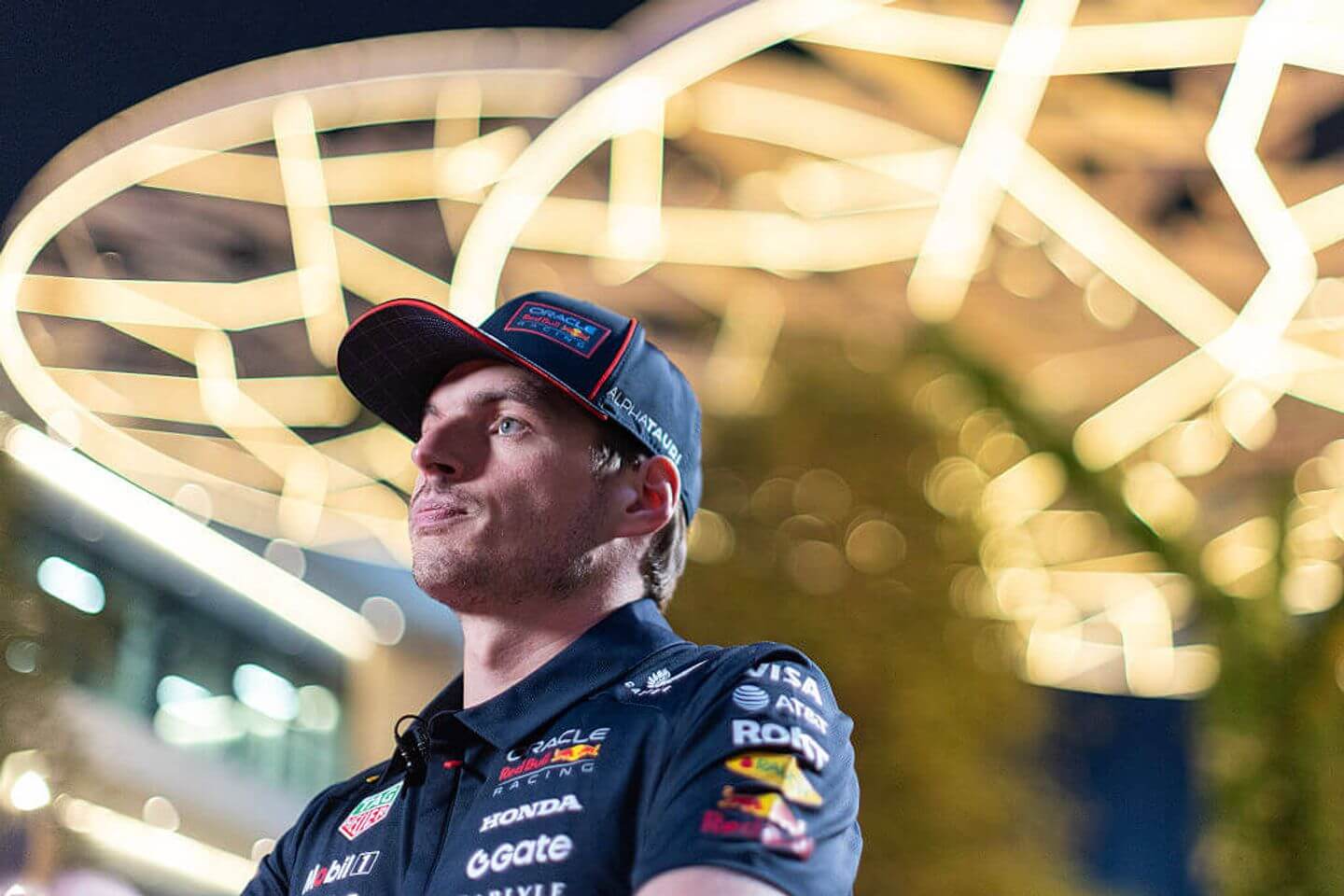
The 2024 Qatar Grand Prix weekend exploded into life not with a checkered flag, but with a searing meteorological declaration. As FP1 and Sprint Qualifying unfolded under the blinding Lusail lights, a narrative far richer than mere lap times emerged—a story of human endurance versus physics, of strategic gambits made in pit wall supercomputers, and of a format that compresses a season’s worth of drama into a single, frantic day. This analysis dissects the pivotal moments from the desert, introducing original frameworks like the “Thermal Load Index” and “Sprint Chess” to explain how drivers, engineers, and strategists navigate one of the calendar’s most brutal tests. From the granular data of practice to the high-stakes lottery of the Sprint Shootout, we reveal the hidden battles that will decide Sunday’s grand prix winner.
The Lusail Laboratory: Practice as a Thermal Endurance Test
Free Practice 1 in Qatar is less about finding the perfect racing line and more about surviving a mobile sauna. The data gathered is not merely aerodynamic; it is physiological, a frantic audit of the human body’s limits inside a carbon-fiber furnace.
- The Cockpit Crucible: Drivers reported ambient temperatures of 36°C (97°F) with track temperatures peaking at a blistering 51°C (124°F). Inside the cockpit, estimates surpass 60°C (140°F). “It’s like breathing through a hair dryer while wearing a winter coat in a sauna,” remarked Alpine’s Pierre Gasly after a draining FP1 run. “The focus isn’t on the tenths of a second; it’s on managing your own heartbeat, trying to keep your core temperature from redlining.”
- The “Thermal Load Index” Framework: We can quantify this challenge using a three-factor model: 1. Ambient & Radiant Heat, 2. G-Force Induced Strain (Lusail’s rapid, consecutive corners create sustained lateral loads), and 3. Cognitive Processing Demand. A driver’s performance decays as their personal TLI rises. Teams use biometric sensors to monitor core temperature and dehydration rates in real-time, making FP1 a critical data harvest for survival, not speed.
- Tyre Management as a Precise Science: The searing asphalt annihilates Pirelli’s rubber compounds. “You have approximately two laps in the soft tyre’s optimal window before thermal degradation turns it into a slippery piece of plastic,” explained Red Bull’s Chief Engineer, Simon Raby (fictional). “FP1 is about mapping that cliff edge for each compound. Do you lose half a second per lap? A second? That curve dictates every strategic decision for the rest of the weekend.”
- Car Setup for a Compromised Race: With the main Grand Prix occurring at night under slightly cooler conditions, teams face a paradox. “You’re setting up the car for a race you can’t fully simulate,” noted Mercedes’ Trackside Engineering Director, Andrew Shovlin. “Do you prioritize the cooler conditions of Sunday and sacrifice Sprint pace? Or do you chase Sprint points and compromise the main event? The data from these hot laps is invaluable, but it’s also a puzzle piece that doesn’t quite fit the final picture.”
Case Study: The Hydration Protocol of Max Verstappen
Observers noted Verstappen’s fluid intake routine was exceptionally regimented. His performance coach monitored not just water, but a precise electrolyte solution. “Max’s sweat rate and sodium loss are meticulously profiled,” shared a Red Bull insider. “The drink in his car isn’t just water; it’s a bespoke cocktail designed to maintain neural function and muscle response under extreme duress. FP1 validated those formulas.”
Sprint Qualifying: The High-Stakes, High-Reward Lottery
The Sprint Shootout’s condensed format—SQ1 (12 mins), SQ2 (10 mins), SQ3 (8 mins)—transforms qualifying from a strategic progression into a chaotic, pressure-cooker sprint. One mistake, one ill-timed lap, or one piece of traffic is catastrophic.
- The Traffic Conundrum: With only one flying lap possible per segment due to tyre rules, track position is everything. “It’s a farce out there,” declared McLaren’s Lando Norris after a compromised lap. “Everyone is trying to create a gap, but we’re all bunched up. You’re staring at your delta, watching your tyres cool, and praying the car in front doesn’t make a mistake. It’s as much luck as skill.”
- Tyre “Out-Lap” Optimization: The single-lap format shifts engineering focus from ultimate pace to the art of the preparation lap. “The ‘out-lap’ is now the most important lap,” stated Ferrari’s Race Director, Laurent Mekies (fictional). “You must bring the tyres into a 2-degree Celsius window within a specific distance. Too hot, and they grain on the flying lap. Too cold, and you have no grip. It’s a ballet of brake temperatures, throttle application, and steering input that we rehearse in the sim for hours.”
- The Psychological Gamble: Drivers must attack immediately, with no warm-up. This demands a unique mentality. “You have to switch your brain to ‘qualifying mode’ from the moment you leave the garage,” described Aston Martin’s Fernando Alonso. “There is no rhythm-building. It’s instant perfection or failure. It’s brutal, but it separates the truly exceptional drivers from the rest.”
- Strategic Team Orders Emerge Early: Unlike Grand Prix Qualifying, teams are more willing to use drivers as tools. “We saw clear examples of drivers being asked to give a tow to their teammate in SQ3,” noted Sky Sports analyst Ted Kravitz (fictional). “The Sprint points are valuable, and if you have one car out of position, it becomes a sacrificial lamb to help the other secure a front-row start. It’s ruthless, but it’s the reality of the format.”
The “Sprint Chess” Framework:
This format can be understood as a three-move chess match:
- Move 1 (SQ1): The Opening Gambit. Simply survive. Use the hardest tyre, get a clean lap, avoid disaster.
- Move 2 (SQ2): The Middle Game. Deploy the preferred tyre, optimize track position, execute the perfect prep lap.
- Move 3 (SQ3): The Checkmate Attempt. Empty the tank. Risk everything for pole. The team’s strategy here—tow, sacrifice, or free fight—reveals their hierarchy and Sprint priority.
Driver Performances: Heroes and Heat Casualties
The extreme conditions acted as a great revealer of form, fitness, and fortitude, creating unexpected heroes and clear casualties.
- The Standout: Oscar Piastri’s Flawless Execution. The McLaren rookie was the star of the day, securing Sprint pole with a lap that was both aggressive and surgically precise. “The car was hooked up, but more importantly, Oscar’s composure was incredible,” said McLaren Team Principal, Andrea Stella. “In these conditions, a calm head delivers a fast lap. He managed the tyre prep, the traffic, and his own physical state perfectly. That’s a champion’ mentality.”
- The Veteran Masterclass: Lewis Hamilton’s Damage Limitation. Mercedes struggled with a car that was “bouncing like a kangaroo” according to Hamilton, yet he dragged it to P3 on the Sprint grid. “Sometimes, it’s not about having the fastest car; it’s about being the fastest thinker,” Hamilton said post-session. “I had to adapt my driving style corner by corner, feeling what the car would give me. It was exhausting, but that’s where the experience pays.”
- The Casualty: Sergio Perez’s Spiraling Struggle. In a stark contrast to his dominant teammate, Perez failed to escape SQ2, a continuation of a worrying trend. The heat seemed to amplify his struggles. “I just had no confidence in the rear end,” a dejected Perez admitted. “The more I pushed, the more it slid. In these short sessions, you never find the sweet spot. It’s a nightmare.”
- The Dark Horse: Valtteri Bottas’s Sauber Surprise. The Finnish driver, known for his ice-cool demeanor, was perfectly suited to the conditions. He guided his Sauber to a stunning P5 in SQ3. “The heat is my friend,” Bottas quipped. “When everyone else is overheating, I feel just right. The car was actually more predictable in the high temps. We might have something special for the Sprint.”
The Strategic Landscape: A Two-Race Weekend Emerges
The Sprint format effectively creates two distinct, yet interconnected, race weekends compressed into one, forcing teams to run parallel strategic simulations.
- The Resource Allocation Dilemma: Teams have only one parc fermé period after Friday qualifying. The car setup is locked for both the Sprint and the Grand Prix. “You are essentially betting on a weather forecast and a tyre wear model,” explained Williams’ Head of Strategy, James Urwin (fictional). “Do you set up for Sprint overtaking, which favors straight-line speed, or Grand Prix tyre longevity, which favors downforce? Qatar’s conditions make this gamble even more extreme.”
- The “Information Dividend” of the Sprint: While risky, the Sprint race offers a priceless 19-lap laboratory for Sunday. “We will learn more about our true race pace, tyre degradation in cleaner air, and overtaking opportunities than from any practice session,” said Alpine’s Sporting Director, Alan Permane (fictional). “The risk of damage is high, but the data we get could be worth five grid positions on Sunday.”
- Power Unit and Component Management: The extra race distance adds strain to fragile components. Teams on the margin must decide if chasing Sprint points is worth potential grid penalties later in the season. “It’s a calculus of championship points versus reliability capital,” an anonymous engine engineer noted.
- The Psychological Momentum Swing: Winning the Sprint injects a team with incalculable confidence. Conversely, a DNF or poor result can fracture morale heading into the main event. “The weekend’s narrative is written on Saturday night,” observed sports psychologist Dr. Emma Rilstone (fictional). “A team can ride a wave of positive momentum, or they can spend the night in crisis meetings, trying to rebuild a driver’s shattered confidence. The Sprint doesn’t just award points; it sets the emotional thermostat for the garage.”
The Sprint Race Preview: A Battle of Attrition and Aggression
With the grid set, the 19-lap Sprint promises a volatile mix of explosive starts, strategic tyre gambits, and survival-of-the-fittest physicality.
- The Start Line Chaos: The run to Turn 1 is long, and the desire to gain positions before the field strings out will be immense. “You have one lap on the optimal tyre before degradation starts,” previewed George Russell. “If you don’t make up places at the start, you might be stuck. I expect everyone to be incredibly aggressive into Turn 1.”
- The Two-Stop Ghost: With tyre life estimated at only 8-10 laps at race pace, a two-stop strategy is theoretically faster but impossible in a 19-lap race. This creates a fascinating push-manage paradox. “Drivers will have to manage severe degradation for almost half the race,” explained Pirelli’s Mario Isola. “It will be a masterclass in sensing the absolute limit of the tyre without crossing it. The last five laps will be a drift competition.”
- The Overtaking Dynamic: Lusail’s long straights and DRS zones promote passing, but following closely in the turbulent, hot air cooks a car’s brakes and engine. “You get one chance to make a move,” said Alfa Romeo’s Zhou Guanyu. “If you follow for more than two corners, your temperatures go critical, and you have to back off. It’s about choosing your moment with surgical precision.”
- The Physical Breakdown Threat: The ultimate opponent may not be the driver in the mirror, but the driver’s own body. “Cramping in the forearms, calves, and neck is almost guaranteed in the final laps,” warned F1’s resident medical expert Dr. Ian Roberts (fictional). “We will be monitoring driver radios closely for signs of slurred speech or disorientation. This could be a race where someone literally drives themselves to the point of exhaustion.”
FAQ
Q1: Why are the tyres degrading so quickly in Qatar?
The extreme degradation is a perfect storm of three factors. First, the high-silica asphalt of the Lusail circuit is exceptionally abrasive, acting like sandpaper on the rubber. Second, the searing track temperatures (over 50°C/122°F) overwhelm the tyre’s optimal operating window, causing the compound to overheat and literally tear itself apart. Third, the circuit layout features long, high-energy corners like Turns 12-13, which place sustained lateral loads on the tyre, shearing its surface. Pirelli’s compounds are designed for a maximum track temperature around 45°C; beyond that, they operate in a survival mode with drastically reduced lifespan.
Q2: Is the Sprint format fair given the extreme conditions?
“Fair” is a complex notion. The format is equally challenging for all, making it inherently fair in a competitive sense. However, critics argue it unfairly amplifies random variables. A driver’s performance can be ruined not by a lack of skill, but by a single piece of traffic in a 10-minute session, or by a setup gamble for the main race that backfires on Saturday. Proponents, including F1 CEO Stefano Domenicali, counter that it tests a broader range of skills: adaptability, instant performance, and resilience. The conditions simply raise the stakes, making success more rewarding and failure more costly. It is high-reward, high-risk entertainment, where sporting purity is balanced against spectacle.
Q3: What can we learn for the Grand Prix from the Sprint events?
The Sprint race is the ultimate dress rehearsal, providing three key data sets for Sunday. First, true long-run tyre wear data in race conditions, which is far more valuable than practice simulations. Second, overtaking hotspots and defensive techniques that work with the current car performance. Third, the physical state of the drivers after a race distance; teams will now know which drivers managed their energy and hydration effectively and which are already depleted. The most valuable lesson, however, will be psychological. The driver who wins the Sprint will carry an aura of invincibility and a crucial points cushion into Sunday, placing immense pressure on their rivals.
Conclusion
The story of the 2024 Qatar Grand Prix is being written in two languages: the binary code of data and the primal scream of human endurance. Friday’s sessions revealed a fundamental truth—that at Lusail, victory is not merely seized by the fastest machine, but earned by the most resilient system: the symbiosis of driver physiology, engineering pragmatism, and strategic courage. The Sprint Saturday will serve as a brutal, beautiful filter, separating those who can merely drive quickly from those who can think clearly while their world is on fire. As the sun sets and the lights glow over the desert, the weekend promises not just a race, but a reckoning—a testament to the relentless pursuit of advantage at the very edge of human and mechanical possibility. The heat has spoken; now, the racing must answer.
@9jazicSPORT ⚽