 By Happypal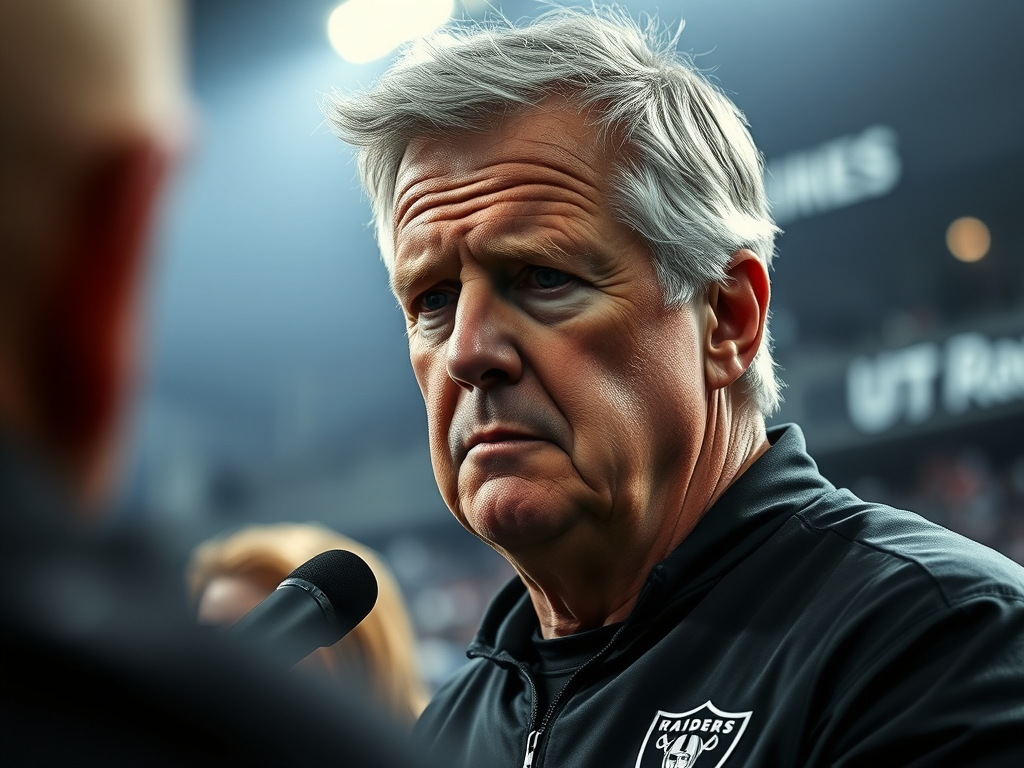
Introduction: A Tough Start in the Desert
When Pete Carroll arrived in Las Vegas, the excitement was electric. The Raiders — one of the NFL’s most storied franchises, now seeking stability and identity — were finally under the direction of a Super Bowl–winning coach known for his energy, optimism, and relentless positivity.
Carroll promised transformation. He talked about culture, accountability, and what he called “a return to Raider football.” His trademark grin and boundless enthusiasm made believers out of skeptics. After all, this was the same man who rebuilt the Seattle Seahawks into a perennial contender and brought them a Lombardi Trophy.
But five weeks into the new season, the mood has shifted dramatically. The Raiders sit at 1–4, bruised and confused after a 40–6 humiliation against the Indianapolis Colts. What was supposed to be the birth of a new era suddenly feels like an echo of old dysfunction.
Then came Carroll’s most revealing statement yet:
“I’m processing it poorly,” he admitted after the loss.
For a man known for his composure, those five words landed hard. They peeled back the layers of confidence and charisma to reveal something raw — a legendary coach struggling to reconcile expectation with reality.
This wasn’t just another bad week in the NFL. It was a psychological moment — for Carroll, for the Raiders, and for a fanbase desperate for direction.
Chapter 1: The Harsh Reality of 1–4
In sports, numbers rarely lie. But behind every ugly record, there’s a story.
At 1–4, the Raiders aren’t simply losing; they’re unraveling in ways that highlight deep systemic issues — from play-calling and player discipline to emotional control and execution under pressure.
The Colts game was the breaking point. Las Vegas was outclassed in every department:
- Offense: Two more interceptions from Geno Smith, who now leads the league with nine.
- Defense: Couldn’t stop third-down conversions; the Colts sustained drives with ease.
- Special Teams: A blocked punt and a missed field goal deepened the chaos.
Every mistake felt amplified. Every possession carried anxiety instead of confidence.
Carroll’s postgame press conference was as somber as any in his career. No “Always Compete” mantra. No silver linings. Just frustration — and accountability.
“We’re not executing. We’re not finishing. And that’s on me,” he said.
For a coach who built his career on optimism, the tone was unmistakably heavy.
Chapter 2: The Confession — “I’m Processing It Poorly”
Coaches rarely show weakness in public. The NFL is an environment built on control, authority, and image. Yet Carroll’s admission was neither rehearsed nor rhetorical — it was deeply human.
When he said he was “processing it poorly,” what he meant was more than just frustration. It was the emotional collision between expectation and adaptation.
Carroll came to Las Vegas expecting to ignite belief quickly — the same formula that worked in Seattle, where young talent like Russell Wilson, Richard Sherman, and Kam Chancellor bought into his vision early.
But the Raiders are a different beast.
The roster is uneven. Veterans are skeptical. The offensive line lacks cohesion. The defense — once feared under Maxx Crosby’s leadership — is struggling for rhythm.
Internally, sources suggest the adjustment period has been “longer than expected.” Some players are still adapting to Carroll’s intense, energy-driven practices and emphasis on accountability over star power.
He’s realizing that transplanting a culture isn’t as easy as repeating slogans.
And that’s the real meaning of “processing it poorly.”
It’s not a loss of faith — it’s the painful awareness that belief alone can’t fix broken fundamentals.
Chapter 3: The Anatomy of the Struggle
To understand why the Raiders are where they are, you have to break down the failures — not as isolated incidents, but as patterns.
A. The Turnover Spiral
Geno Smith’s struggles have become symbolic of the Raiders’ problems. Once known for composure and accuracy, Smith has fallen into bad habits — forcing throws, missing open reads, and turning over the ball at critical moments.
Carroll has publicly supported him, but privately, there’s frustration.
“We can’t keep putting our defense in those positions,” Carroll admitted after Week 5.
Every turnover resets momentum, demoralizing both offense and defense.
B. The Special Teams Collapse
Special teams, often overlooked, have been disastrous. Blocked punts, missed field goals, and coverage breakdowns have cost points and confidence.
These are detail-oriented issues — and details are supposed to be Carroll’s strength. That makes them doubly painful.
C. The Defensive Identity Crisis
The Raiders’ defense was built around aggressiveness — pressure, turnovers, swagger. But this season, that edge has dulled.
They’re struggling to close out drives. Third-down stops have become rare. And opponents are exploiting zone coverage gaps that used to be airtight.
Without consistency up front, the secondary looks exposed.
“We’re playing reactive football,” one defensive assistant reportedly told The Athletic. “We’re not dictating anymore.”
D. Leadership and Communication
Multiple insiders describe a “disconnect” between Carroll’s motivational style and some veteran players used to a looser structure. His high-energy approach — music in practice, constant movement, rapid drills — feels unfamiliar to an older locker room.
He’s not losing the group, but he’s still learning them.
Chapter 4: The Weight of Legacy
At 73, Pete Carroll is one of the most respected figures in modern football. His resume — a national title at USC, a Super Bowl with the Seahawks, years of winning seasons — should make him untouchable.
But the NFL doesn’t run on nostalgia.
Every season resets your relevance.
Carroll’s move to Las Vegas wasn’t about coasting into retirement. It was about proving that his energy and philosophy could still shape a modern team.
However, his legacy now stands at a crossroads:
- Can a coach known for adaptability reinvent himself again?
- Or has the game — faster, more analytical, more player-driven — finally evolved past him?
There’s no shame in struggle. But for someone whose entire identity is built on positivity and momentum, this feels like a personal test of endurance.
“He’s taking it harder than people realize,” said one source close to the Raiders’ staff. “He’s not used to failure. He’s trying to smile through it, but it’s weighing on him.”
Chapter 5: Lessons from the Sideline
If there’s one thing Pete Carroll has always taught, it’s that adversity can be fuel. But even fuel burns out if mismanaged.
This is the point where great coaches distinguish themselves — not by avoiding failure, but by responding to it without losing conviction.
So what’s next for Carroll and the Raiders?
1. Simplify the Playbook
Analysts note that the Raiders’ offensive scheme has become overly complex. Geno Smith thrives on rhythm, not risk. Streamlining to quicker reads, shorter passes, and designed rollouts could stabilize the offense and limit turnovers.
2. Rebuild Confidence Through Small Wins
In Carroll’s early Seattle days, he built culture by celebrating incremental success — a big third-down stop, a well-executed special teams play, a clutch block.
He needs that same incrementalism now.
Momentum isn’t always built in the end zone; sometimes, it starts on the sideline.
3. Re-establish Defensive Identity
The Raiders have the personnel to play aggressive football. Maxx Crosby remains a game-changer. But aggression without structure leads to chaos. Expect Carroll and defensive coordinator Kris Richard to emphasize fundamentals — tackling angles, zone discipline, and communication.
4. Discipline and Emotional Control
The red cards, sideline outbursts, and unnecessary penalties reflect emotional instability — not malice, but frustration. Carroll must lead emotionally as much as tactically.
If he stays composed, his team will follow.
Chapter 6: Inside the Locker Room
Sources from inside the team suggest the locker room is not fractured — just tense.
Some players are frustrated, others confused, but few are turning against Carroll. His track record commands respect, even in rough waters.
Veterans reportedly appreciate his transparency. When he admitted to “processing it poorly,” several players saw it as a moment of shared humanity — proof that he wasn’t detached or defensive.
“He’s real,” said one player anonymously. “He’s not blaming us. He’s hurting with us.”
That’s rare in modern coaching.
The question now is whether emotional honesty can translate into tangible improvement.
Chapter 7: The Road Ahead — Turning the Ship
The next few weeks will determine the Raiders’ season. The schedule doesn’t ease up — matchups with the Chargers, Chiefs, and Ravens loom large.
To stay competitive, Carroll must:
- Tighten fundamentals (limit penalties, fix special teams)
- Reignite belief (remind the team why they bought in)
- Rebuild rhythm (especially for Geno Smith and the offense)
He’s done it before. At USC, after a shaky first year, Carroll turned the Trojans into a dynasty. In Seattle, he transformed a struggling franchise into a powerhouse.
The pattern is there — but so is the risk that age, roster imbalance, and NFL evolution could prevent history from repeating itself.
Chapter 8: The Psychology of Losing
Few topics are more misunderstood in sports than what losing does to leaders. For Carroll, it’s not just about game plans — it’s about identity.
He’s built a career around energy, connection, and optimism. Losing corrodes that fuel.
When he says he’s “processing it poorly,” it’s not self-pity — it’s the realization that his usual tools (positivity, enthusiasm, belief) aren’t immediately working.
It’s a moment of psychological reckoning.
In that honesty, though, lies opportunity. Vulnerability is not defeat. For his players, seeing their coach humanized might actually strengthen trust — if he can channel that emotion into progress.
Chapter 9: The Bigger Picture — Coaching Legacy and NFL Realities
This season will be a case study in how even the greatest minds confront change.
If Carroll stabilizes the Raiders and finishes near .500, the narrative shifts from “decline” to “resilience.”
If not, it could mark the quiet sunset of one of football’s most vibrant coaching personalities.
Either way, the lesson extends beyond Las Vegas. It’s about how leaders adapt when their methods meet resistance.
Great coaches evolve. Great teams absorb pain. Great organizations align philosophy with personnel.
Right now, all three are being tested in the Raiders’ locker room.
Conclusion: A Season on the Brink
Pete Carroll’s admission wasn’t weakness — it was truth. The Raiders’ 1–4 start has forced him into unfamiliar territory: vulnerability under a national spotlight.
But make no mistake — he’s not finished.
He’s angry, reflective, and still fighting. And if there’s one thing Carroll’s career has proven, it’s that he thrives when doubted.
“We’re going to figure this out,” he said quietly after the loss.
Maybe they will. Maybe they won’t. But what’s undeniable is that this version of Pete Carroll — raw, humbled, searching — is one we’ve never seen before.
The season is young, but the message is clear: in Las Vegas, the biggest gamble isn’t on the field. It’s in the belief that even legends can learn to start again.
Haha, so the Raiders are unraveling, and Pete Carroll’s admitting he’s processing it poorly? Sounds like someone’s finally human after all that Always Compete nonsense! Maybe transplanting a culture is harder than just yelling slogans from the sidelines. Good to know positivity alone can’t fix a broken offensive line or Geno Smith’s turnover spiral. Still, for a coach whose identity is built on energy, this must be tough. But hey, maybe this messy processing phase is just Carroll’s way of adapting to the modern NFL, like everyone else. Let’s see if this humanity translates into actual football improvements soon!đồng hồ bấm giờ đếm ngược